
We are all familiar with reaping what we sow. As a somewhat meritocratic society, we are very aware that our actions, or inaction, will determine our future. This is largely true also in exercise. People who are physically active have less health issues in the future and also reduced risk of premature death. On the well-being side of things, exercise also predicts life satisfaction. Exercise is indeed linked to many good things.
Despite all the goodness of physical activity, it’s very hard to wrap our heads around how exactly is exercise-is-good-for-us. Because the impact of our behaviour on outcomes is hard to imagine. Like, what do you mean I will be happier today if I exercised more ten years ago? What does even happier look like?
You know what I mean?
Learning new exercises is a strong reality check
Recently I decided that I would like to learn how to handstand. I mean, I don’t really care to handstand per se but I do think there are benefits to engaging in activities outside of our usual norm. Learning new skills in itself can be considered a health behaviour as it protects against dementia and can improve cognitive function via neuroplasticity. In fact, exercise on its own can boost memory and focus.
Although being able to handstand in itself is not a goal for me, I would still like to make progress at it. One of the things that repeated came up was that I struggle to lock my elbows. Initially it seemed like a technique, poor awareness thing. But later it became more obvious than locking the elbow in a handstand is physically extreme demanding for me. Not only does it take ridiculous amount of physical effort, I could feel my elbows buckling when I don’t pay enough attention to it.
There is no pain whatsoever. Thankfully. But my elbows are definitely a limitation when it comes to my progress to performing a handstand. Elbows aside, my wrist does tend to become fatigue and does feel sore if my weekly handstand volume is on the higher side. There are also shoulder and upper thoracic mobility issues that didn’t allow me to “stack” as nicely as my coaches would prefer.
Handstands can be a great exercise for rehab
I talk a lot about functional training. It’s definitely a big (and important) topic. Handstands, as an exercise, is extremely far from what I would consider a functional exercise. Like, what do you mean I need to stand on my hands?
Are our hands and arms even designed for standing?
So, to clarify, I don’t consider handstand a functional exercise. I also don’t think that our human bodies are designed for standing on my upper limbs. That doesn’t mean there is no value to handstands.
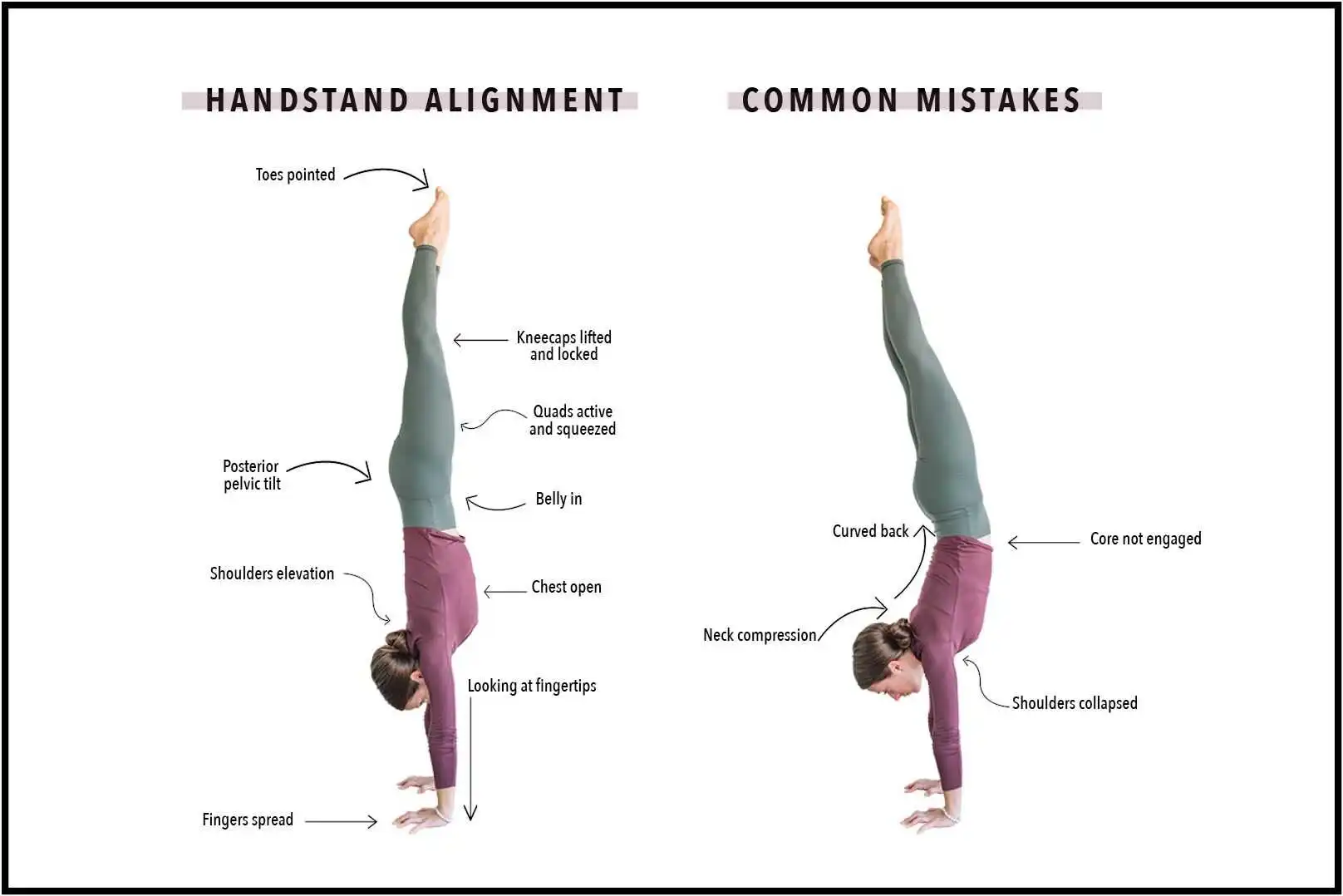
One of the best things I like about handstand is that it takes a lot of bodily awareness to be able to do it. I personally can’t handstand, yet. Even if I were to try to float off the wall into a handstand position, I can barely hold my feet in the air for a few seconds. The reason is because it takes a great degree of control physical awareness to make micro-corrections, in real time, to be able to handstand.
Using handstands to improve weight bearing capacity of shoulder joint
More important, handstands load your shoulders and wrist joints pretty intensely. Not being able to weight bear on the shoulder joint after an injury is very common. If you have pain with pushing exercises (e.g., push ups, bench press, etc), it is very possible that your shoulders can’t take compressive forces through itself.
This is where handstand can be a nifty rehab tool. Handstands loads your shoulder joint with almost no movement. It is largely isometric in nature (i.e., more about holding than moving a weight through a distance). It is also ridiculously tiring so it doesn’t take a lot of time to reach a high RPE (rate of perceived exertion).
To train your shoulder to weight bear using exercises like isometric push ups or bench press holds does work in theory. However, these exercises are simply too easy and takes too much time.
Importance of wrist mobility in handstand
Remember I was saying how my elbows were struggling and they can also buckle when I didn’t pay enough attention? I honestly thought it was a straight-arm strength issue. Like, I don’t do enough exercises in straight arm positions for my elbows to be able to stay straight in a handstand.
Well, that’s not the complete picture!
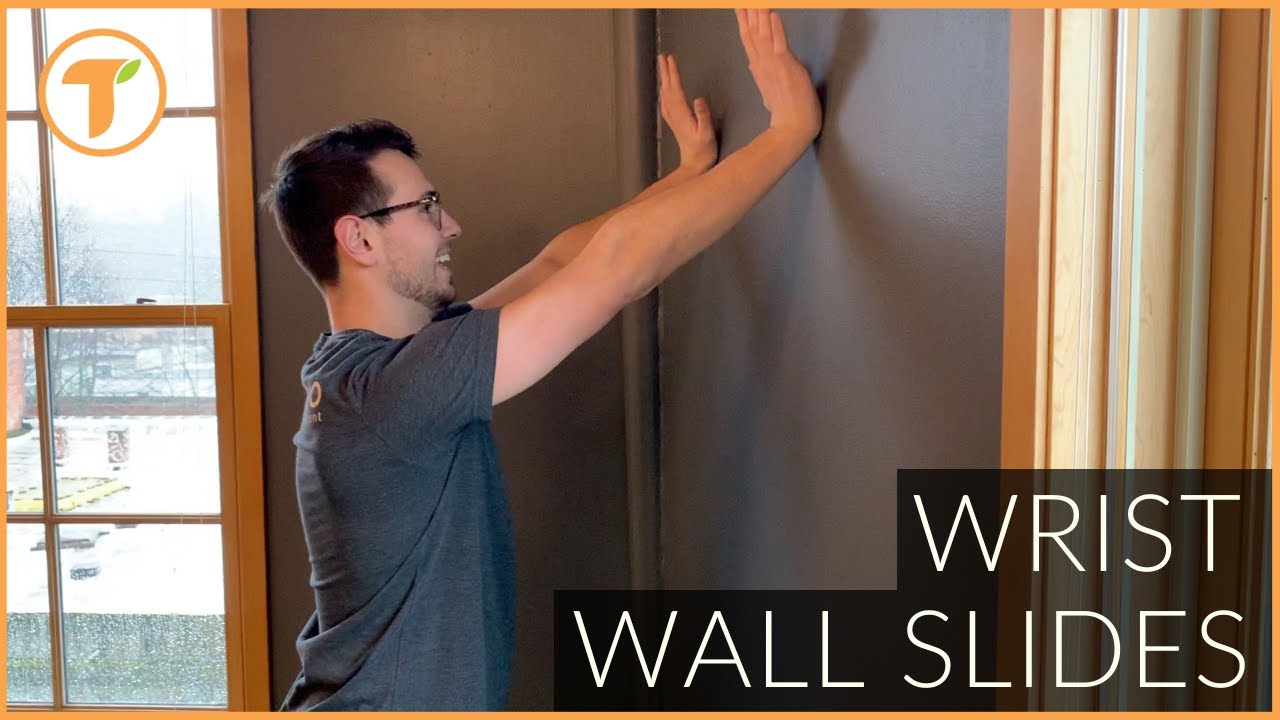
Recently, I realised that both my wrists have very poor range into extension. It is likely a mobility issue. When doing some accessory drills, I realised I don’t have the range to actively extend my wrists compared to my classmates.
In fact, my elbows had to bend in order for me to achieve wrist extension. If I were to force myself to keep the elbows straight, the wrist extension is almost negligible (i.e., fingers will still be touching the wall).
This is why my elbows were struggling to stay straight! When I adjust my body to “stack” on top of my wrists during a handstand, my elbows were buckling cos my wrists could not sustain the load!
New exercises tell us new things about our bodies
I honestly never thought my wrist had issues or that my wrists have issues going into extension. I don’t recall having ever injured my wrists. They are also not a limiting factor for upper body exercises. So, I never knew my wrists were extremely limited in extension.
Is my limited mobility in my wrist an issue?
No, not really. In my opinion, not all “problems” need to be fixed and not all limitations need to be addressed. I am not denying that my wrist is indeed limited in range. What I am saying is this limitation does not transcend into any areas of my life besides handstands.
As a chiropractor, I often hear people sharing about how imperfect their mobility or flexibility is. The truth is we all have our own flaws and we don’t have perfect bodies. We are busy as is living in Singapore, it doesn’t make sense to spend extra time and effort to address something that will have no discernible value to our lives.
What caused my limited wrist extension?
The point of the blog post is what we do today will predict our future. In other words, what we did in the past would influence our present day reality. It is arguably impossible to know with 100% certainty why my wrists are the way they are. But I could fancy a good guess.
When I was much younger, I used to play the violin and I played it for years. I took it fairly seriously for a few years and would practised for hours each day. I think this was when I would have trained my wrists into a flexion preference.
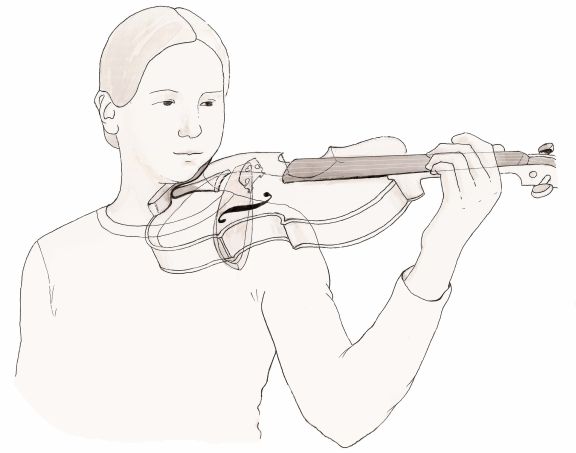
Both the left and right wrists are held in flexion when playing the violin. The left wrist (i.e., fingering hand) is almost entirely, if not entirely, held in flexion while the right wrist (i.e., bow holding hand) is in a flexed position during upbow (aka pushing the bow towards the ceiling) and an extended position during downbow (aka pulling the bow towards the ground).
I cannot be certain that this is why I am struggling to keep my elbows straight during handstand. But I am pretty convinced my violin playing years had a part to play.
Ultimately though, it doesn’t matter what caused my limited wrist extension. What matters is recognising that our bodies are living records of our past. Every sport we played, every music instrument we practiced, every habit we repeated has quietly shaped us.
What this means is that what you do today has the ability to shape your future. Sure, you may be physically unfit or have poor psychomotor coordination today. But that doesn’t need to be your reality in five or ten years. Change doesn’t happen in a day and you may not find success in the short term. But trust that whatever you do today will inevitable affect you in the future.
BOOK A CHIROPRACTOR IN SINGAPORE
Based in Singapore, Square One Active Recovery offers treatments with a very big difference. With our evidence-based exercise approach, you can achieve your recovery goals in just 12 weeks. Not getting results from your chiropractor, TCM doctor or physiotherapist? Talk to us and find out how we can take your recovery to the next level.
Our goal? To make our own services redundant to you.
*We do not offer temporary pain relief such as chiropractic adjustments, dry needling, or any form of soft tissue therapy.

