
Clinical Insight
The Headache Your Doctor Might Be Missing
Up to one in five chronic headache sufferers are actually experiencing cervicogenic headaches. For many desk bound professionals in Singapore, this is a mechanical issue where pain is referred from the structures of the upper cervical spine rather than the brain itself. Years of sustained posture for prolonged working hours the can overload the cervical spine, creating a referral pattern that mimics a primary headache. Shifting your focus to the neck is the first step in breaking the cycle of temporary relief.
The Misdiagnosis Trap
Because the symptoms of a cervicogenic headache often mimic migraines or tension-type headaches many patients spend years on a cycle of medication. This approach only masks the pain without addressing the stiff or irritated cervical segments that are the actual source of the problem.
At Square One we look beyond the symptom by identifying the specific upper cervical vertebrae that are driving the referral pattern to implement a mechanical solution for your mechanical problem.
Signs of Cervical Origin:
- ✔ Pain starts at base of skull and spreads forward
- ✔ Triggered by neck movement or desk posture
- ✔ Pain is typically one sided or unilateral
- ✔ Reduced range of motion in the neck
The Mechanics of the Upper Neck
The upper cervical spine is a masterpiece of specialised engineering. While most vertebrae are designed for load bearing the first two are built specifically for precision movement. The Atlas (C1) supports the skull and is responsible for 33% of your head’s forward and backward movement. Directly beneath it sits the Axis (C2) which allows the Atlas to pivot around it facilitating 60% of all cervical rotation.
The Muscular Experience
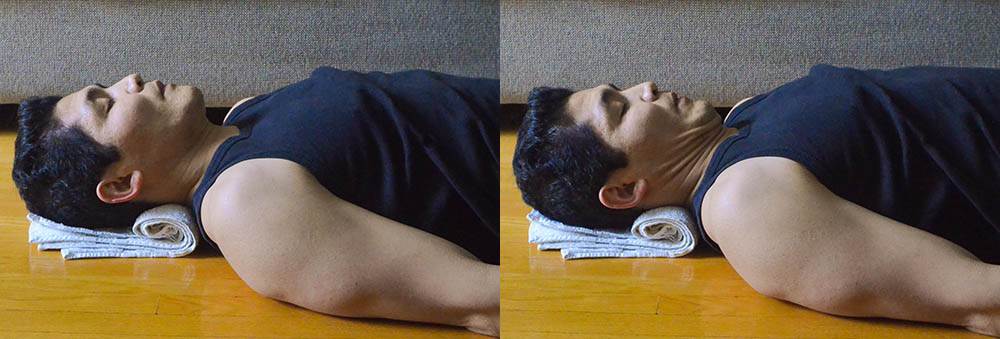
Cervicogenic headaches are frequently linked to a loss of structural support within the neck. The Deep Neck Flexors, located deep at the front of the cervical spine, act as the essential “core” muscles for your neck. Their primary role is to maintain the integrity and alignment of the spine during daily activities. In Singapore’s office-heavy environments, these muscles often become inhibited due to prolonged, sedentary positions, leading to a significant drop in their functional support.
When this internal bracing system weakens, the cervical spine loses its primary stabilisers. This structural failure causes the surrounding tissues to become overloaded and hypersensitive. Over time, this constant mechanical strain irritates the nerves in the upper neck, which the brain eventually interprets as a persistent headache.
How Exercise Provides a Solution
Solving the problem requires building functional capacity rather than just chasing temporary relaxation. By conditioning the deep neck flexors through precision movements like the chin tuck, you restore the internal bracing your neck needs to stay stable. This strengthening process directly reduces the mechanical irritation sent to the nervous system. Improving your muscular endurance ensures your neck has the resilience to handle a full workday without the structural failures that trigger a headache response.
The Neurological Connection
The reason a neck issue feels like a headache lies in the trigeminocervical nucleus. This is a specialised pain processing centre where sensory signals from the upper three cervical nerves converge with signals from the trigeminal nerve, which is responsible for sensation in your face and head. When the upper neck is irritated your brain can misinterpret these signals as coming from your eyes or forehead. Over time chronic irritation can lower your pain threshold and make you more susceptible to severe episodes.
The Suboccipital Connection
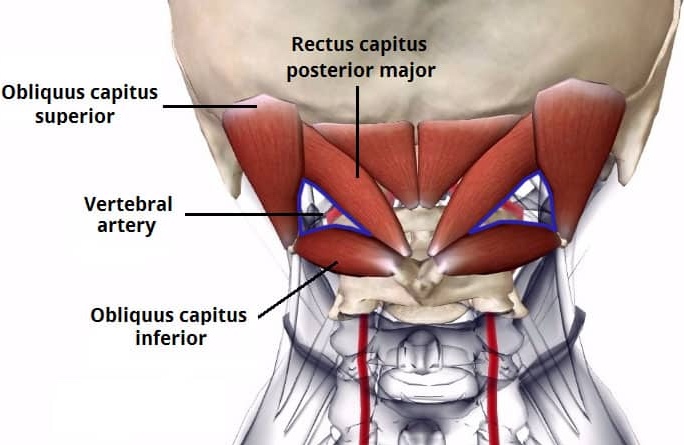
The suboccipital group is made up of eight small muscles, four on each side, located at the very top of your neck where it meets the base of your skull. The suboccipital muscles are designed to be your head’s “fine-tuners.” Their job is to stabilise the skull on top of the spine while also allowing you to extend (look up) and rotate (turn your head left and right).
In Singapore’s office environments, suboccipital muscles often fail under prolonged static loading. These small structures lack the endurance for fixed positions. This strain worsens when deep neck flexors become weak and stop providing stability. Consequently, the suboccipitals overwork to keep the head level. Long term recovery requires building functional capacity in both groups to handle your daily workload properly.
Active Rehabilitation Over Adjustments
Traditional chiropractic adjustments provide short-term sensory relief but don’t address the mechanical cause. Our approach uses progressive strengthening of the deep neck stabilisers and thoracic mobility work to build lasting capacity, not temporary comfort.
Breaking the Cycle of Chronic Tension
For many office professionals, the primary driver is sustained sedentary posture. Sitting for long hours causes the stabilisers to become inhibited while the base of the skull becomes overworked. No amount of massage will fix this long term if the underlying weakness remains. True resolution requires moving toward active strength training and reconditioning.
Visit Our Chinatown Clinic
Our chiropractor at Hong Lim Complex is a short walk for professionals based in Raffles Place or Tanjong Pagar. We are centrally located with direct access via the North East, Downtown and Thomson East Coast lines.
Transport Access
- 📍 3 min walk from Chinatown MRT
- 📍 5 min walk from Clarke Quay MRT
- 📍 7 min walk from Maxwell or Raffles Place MRT
- 📍 Directly above Hong Lim Food Centre
538 Upper Cross Street, Hong Lim Complex, Singapore 050538
Stop chasing the pain in your head and start addressing the source in your neck