
When I booked a private one-on-one calisthenics session with Lucas Tey at Project Rally, I was curious about bodyweight training and wanted to explore a different approach to fitness. As a chiropractor who spends his days helping others with chronic pain, I rarely get the chance to be just a regular person wanting to try something new.
What I experienced was an excellent workout that challenged me in ways I hadn’t expected. But the real surprise came afterwards. It was a pleasant reminder of why I believe so strongly in the power of movement as medicine, even when that’s not the primary goal.
The reality of chronic pain in Singapore
Before diving into my experience, it’s worth understanding the scope of chronic pain in Singapore. A 2016 study estimated that 14 percent of Singaporeans suffered from chronic pain. Globally, estimates suggest that as many as 20 percent of adults suffer from it. These figures represent hundreds of thousands of Singaporeans living with persistent pain that affects their daily activities, work productivity, and quality of life.
Contrary to popular belief, pain is not just pain. Pain comes with very tangible consequences in many facets of our lives. For example, the economic burden of chronic pain cost the Singapore $8 billion each year! Chronic pain can affect the economy through productive loss and missed work days.
Yet despite this widespread issue, chronic pain remains poorly understood and often inadequately treated. Many sufferers keep quiet about their pain, perpetuating a cycle where effective treatments remain underutilised.
Private calisthenics class at Balestier

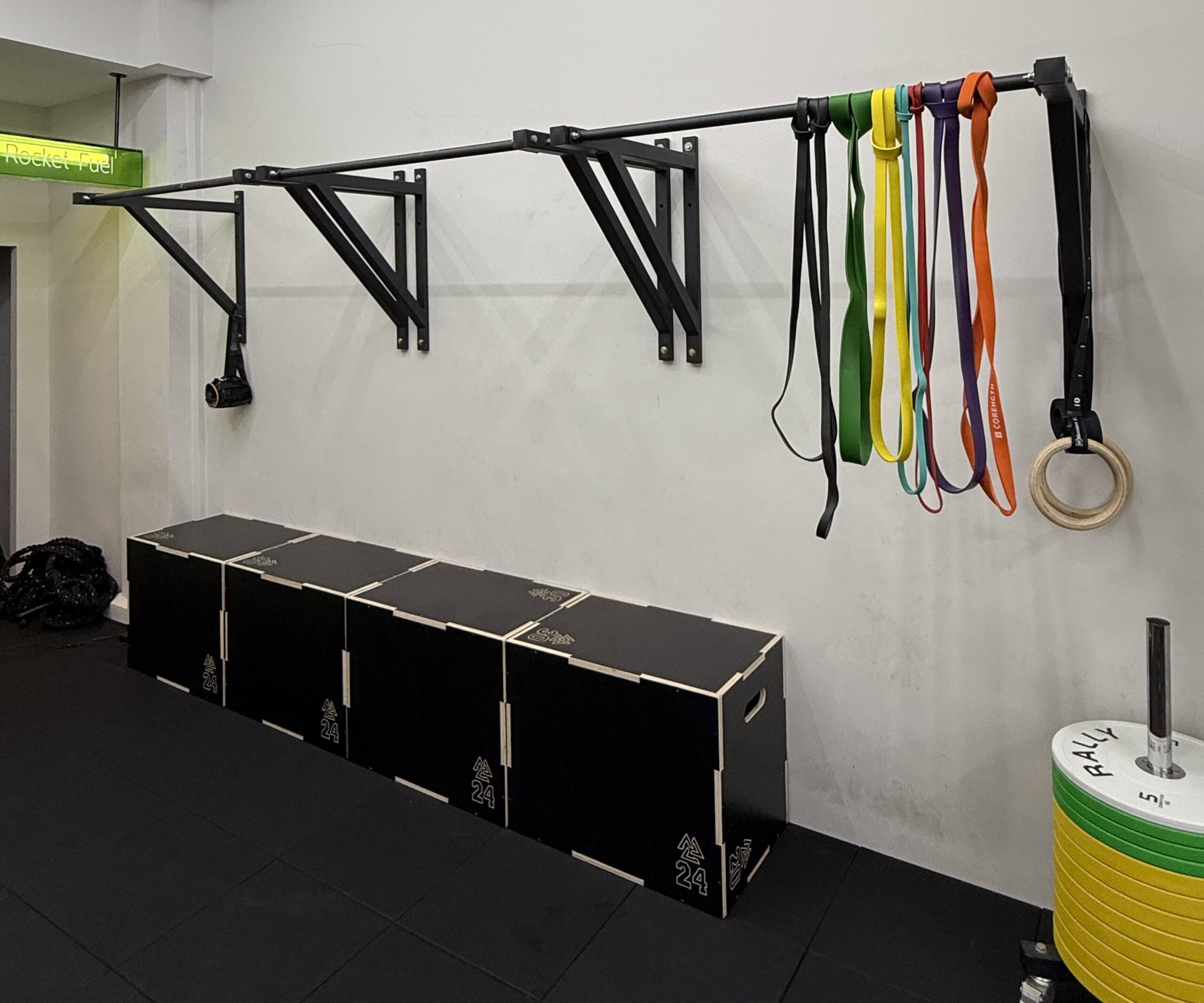
Project Rally is located at 513 Balestier Road, directly opposite Zhongshan Mall. While it does look like a standard functional training or gym set up, Project Rally is not your typical gym.
Rather than just offering standard fitness classes, Project Rally provides a comprehensive approach with HYROX, calisthenics, strength, and weight lifting classes.
What sets them apart is their commitment to complete recovery alongside fitness training. They have massage services available on site as well as a cold plunge room that can fit up to six people in their own individual tubs—no need to share!
The gym is designed with a complete wellness circle in mind: you get a good workout and proper recovery. They also provide advice and recommendations on nutrition and sleep so you can achieve peak well-being.
Calisthenics workout of the day
My calisthenics class was conducted by Lucas Tey. He is one of the cofounders of Project Rally. Believe it or not, he started coaching calisthenics since he was 14 years old! It all started at a neighbourhood and people starting joining.
The workout Lucas crafted was focused on isometrics and progressively challenging:
E2MOM (10 minutes):
- Dumbbell wall sits @ 5kg, 60 seconds on, 60 seconds off
EMOM (15 minutes):
- 8 toe to bar
- 10 ab mat sit-ups
- 12 mountain climbers
EMOM (20 minutes):
- Pull-up isometrics: tempo high position 5 seconds, mid position 5 seconds, hang 5 seconds
- Ring dip isometrics: same tempo pattern
What impressed me about this programme was its emphasis on time under tension and controlled movements. In a society where we focus a lot on being fast and with the rise of high intensity workouts, the focus on endurance is refreshingly counter-cultural. Rather than chasing the adrenaline rush of quick, explosive movements, Lucas had designed a session that demanded patience, precision, and mental fortitude.
Calisthenics can accommodate to different fitness
The session took an interesting turn during the ring dip isometrics. My shoulders simply weren’t stable enough for this particular challenge. Rather than pushing through potential injury, Lucas immediately modified the exercise, substituting push-ups that would provide similar training stimulus whilst respecting my current capabilities.
This moment highlighted Lucas’s expertise as a trainer. He could assess when an exercise wasn’t appropriate and provide an effective alternative without breaking the flow of the workout. This isn’t just good coaching. It’s the mark of someone with years of experience with exercise programming.
Exercise is medicine

I came to the session with some existing spinal fatigue from, ironically, a pilates class I had done earlier. Given the emphasis on spinal flexion in the second portion of Lucas’s programme (e.g., toe-to-bar, sit ups, and mountain climbers), I half-expected myself to need more exercise substitutions.
Interestingly, my low back pain was a non-issue. Rather than exacerbating my spinal fatigue, the calisthenics session left me feeling significantly better. The next day, there was no sensitisation or residual fatigue.
This was not something that was planned or predicted. The therapeutic benefit was a pleasant surprise. It is a reminder that sometimes all we need to do is to move and exercise (safely) within our physical capacity. The benefits will come.
Science behind using exercise to treat chronic pain
My unexpected positive response to the session wasn’t just a happy coincidence. Research consistently demonstrates that exercise can be highly effective for pain management, even when that’s not the primary goal of the activity.
The mechanisms are well understood: exercise-induced hypoalgesia (pain relief), improved movement patterns, enhanced self-efficacy, and reduced fear avoidance behaviours. What’s particularly interesting about calisthenics is how it combines several of these pathways simultaneously.
The isometric holds, for example, weren’t just building endurance. Isometric contractions have been well reported to have an hypoalgesia effect. The controlled movements were reinforcing good movement patterns whilst building functional capacity. Without realising it, I was engaging in what could be considered therapeutic exercise, disguised as a challenging workout.
Individualisation matters more than the type of exercise

As healthcare providers, we often get caught up in debates about which exercise modality is “best” for chronic pain. Is it pilates? Yoga? Strength training? The truth is, the question itself misses the point.
What my session with Lucas reinforced is that the “best” exercise is the one that:
- Meets you where you are physically and mentally
- Challenges you appropriately without overwhelming you
- Keeps you engaged and motivated to continue
- Adapts when your needs change
From a pain treatment perspective, an individualised approach always trumps rigid protocols. Sometimes a person with back pain will thrive with deadlifts and squats. Sometimes they will do better with gentle yoga flows. And sometimes, as in my case, they will find unexpected relief through challenging isometric holds and bodyweight movements.
The key isn’t the specific exercise. It’s the quality of instruction, the appropriateness of the progression, and the ability to adapt when needed.
Benefits of exercise can be accidental
I didn’t show up at Project Rally with the intention of making my low back feel better. In fact, I had reservations about how the core workout. Nonetheless, the results surprised us.
What surprises me about this experience is how challenging our preconceptions about how recovery or pain treatments need to be delivered. When we think pain, we think boring resistance band rehabilitation exercises but that doesn’t have to be the case.
I went seeking exposure, to learn a bit more about Project Rally and calisthenics, yet the session provided unintended therapeutic benefits.
Sometimes the most effective interventions happen when we’re not actively trying to fix ourselves. When we are simply pursuing good health habits: moving regularly, challenging ourselves appropriately, prioritising recovery, rest well, and listening to our bodies, our bodies often respond in ways that surprise us.
Project Rally Gym: Balestiers’ hidden gem?
Tucked away on Balestier Road, Project Rally feels like one of Singapore’s best-kept fitness secrets. The space itself has this unpretentious, functional vibe that immediately puts you at ease. There’s no intimidating atmosphere or flashy equipment designed to impress. Just thoughtfully arranged training areas that clearly prioritise substance over style.
Lucas and his team have created something quite special here. It’s the kind of place where you can push your limits without feeling judged, where modifications aren’t seen as failures. The emphasis on education (e.g., nutrition, sleep, movement quality) suggests they’re thinking about their members’ lives beyond the gym walls.
BOOK A CHIROPRACTOR IN SINGAPORE
Based in Singapore, Square One Active Recovery offers treatments with a very big difference. With our evidence-based exercise approach, you can achieve your recovery goals in just 12 weeks. Not getting results from your chiropractor, TCM doctor or physiotherapist? Talk to us and find out how we can take your recovery to the next level.
Our goal? To make our own services redundant to you.
*We do not offer temporary pain relief such as chiropractic adjustments, dry needling, or any form of soft tissue therapy.

