
You have been told to “strengthen your core” more times than you can count. You have done the planks, the bird-dogs, and maybe even bought an ergonomic chair. So why does your lower back still feel a little “off” or flare up months down the line?
There is a reasonable chance you are missing a critical component of core stabilisation. You may not be breathing correctly while using your deep abdominal stabilisers.
A comprehensive clinical meta-analysis published in Archives of Physical Medicine and Rehabilitation has shed light on diaphragmatic breathing as a legitimate, evidence-based tool for relieving nonspecific low back pain. Unlike traditional fitness routines, modern Clinical Pilates uses this research data to bridge the gap between symptom relief and active, functional rehab. By integrating clinical breathing technique with progressive movements like the iconic “The Hundred,” you directly reprogram how your body coordinates muscle recruitment to stabilise your spine.
Does Breathing Differently Actually Reduce Back Pain?
Historically, diaphragmatic breathing and Pilates have shared a lot of philosophical ground. However, clinical rehabilitation requires hard numbers. The systematic review pooled data from multiple randomised controlled trials to see if diaphragmatic training delivers measurable relief.
Here is what the synthesisd clinical trial data showed regarding the direct impact of diaphragmatic interventions compared to control groups.
| Clinical Marker | Measured Impact vs. Control |
|---|---|
| Pain | 20.5% reduction |
| Functional Disability | Significant Reduction |
| Diaphragm Thickness during Inspiration | Potential Increase |
There is moderate-certainty evidence that diaphragmatic training improves both pain intensity and functional disability. Patients were noticeably better able to move, bend, and handle daily life when breathing protocols were part of their rehabilitation.
However, it’s less clear if the diaphragm “muscle thickness” actually did inrease with training. The ultrasound data suggested an increase in the physical size of the diaphragm muscle but the certainty was rated very low due to variations in methodologies.
In short, diaphragmatic training can improve function and pain though your diaphragm itself may not actually change.
How Does Diaphragmatic Breathing Improve Lower Back Pain?
Why does your main respiratory muscle have such a massive impact on your lumbar spine? The researchers highlighted two major synergistic mechanisms that explain the clinical benefits.
1. Mechanical Stability (The Core Cylinder)
Think of your core as a soda can. Your deep abdominal muscles and transversus abdominis form the walls, your pelvic floor is the bottom base, and your diaphragm forms the top lid. Diaphragmatic training enhances your ability to regulate intra-abdominal pressure. This promotes the coordinated activation of deep core stabilisers to improve spinal stiffness and postural control without requiring you to rigidly brace your spine all day.
2. Neurological Desensitisation (The Stress-Pain Axis)
Your diaphragm is heavily interconnected via phrenic nerve pathways with the vagus nerve. Slower, deep diaphragmatic breathing increases parasympathetic dominance (“rest and digest” mode). By actively lowering your respiratory rate, you can tone down stress-mediated pain pathways, reducing how hypersensitive your nervous system is to lower back discomfort.
Applying Diaphragmatic Breathing to Pilates “The Hundred”
If you want to put this science into practice, you do not have to just sit flat on your back doing isolated belly breathing. You can integrate it directly into The Hundred pilates exercise.
The Hundred is a classic Pilates mat exercise where you lift your head, neck, and shoulders off the mat, extend your legs, and vigorously pump your arms up and down for 100 beats. The breathing pattern is strict: inhale for 5 counts, exhale for 5 counts.
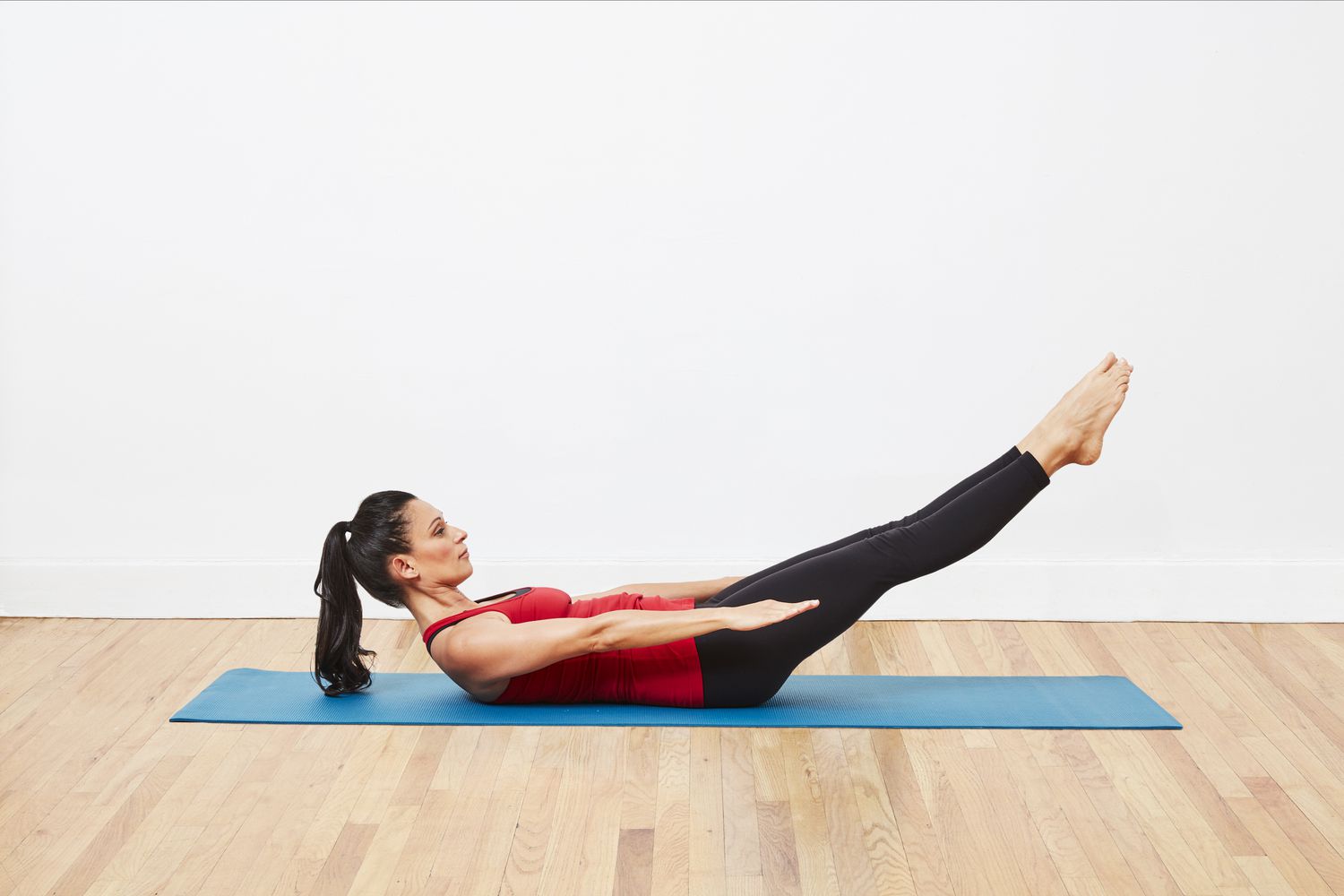
The meta-analysis notes that the diaphragm acts as both a breathing muscle and a postural stabiliser. When you perform The Hundred, your abdominal muscles are under intense, sustained isometric contraction to hold your posture against gravity.
This forces your diaphragm to do its dual job. It must continue to expand and contract for respiration while your core is dynamically stabilising your spine. If you cheat by shallow-breathing into your upper chest, you lose intra-abdominal pressure regulation, and your lower back will likely start to arch and ache. Driving the breath deep into the lower ribs and abdomen anchors the lumbar spine safely.
The Sweet Spot: Why More Is Not Better
When people find an exercise that works, the immediate temptation is to do it constantly. However, the meta-analysis revealed a fascinating nuance regarding training frequency:
Subgroup analyses indicated that a training frequency of 2–3 sessions/wk was associated with greater benefits than frequencies >3 sessions/wk.
In layman terms, the best benefits were seen with 2-3 times per week of training. Why does doing it every single day yield inferior results? It comes down to diaphragmatic fatigue. While your respiratory muscles are highly resilient, overworking them can compromise core stability mechanics, which may increase the risk of pain recurrence in individuals with chronic low back pain.
Why Pelvic Floor Coordination Matters
Another vital takeaway from the literature is the synergistic relationship between your breathing and your pelvic floor muscles. Ultrasound studies have observed that individuals with nonspecific low back pain frequently exhibit reduced mobility in *both* the diaphragm and the pelvic floor.
This aligns directly with the core tenets of Pilates. In Pilates, the “Powerhouse” is the collective collective integration of the deep abdominals, pelvic floor, and breath. True lumbar function isn’t about isolating a single muscle group. It is about restoring the synchronised, coordinated movement of the entire deep core cylinder.
At Square One Active Recovery, we build structured, progressive exercise programs that respect these physiological relationships, ensuring your rehab moves past basic abdominal bracing to complex, real-world coordination.
A Note on General Exercise Load
Because diaphragmatic fatigue can temporarily impact your postural control, the study notes it may be prudent to limit concurrent high-intensity endurance exercise during the initial weeks of targeted diaphragmatic training. Managing your total exercise load prevents your stabilising muscles from burning out, allowing for optimal structural and therapeutic adaptations. It can also reduced the risk of injury that is often associated with overtraining.
Supporting Long-Term Recovery in Singapore
Low back pain is one of the leading causes of disability and missed workdays in Singapore. Finding evidence-based, active interventions that allow individuals to self-manage their symptoms is crucial for long-term health span.
The current literature suggests that optimal clinical outcomes are typically achieved when diaphragmatic training is delivered consistently over a 3-to-12-week timeline. This is not a quick 5-minute fix; it is a neurological and mechanical re-education process that requires programmatic consistency.
If you are managing persistent lower back pain or find that your traditional core exercises are causing your symptoms to flare up, our team at Square One can help calibrate a routine tailored to your body. You can visit us at Hong Lim Complex, located just a two-minute walk from Chinatown MRT, to start your active recovery journey.
Key Takeaways for Your Recovery
Bringing this scientific research into your Pilates and rehab practice, here is how you should approach your training:
-
1
Integrate breath with spinal stabilisation. True core control requires your diaphragm to execute its dual respiratory and postural roles simultaneously. Do not hold your breath during difficult core movements.
-
2
Stick to the frequency sweet spot. Aim for 2–3 targeted diaphragmatic or Pilates sessions per week. More than three sessions can cause diaphragmatic fatigue, which temporarily reduces spinal control.
-
3
Modify challenging movements like The Hundred. If a full Pilates Hundred causes your back to ache, regress the exercise. Keep your feet flat on the floor or in tabletop, and focus entirely on a controlled 5-count inhale/exhale rhythm expanding your lower ribs.
-
4
Commit to a multi-week timeline. Clinical changes require 3 to 12 weeks of consistent training. Prioritise structural progression over immediate, short-term symptom chasing.
-
5
Incorporate diaphragmatic training into multimodal care. Diaphragmatic exercises are a powerful adjunct to conventional rehabilitation and progressive loading, not a standalone replacement for a comprehensive plan.

