
I don’t claim to know or practise yoga. Yoga is one of the things that is fairly foreign to me and I don’t see any value in trying anytime soon. That is not to say that yoga has no benefits to everyone, but more of that what yoga can deliver is not something I am interested in.
One of my reservations when it comes to yoga, among many amateur practitioners, is their lack of strength. Although yoga does involve pushing motions and poses, it is still quite strange to me that people who have done years of yoga can still objectively lack strength. Why is this the case?
The origin of yoga
Perhaps we have been getting it all wrong. Is it possible that yoga is not a physical exercise? Thus, trying to get physical benefits out of yoga practice may not entirely be reasonable?
Yoga’s origins trace back thousands of years in India. It began more of as a holistic practice encompassing asanas (physical postures) and pranayama (breathing techniques) that is more spiritual than physical. From my understanding, the objective of yoga is to achieve (?) inner peace or self-actualisation through harmony between the mind and body.
It is true physical components are present in yoga. However, these aspects are secondary to the mediation element. The core purposes, back in the day at least, is about being able to still and undisturbed. Some also describe it as a tool for abstinence to burn karma and prevent new karma from forming, thus liberating an individual from the cycle of rebirth.
All literature on yoga seems to virtually agree that becoming flexible and being able to achieve certain aesthetics of yoga postures are not part of the objectives of yoga practice.
What does yoga look like in modern Singapore
Fast forward to today in modern Singapore, yoga has been thoroughly repackaged. Walk into any of Singapore’s countless yoga studios and you’ll find a myriad of options: vinyasa flow, yin yoga, aerial yoga, trapeze yoga, hot yoga, power yoga. Most of these classes are more modern interpretation than yoga as it was meant to be.
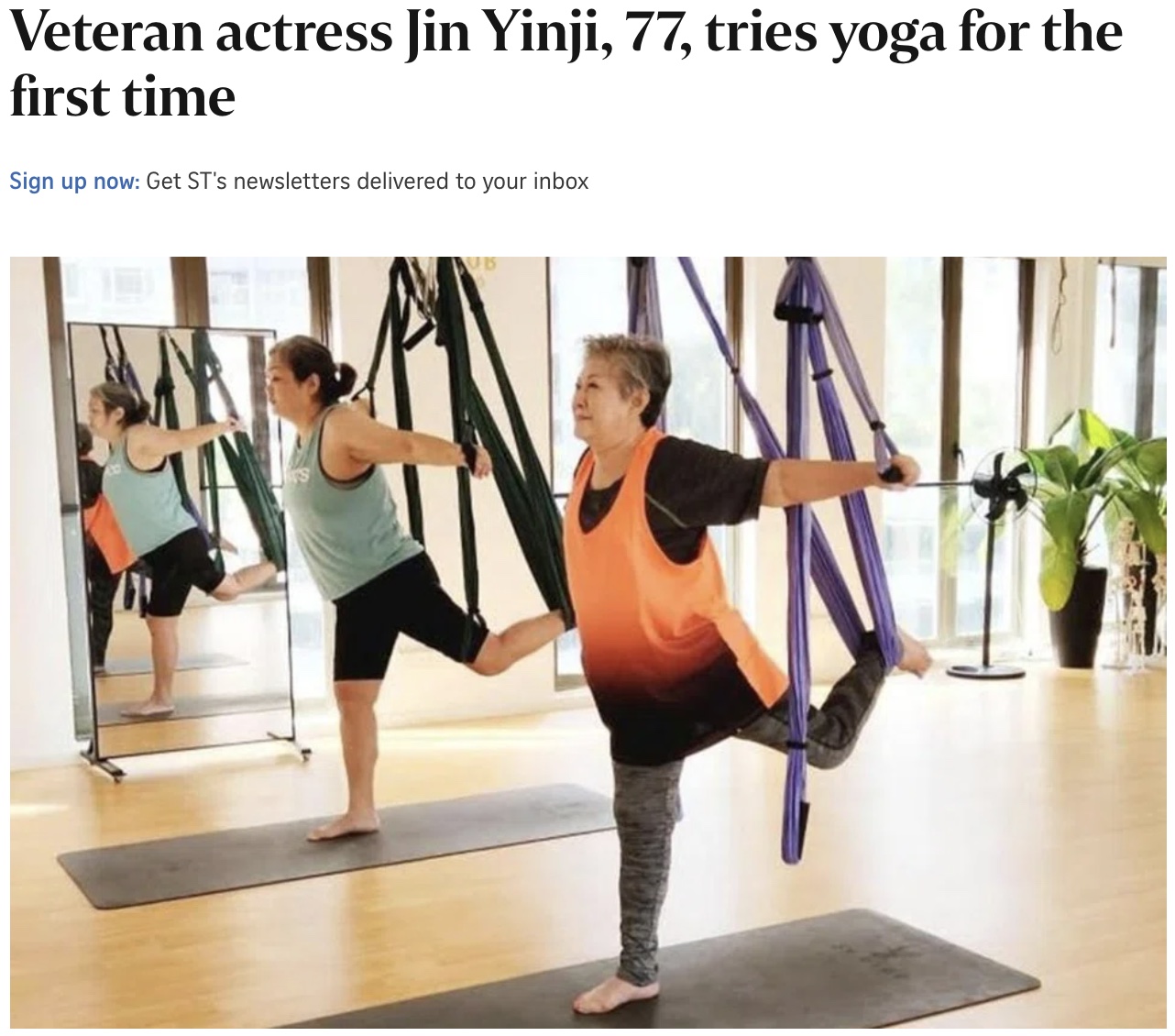
Classes tend to run on tight schedules. They are usually around about an hour long and led by an instructor in athleisure who will guide you through a sequence of movements.
Today, yoga in Singapore is more lifestyle than spiritualism. The focus, even between studios, seem to converge on the physical aspects of yoga practice. A perfunctory “namaste” at the end of classes do perhaps acknowledge the spiritual roots, but not quite enough to consider it a spiritual practice.
What is the right yoga technique?
If the origin of yoga was never about the movements, poses, or physical benefits to begin with, who decides who is the right techniques for yoga? I think this is when things lines start to blur.
Take for example the crow pose (bakasana). From a physical perspective, the crow pose requires strength, balance, and also wrist mobility. It’s one of the exercises that they make you do during a handstand class, which I truly struggle with cos my wrists cannot.
There are technique cues that are available to help me achieve the physical aspect of the pose. For example, leaning more forward to get into a balanced state or pressing more with my wrist to stop myself from falling over.
But is this the right technique if the objective of yoga was never about the physicality to begin with? If yoga is not about the poses, then are we still doing yoga if being able to perform said poses is our end goal?
Circling back to my original question, who decides what is right?
Meditation guru charges up to $1,000 for ticket to one day event
It’s really hard for layperson or outsiders like me to tell who are the true “thought leaders” in the yoga/meditation space. In 2024, spiritual leader Gurudev Sri Sri Ravi Shankar came to Singapore to conduct a full-day masterclass. The sold out event, held at the 1,541-seat Mediacorp campus in Stars Avenue, cost up to $1,000 to attend.
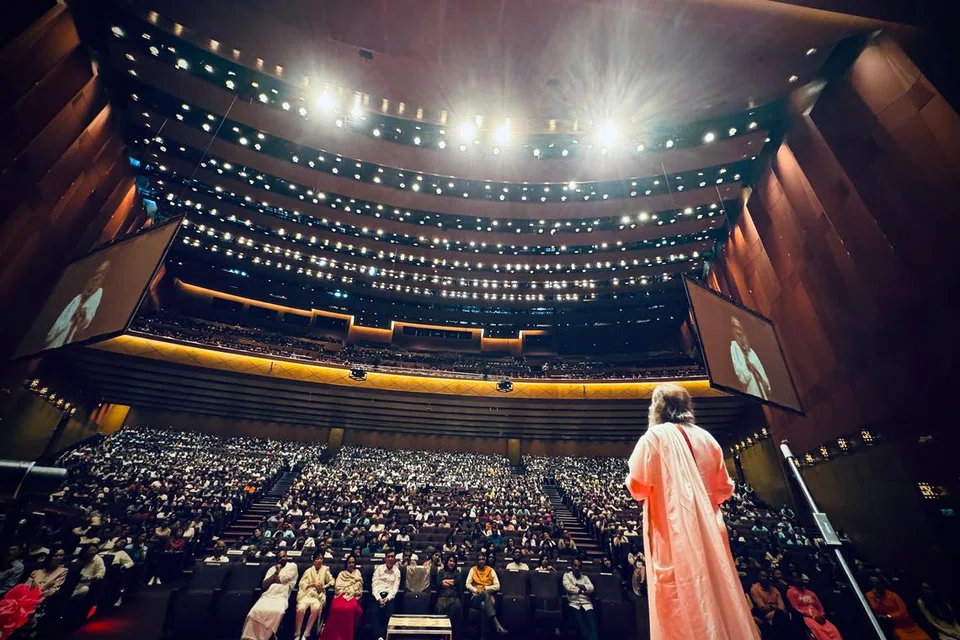
The gurudev received the breathing technique he was teaching after a 10-day silence observance on the banks of the Bhadra River. His main interest (?) in teaching his breathing technique is to harmonise the body, mind and spirit and to promote mental well-being. It’s sort of like like yoga spiritualism approach for mental health.
From a layperson’s perspective, it’s very hard to tell if he’s legit or not. I mean, what do we know right? It’s not like yoga or meditation has some sort standardised benchmark we can refer to. What I can say though is that meditation does have compelling benefits, even within an evidence-based perspective for chronic pain.
Mindfulness practice for low back pain
There is a lot of debate over what is meditation and what is mindfulness practice, as well as the differences between the two of them. I am not going to attempt to define them. What I can say is that mindfulness practice has been reported to be favourable for chronic pain, even in clinical guidelines.
While there is contention that mindfulness practice is not entirely meditation, there are parallels between them. Therefore, it is not implausible that meditation can be empirically beneficial for us, via means of improved mental well-being.
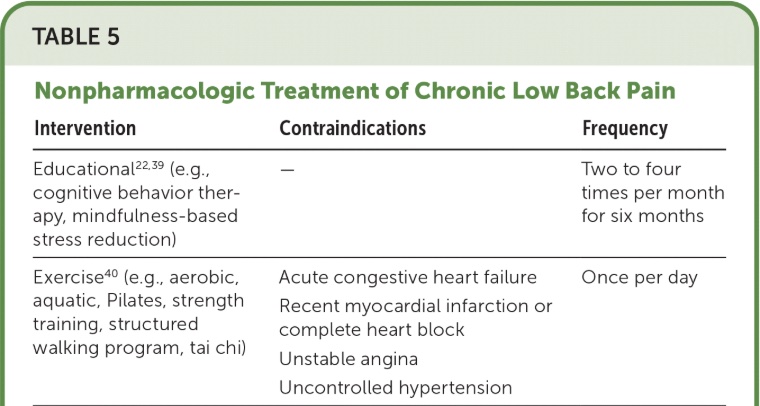
Clinical guidelines from American Academy of Family Physicians (AAFP) and American College of Physicians (ACP) do endorse mindfulness-based stress reduction for treatment of low back pain. However, the World Health Organisation and Lancet low back pain guidelines report insufficient evidence for an affirmative recommendation to be made.
The teacher training knowledge gap
Yoga teacher training don’t train instructors about (physical) strength or strength training. Most yoga teacher training programs today, including the popular 200-hour and 500-hour certifications, are still focused on teaching yoga poses. Other aspects can include anatomy, biomechanics, teaching methodology such as cueing, adjustments and modifications, philosophy, etc.
I think philosophy refers to the spiritual aspects of yoga but I cannot be sure. If so, it will be about the eight limbs of yoga, chakras, sanskrit terminology, meditation techniques, and the spiritual lineage of the practice.
Modern teaching training is trying to find a bridge between the physical and spiritual aspects of yoga. In doing so, they water down the original objective of yoga practice and more heavily emphasise yoga as a physical exercise. There is nothing inherently wrong with that but raises the question of what makes yoga yoga. At what point does yoga stop becoming yoga?
What’s missing from most, if not all, yoga teacher training is principles of strength training. Concepts such as progressive overload, programming and periodisation, nutrition to increase muscle mass, strength testing and assessment are all missing from a typical yoga teaching programme.
Does it still surprise us that many yoga practitioners lack strength?
Pull movements are sorely lacking from the yoga repertoire
One of the most glaring shortcomings in yoga as a strength-building practice is the near-total absence of pulling movements. Yes, there are technically pulling motions involved in yoga. You do indeed literally pull your knee toward your chest in apanasana (knees-to-chest pose) or draw your foot toward your head in variations of dancer’s pose.
The problem with these pulling movements is that they don’t meaningfully load the muscles responsible for pulling strength. They’re positional adjustments. You’re using your arms to manipulate a limb into a stretch or to deepen a joint’s range of motion, not to overcome significant resistance. There’s no engagement of the lats, rhomboids, rear deltoids, or biceps in any meaningful way that would build pulling strength.
Compare this to pulling-specific exercises such as pull ups, rows, face pulls or lat pulldowns where you’re working against substantial load through space. These movements create tension in the muscle chain, forcing your muscles to contract forcefully and adapt over time. This is the prerequisite for strength gains.
Yoga sequences, by contrast, are dominated by pushing patterns. Chaturanga, upward dog, plank variations, etc, all involve pressing away from the ground.
Unfortunately, we don’t find true horizontal and vertical pulls in yoga. This creates, ironically, an imbalance. You end up with practitioners who might have decent anterior chain strength from all that pushing but completely underdeveloped backs. This leaves them vulnerable to postural problems that they are supposed to resolve: rounded shoulders, forward head posture, or even shoulder dysfunction from the muscular imbalances.
If you want a balanced, strong body, you can’t just push. You need to pull with equal intensity. Yoga doesn’t give you that.
People do get stronger from yoga, mind you
No, I am not saying that people cannot get stronger from yoga. People absolutely do. If you are someone who are completely sedentary, you will definitely get stronger doing yoga. In fact, you will get stronger regardless of what exercises you do.
However, the limitations to your strength gains are limited. It will also not compare to someone who participates in two days of muscle strengthening activities as is recommended by World Health Organisation and MOH Singapore.
Even with years of yoga practice, it is not reasonable to expect yourself to be able to build muscles from it alone.
Do the right exercises if you want to get stronger
As a chiropractor, people often ask me for exercise recommendations. Yoga is very popular because we see yogis looking fit and athletic in their athleisure gear. However, there are two major assumptions here that need challenging.
First, looking fit doesn’t mean they are actually fit or strong. Looks can be deceiving! A lean physique and the ability to contort into impressive poses don’t necessarily translate to functional strength. Someone might look athletic while still struggling to carry their groceries up a flight of stairs or unable to perform a single pull-up.

Second, yogis don’t always only do yoga. A lot of them participate in other types of exercises from Pilates to calisthenics or even HYROX. That Instagram yogi with the enviable physique? There’s a good chance they’re also lifting weights or following some kind of structured resistance program. Their strength isn’t coming from yoga alone, even if that’s all you see them posting online.
Yoga for mobility and flexibility
Yoga is also popular because it’s gentle on the joints and it’s supposedly good for posture. I think it’s true that if you were to keep practising those poses, you do eventually end up with better posture through improved mobility and flexibility. The ability to access greater ranges of motion and spend time in various positions can certainly help you move more freely.
However, remember yoga is not designed to do that. Better posture might be a side effect of regular practice, but it was never the original goal. And here’s the crucial part: mobility and flexibility alone don’t guarantee good posture.
Even after you have sufficient mobility and flexibility to assume the posture that you want, you still need to consider if you have the strength to support yourself in that said posture. Not having sufficient musculature development, especially in your posterior chain, will ultimately lead to pain or regression back into your previous posture.
Being able to passively stretch into an upright position is very different from being able to actively hold that position against gravity for hours while you work, commute, or go about your daily life. That requires muscular endurance and strength that yoga, especially modern yoga, simply doesn’t build effectively.
Is yoga an exercise?
It is not that yoga is not an exercise. It absolutely is. Yoga is just not an exercise designed for strength training. Even in modern yoga practices that claim to focus on the physical, it is still very poorly structured to deliver strength gains. The teacher training lacks progressive overload principles, the practice is dominated by pushing movements while completely neglecting pulls, and there’s no framework for measuring or ensuring progress.
If your goal is to get stronger, build muscle, increase your one-rep max, improve your functional capacity, or develop a more resilient body, then you need to do exercises designed for that purpose. We are talking resistance training with barbells, dumbbells, kettlebells, or your own bodyweight performed with progressive difficulty. It means following a structured program that includes both pushing and pulling movements. It also means eating enough protein to support muscle growth.
If your goal is stress relief, improved flexibility, a mindful movement practice, or spiritual exploration, then yoga is an excellent choice.
The mistake isn’t in doing yoga. The mistake is expecting yoga to deliver something it was never designed to provide, then being disappointed when years of practice don’t translate to the strength outcomes you wanted. That’s not yoga failing you. It is you failing to match the tool to the task.
BOOK A CHIROPRACTOR IN SINGAPORE
Based in Singapore, Square One Active Recovery offers treatments with a very big difference. With our evidence-based exercise approach, you can achieve your recovery goals in just 12 weeks. Not getting results from your chiropractor, TCM doctor or physiotherapist? Talk to us and find out how we can take your recovery to the next level.
Our goal? To make our own services redundant to you.
*We do not offer temporary pain relief such as chiropractic adjustments, dry needling, or any form of soft tissue therapy.

