
Chiropractic Rehab in Singapore
Lumbar Facet Syndrome Treatment
in Singapore
Are you experiencing persistent lower back pain that flares up when you lean backwards, twist your waist, or get out of bed in the morning? You might be dealing with lumbar facet syndrome. Lumbar facet syndrome is a common mechanical source of spine discomfort where the small joints linking your vertebrae become irritated and inflamed. At Square One Active Recovery, located right in the Chinatown district of Singapore, our chiropractor focuses on active movement rehabilitation rather than passive dependency to help you regain full spinal function.
What is Lumbar Facet Syndrome?
- •
Morning Stiffness: Back ache and stiffness that feel worse upon waking up or after long periods of inactivity.
- •
Extension Triggers: Pain that worsens when leaning backwards, standing for prolonged periods, or twisting at the waist.
- •
Pseudo-Radicular Referral: Discomfort that may spread into the buttocks or thighs but typically stops above the knee.
Active Care
Our Active Recovery Approach in Singapore
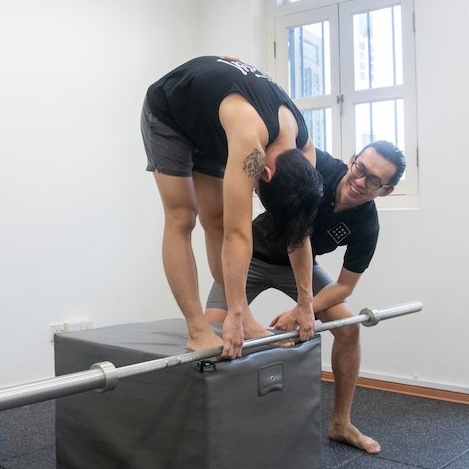
Active Rehabilitation focuses on restoring natural movement patterns and joint resilience. This can be done through pilates and even weight training.
We do not believe in passive treatments that leave you dependent on temporary fixes. When you visit our Chinatown clinic, your personalised care plan empowers you through active solutions backed by studies such as recent clinical insights on low back rehabilitation:
Spinal Mobility
Movement Control
Targeted movement protocols designed to calm joint irritation, reduce muscle guarding around the lower back, and restore comfortable bending and twisting ranges.
Progressive Loading
Tissue Resilience
Graduated strengthening exercises that build robust physical capacity in the spinal erectors and core muscles to better support your back during daily tasks.
Self-Management Education
Confidence Building
Equipping you with clear knowledge of your condition so you can overcome fear-avoidance and take active control of your long-term spinal health.
Ergonomic Integration
Practical Adaptations
Customised desk setups and movement adjustments tailored to office life in Singapore without restricting your routine.
Differential Diagnosis
Other Potential Causes of Lower Back Pain
Because lower back pain can originate from various structures in the spine and pelvis, our thorough clinical evaluation helps rule out other possibilities in plain language:
Disc Bulge or Herniation
Irritation of the intervertebral disc where pain often worsens with bending forward or sitting, sometimes causing sharp pain travelling down the leg.
Sacroiliac Joint Dysfunction
Pain located in the lower pelvis and tailbone area that typically flares up when rising from a chair or climbing stairs.
Myofascial Back Strain
General tightness or muscle fatigue in the lower back muscles resulting from sudden lifting or unaccustomed physical work.
SPINAL INSTABILITY
Weakness in the spinal stabilisers such as the multifidus can lead to pain with reaching movements.
Movement Integration
How Pilates Helps With Lumbar Facet Syndrome
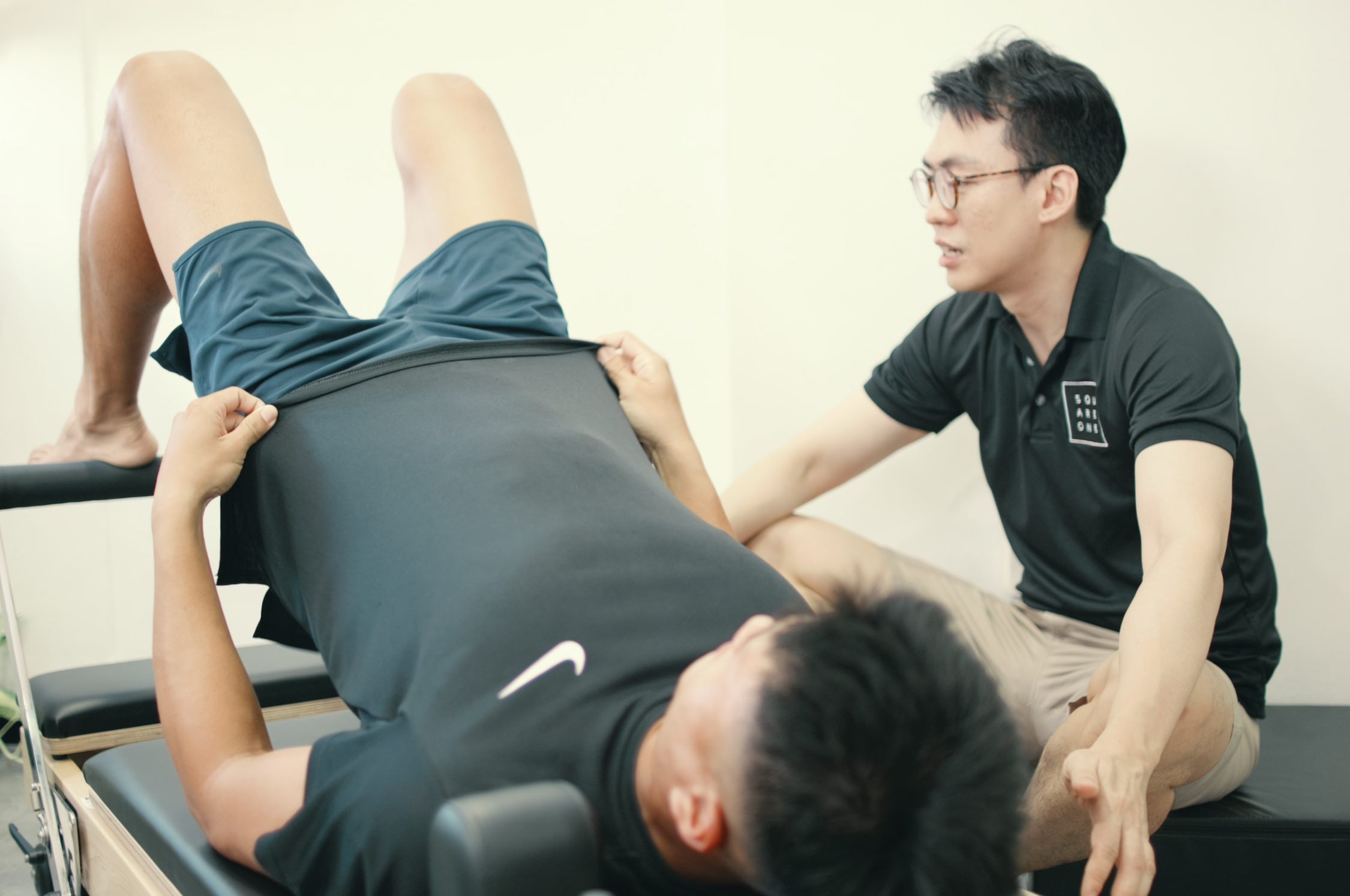
Clinical Pilates integrates targeted core stability to reduce excessive lower back facet joint compression. For sedentary individuals, pilates can be a bridge to muscle strengthening exercises.
Clinical Pilates plays a valuable role in managing lumbar facet syndrome by focusing on core stability, pelvic control, and controlled spinal articulation. When facet joints are irritated, surrounding muscles often go into protective spasm.
Pilates teaches you how to move through your hips and thoracic spine while maintaining a stable, supported lumbar spine. This reduces excessive compression on the lower back facet joints during daily activities.
By improving deep abdominal breathing muscles and gluteal muscle engagement, Pilates helps distribute physical loads evenly across your entire body rather than overloading vulnerable lower back joints.
Local Case Study
Helping a Client Near Chinatown
The Client: A 48-year-old desk worker based near Hong Lim Complex visited Square One Active Recovery experiencing sharp lower back stiffness every time they stood up or twisted at their desk.
Our Solution: We utilised an active chiropractic rehab plan combined with progressive loading exercises to desensitise the irritated joints and improve movement confidence.
The Result: Within 6 weeks of targeted care at our Singapore clinic, the client regained pain-free bending, resumed light gym workouts, and mastered simple self-management strategies for work.
What Our Patients Say
“I used to dread getting out of my chair at work because of sharp back catches. The team at Square One Active Recovery taught me how to move with confidence without relying on endless adjustments. Being located right here in Chinatown made appointments so convenient.”
Service Comparison
Chiropractic Rehab vs. Clinical Pilates
| Comparison Metric | Chiropractic Rehab | Clinical Pilates |
|---|---|---|
| Primary Focus | Progressive loading to improve movement pattern and weight tolerance for spinal health | Core stability, neuromuscular control, and low-load endurance and flexibility training |
| Best Suited For | Chronic spinal issues that are not responding to previous treatment | Sedentary individuals looking to exercise for the first time or with poor core |
| Core Modality | Body weight exercises, resistance bands, and functional gym loading | Pilates apparatus such as mat, reformer, cadillac/trapeze table, ladder barrel, wunda chair |
| Goal & Progression | Pain-free spine | Mobility and flexibility |
Chiropractic Clinic Location
Chinatown & Raffles Place
Located in the Hong Lim Complex in the Chinatown area, Square One Active Recovery serves professionals across Singapore, minutes from Chinatown and Maxwell stations.
Accessibility
Raffles Place CBD
Walking distance from the CBD. Ideal for before work, lunchtime, or after work appointments.
Chinatown (NEL, DTL)
Easily accessible from the MRT station. Located next to Chinatown Point and directly above Hong Lim Food Centre.
Maxwell (TEL)
Only five minutes walk from Maxwell station.
FREQUENTLY ASKED QUESTIONS
What services do you offer at Square One Active Recovery for lumbar facet syndrome?
We offer a comprehensive, evidence-based approach designed to address lower back pain without relying on passive adjustments. Our services combine chiropractic rehabilitation to safely restore spinal mechanics and reduce muscle guarding, Clinical Pilates for precise core stability and movement control, and progressive loading routines to rebuild your trunk strength. Our goal is to guide you through recovery so you can regain complete physical independence.
What causes lumbar facet syndrome, and what are its main signs?
Lumbar facet syndrome occurs when the small facet joints linking your vertebrae become irritated, inflamed, or worn down due to age, poor posture, or repetitive twisting. Common signs include morning stiffness, lower back discomfort that worsens when leaning backwards or twisting, and sometimes mild pain referring into the buttocks or thighs.
How does active therapy help lumbar facet syndrome?
While passive treatments offer temporary relief, true long-term recovery requires active exercise to build spinal resilience. At Square One Active Recovery, we guide you through chiropractic rehab and movement protocols that restore joint capacity and core stability without relying on painful passive manipulations.
How long does recovery take with active therapy?
Recovery times vary depending on the chronicity of the condition, but active musculoskeletal care can substantially accelerate functional recovery compared to passive rest alone. Many patients experience noticeable improvements in movement confidence and daily comfort within the first few weeks of consistent care.
Do I need a doctor's referral to book an appointment?
No, you can book an initial evaluation directly with our clinicians at Square One Active Recovery.
Where is your clinic located?
Our practice is conveniently located at Hong Lim Complex in Chinatown, Singapore, easily accessible via MRT and a short walk from Raffles Place and the CBD.
READY TO MOVE WITHOUT PAIN?
Book Your Lumbar Facet Assessment Today
Don’t let lower back stiffness dictate your routine. Take the first step toward recovery with trusted active care in Singapore.
No referral needed • Evidence based active recovery • Singapore