
Have you ever dropped into a deep squat, felt completely fine strength-wise, but reached the bottom only to feel physically stuck or blocked? Or perhaps your shoulders click and cluck every time you reach overhead or move your arms in wide circles? Many people assume these sensations are just part of getting older or having tight muscles. However, they are often early warning signs of poor joint centration.
Before a joint develops chronic pain, tendonitis, or structural wear and tear, it usually loses its optimal alignment during movement. Understanding joint centration and how to restore it with active movement modalities like exercise rehabilitation and Reformer Pilates is one of the most effective ways to build lasting mobility, strength, and joint longevity.
1. What Is Joint Centration and Why Does It Matter?
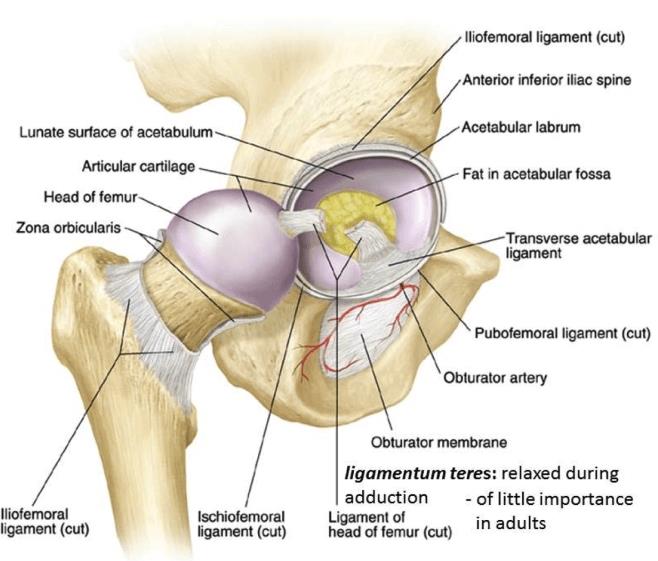
Joint centration refers to the optimal positioning of joint surfaces throughout their entire range of motion. When a joint is centrated, the axis of rotation remains centered, allowing joint forces to distribute evenly across cartilage and surrounding structures.
Joint centration is especially critical for highly mobile ball-and-socket joints like the shoulder (glenohumeral joint) and hip. Because these joints move in all three planes and rely heavily on circumduction (a continuous circular movement combining flexion, extension, abduction, and adduction), they trade inherent structural stability for maximum mobility.
Without active centration driven by deep dynamic stabiliser muscles, the ball shifts off-center within the socket during movement, creating localised friction and altered biomechanics.
The Train Track and Car Alignment Analogy:
- The Train Track: Imagine a train running on a track. When the train wheels sit perfectly centered on the rails, the train glides effortlessly with minimal friction. If the wheels shift off-center, they scrape heavily against the edge. The train still moves, but it grinds, produces noise, wears down unevenly, and risks derailing under high speed or heavy load.
- Car Suspension: Similarly, consider a car with misaligned wheel tracking. You can drive a car with poor wheel alignment for miles, but over time, the tires wear out prematurely, fuel efficiency drops, and steering degrades. In your body, poor centration means tendons and labral tissue grind against bone, leading to clicking, catching, and eventual pain.
2. Early Warning Signs of Poor Joint Centration
Most people wait for sharp pain before addressing a joint issue. However, your nervous system sends clear mechanical signals long before structural tissue damage occurs.
1. Auditory Clues (Clicking and Clucking): A painless click, cluck, or popping sound during circumduction often indicates that a tendon is snapping over a bony prominence or that the joint head is subtly gliding off-center within the socket.
2. The End-Range Block: You drop into a deep squat or reach overhead. Muscularly, you have enough raw power to complete the movement, but mechanically, you feel stuck or blocked. This happens because the joint head has glided out of its optimal centrated position, mechanically pinching against the lip of the socket.
When a joint consistently loses centration, it leads to poor joint stability and dysfunctional movement patterns where prime movers overwork to grip the joint together.
3. From Poor Centration to Impingement and Labral Tears
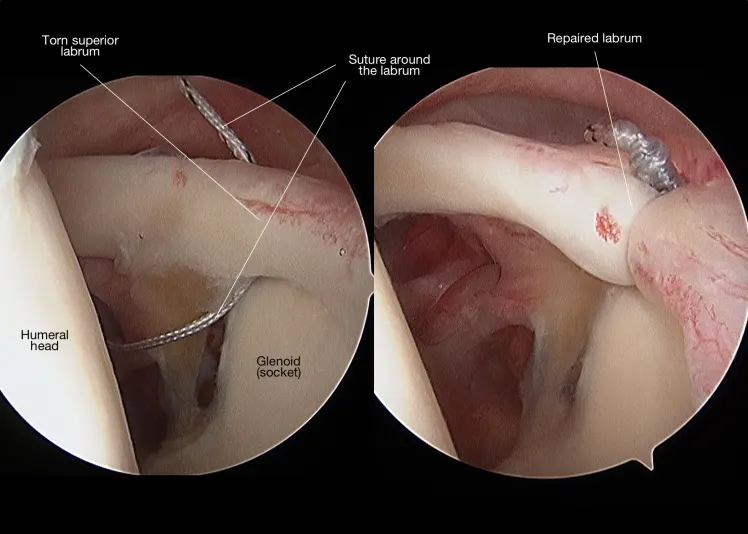
When poor centration is ignored, mild clicking and end-range catching often progress into structural joint breakdown. Both the hip and shoulder share a critical anatomical structure called the labrum. The labrum is a ring of dense fibrocartilage that deepens the shallow bony socket, maintains fluid suction seal, and keeps the joint secure.
The Pathway to Impingement Syndrome:
When deep dynamic stabilisers fail to centrate the bone head, the ball migrates off-center during movement. In the shoulder (glenohumeral joint), the head of the arm bone can glide upward and pinches soft tissues against the overhead bone arc, leading to subacromial impingement syndrome.
In the hip, if the head of the thigh bone glides too far forward or upward, it can alter the joint mechanics between the femur and pelvis to cause a painful hip condition known as femoroacetabular impingement (FAI).
How Labral Tears Cause Excruciating Pain:
With repeated impingement and un-centrated glides under load, the bone head acts like a chisel against the rim of the socket. Over time, this shear force damages or detaches the delicate cartilage ring, resulting in a labral tear.
Because the labrum is rich in nerve endings, a tear can trigger excruciating, deep-seated pain. Patients often experience severe catching, sharp pinching, a feeling of the joint “giving way,” and intense night pain. Furthermore, losing the labrum’s suction seal reduces passive joint stability, forcing local muscles to work much harder to hold the joint together. This extra work lead to repetitive stress and a vicious cycle of muscle guarding, inflammation, and chronic pain.
4. Why Reformer Pilates Is an Exceptional Tool for Centration
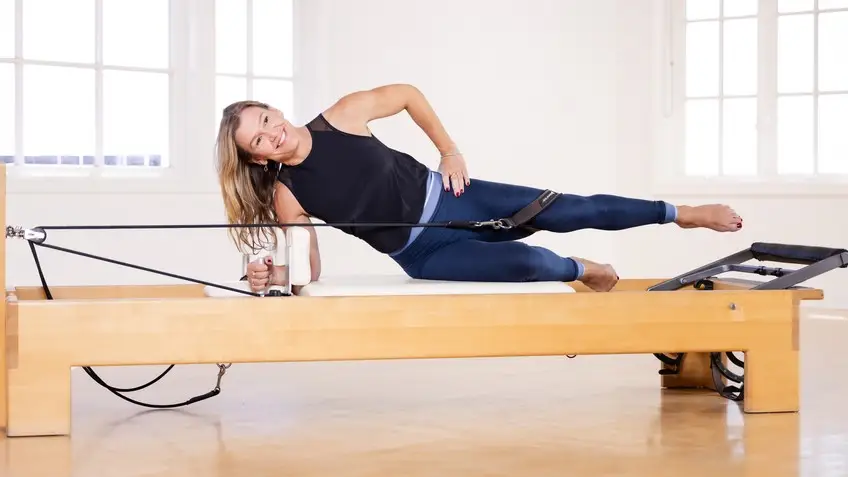
Reformer Pilates offers unique mechanical advantages for retraining joint centration and dynamic stability.
- Unstable Straps and Loops: Exercising with hands or feet in hanging straps introduces multidirectional instability. Much like performing ankle rehabilitation on a wobble board or BOSU ball, forcing the limb to negotiate an unstable surface sharpens proprioception and forces deep stabiliser muscles to fire rapidly.
- Progressive Spring Feedback: Unlike traditional weights that provide constant resistance against gravity, springs increase tension the further they are stretched. This progressive force creates gentle axial compression back into the joint socket, helping seat and centrate the bone head throughout the motion.
- Non-Weight-Bearing Carriage: Working lying down or seated on the carriage removes full bodyweight demands. This unloads compressive forces, allowing the nervous system to focus on pure motor control without compensatory bracing.
5. Comparison of Training Environments for Joint Stability
| Modality | Resistance Type | Proprioceptive Input | Role in Joint Centration |
|---|---|---|---|
| Reformer Pilates | Progressive spring tension with vector variance | High (unstable loops, tactile spring pushback) | 🌟🌟🌟 Ideal for early-stage motor control and non-weight-bearing joint seating |
| Unstable Equipment (BOSU / Wobble) | Bodyweight and reactive surface deflection | Very High (rapid micro-adjustments required) | 🌟 Refinement of reflex stabilisation and lower limb joint positioning 🚫 No “pushback” effect 🚫 Inappropriate for patients who cannot weight bear properly |
| Free Weights (Dumbbells) | Constant linear gravitational load | Moderate (requires spatial control) | ✅ Builds global capacity and load tolerance once centration is established 🚫 Does not specifically improve centration 🚫 Centration can worsen due to irritating from loading on poor movement pattern |
| Standard Gym Machines | Fixed path pulley or lever resistance | Low (machine dictates movement plane) | ✅ Isolates prime movers for strength training 🚫 Bypasses deep stabilisation requirements with virtually no benefit for centration |
6. Four At-Home Exercises for Joint Centration
You do not need a full reformer setup to start retraining joint mechanics. These four exercises focus on deliberate control and localised stabilisation, though they come with distinct trade-offs compared to clinical reformer apparatuses.
Shoulder Centration
1. Forearm Wall Slides with Resistance Band
How to do it: Place a light loop band around your wrists and stand facing a wall. Keep forearms parallel against the wall and press outwards against the band. Slowly slide forearms upwards while maintaining outward pressure.
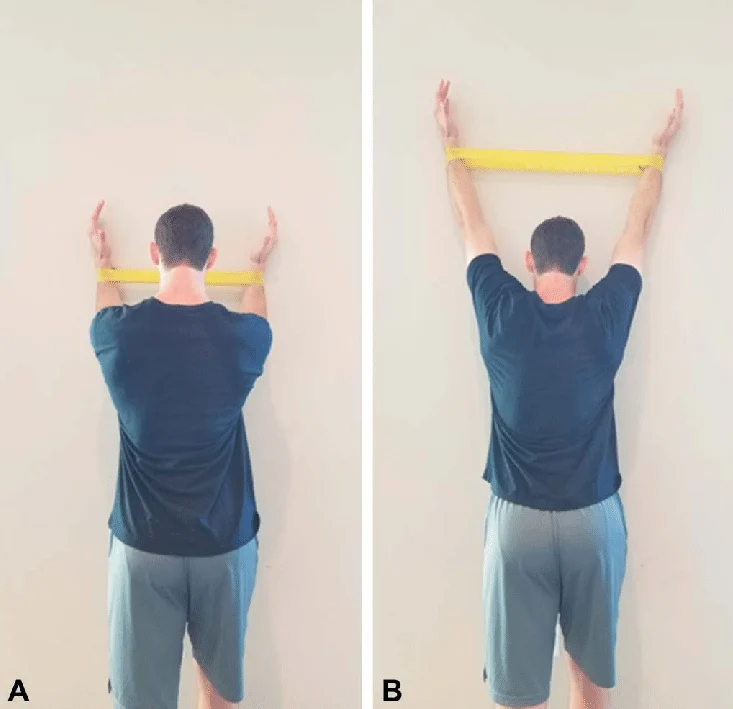
How it helps: Outward tension activates the posterior rotator cuff (infraspinatus/teres minor) while forward wall pressure recruits the serratus anterior. This co-contraction glides the humeral head inferiorly, centering it within the glenoid fossa as you move overhead.
Limitations vs Reformer: While great for basic plane elevation, the band provides fixed lateral resistance rather than multi-axis instability. It lacks the dynamic vector shifts of a reformer strap, meaning your stabilisers do not have to adapt continuously across 3-dimensional space.
2. Bottom-Up Water Bottle Holds & Rotations
How to do it: Hold a partially filled water bottle upside down by its base so the heavy water mass sits above your hand. Hold your arm at 90 degrees in front of you and perform small controlled inner and outer rotations without tipping the bottle.
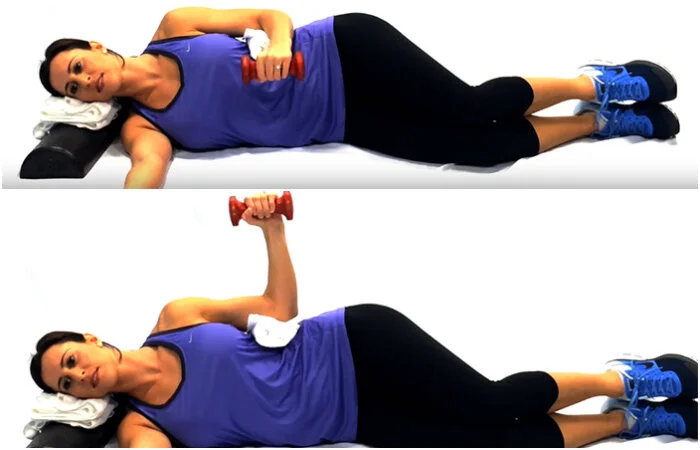
How it helps: The sloshing liquid creates unpredictable, micro-unstable forces. This forces rapid, reflexive firing of the deep rotator cuff to stabilise the arm bone, teaching your brain to maintain centration under variable dynamic feedback.
Limitations vs Reformer: Resistance relies entirely on gravity pulling downward. You cannot recreate horizontal spring compression that directly draws or pushes the joint head into the socket through extended ranges of motion.
Hip Centration
1. Quadruped Hip Controlled Articular Rotations (CARs)
How to do it: On all fours with a locked, stable spine, move one hip through its maximum controlled circular path (bringing knee to chest, abducting out to the side, rotating back into extension, and sweeping down).
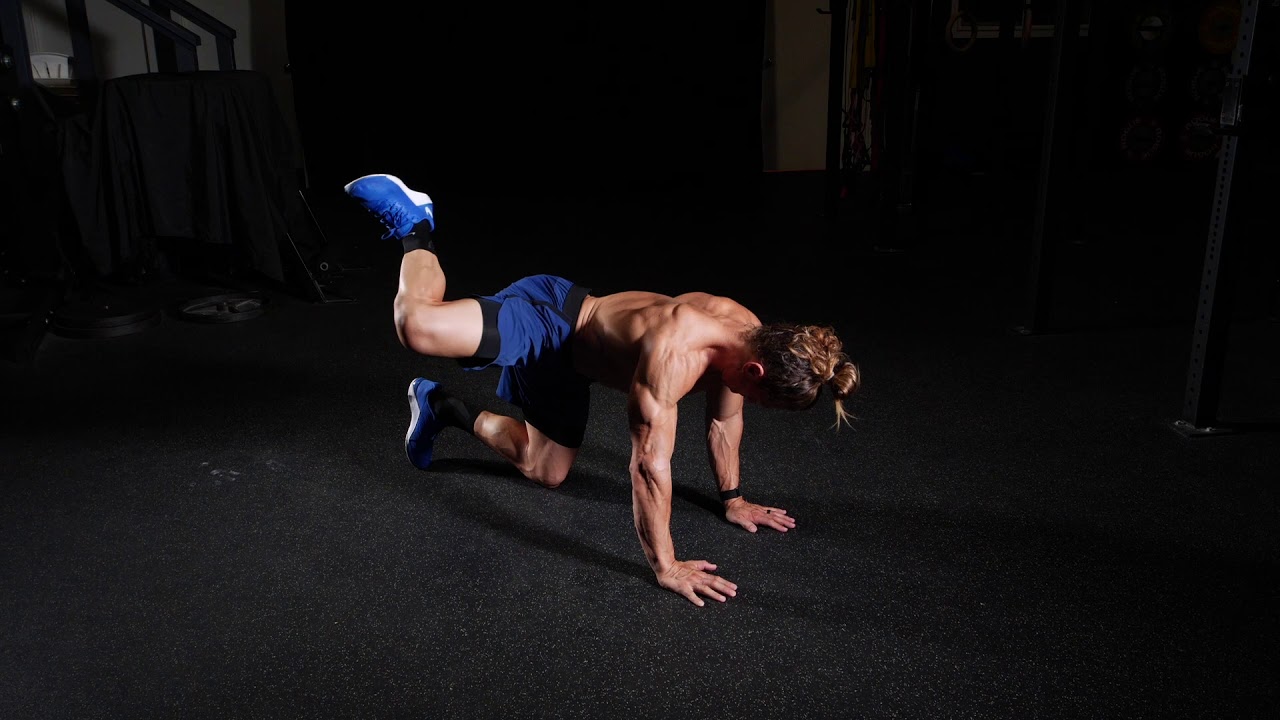
How it helps: CARs actively map outer range motor control, forcing the deep gluteal rotators and iliopsoas to smoothly guide the femur through 360 degrees of rotation without allowing compensating pelvic motion. If there is a lot of clicking or snapping, reduce the size of rotation to a range that can achieve centration.
Limitations vs Reformer: Excellent for active range mapping, but there is zero external spring resistance pushing the femur back into the hip socket to actively enforce centration. In theory, you could try to anchor a heavy resistance band to pull the femur inward during CARs, but in practice, keeping a band in a stable position while performing multi-axis circumduction is nearly impossible.
2. Side-Lying Banded Clamshell with Axial Compression
How to do it: Lie on your side with knees bent and a loop band around your knees. As you lift your top knee open against band tension, use your top hand to physically push down on your femur bone, driving gentle force down into your hip joint. You can also drive the heel into the ground or the supporting heel for axial compression of the femur into the pelvis.
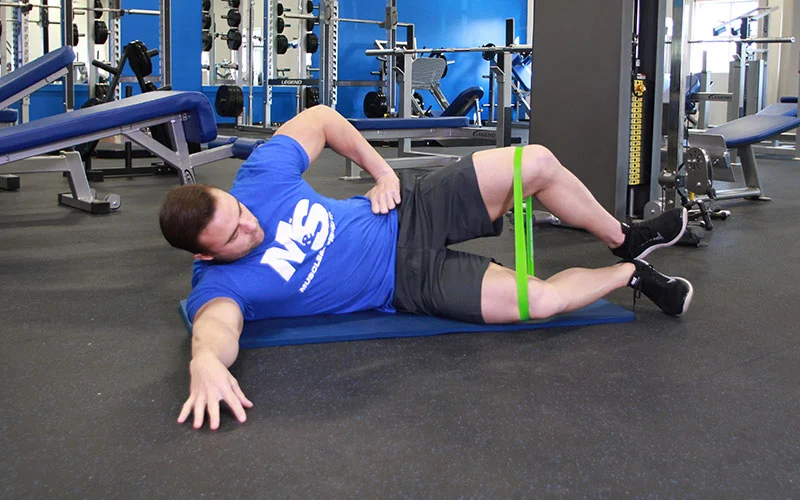
How it helps: The manual downward pressure creates an artificial compressive load along the thigh bone, encouraging deep local rotators to seat the head of the femur centered in the acetabulum instead of letting it migrate anteriorly during rotation.
Limitations vs Reformer: Self-applied hand pressure is inconsistent and hard to sustain uniformly throughout the full movement arc. Exercise makes sense in theory but is awkward and difficult to perform in real life. A reformer spring applies smooth, continuous, vector-specific resistance throughout the entire motion.
Key Takeaways
When building joint stability and restoring optimal movement mechanics, keep these core principles in mind:
-
1Listen to Mechanical Warning Signs: Clicking, clucking, and end-range blocking sensations occur when joints glide off-center long before chronic pain develops.
-
2Prevent Impingement & Labral Damage: Poor centration causes the bone head to pinch surrounding cartilage. Over time, this leads to impingement syndromes and excruciating labral tears in both hips and shoulders.
-
3Leverage Dynamic Feedback: Tools like Reformer Pilates straps and unstable loads sharpen proprioception, forcing deep stabiliser muscles to keep the joint seated throughout its movement arc.
If you are experiencing joint clicking, end-range stiffness, or persistent movement blocks, book an assessment with Square One Active Recovery today to rebuild your movement foundation.

