
Between the endless hours hunched over laptops in your CBD office and the physical toll of our weekend workout routines, “tech neck” and lower back stiffness have practically become a norm in Singapore.
If you are thinking about visiting a chiropractor to get your spine checked, you might be surprised to learn that it isn’t a one-size-fits-all practice. Chiropractors utilised a range of specialised techniques depending on your body’s structural needs, posture goals, and comfort levels.
Here is a breakdown of the four major chiropractic techniques you will find in Singapore clinics today, and how they can help you unlock better spinal health.
1. The Diversified Technique: The Universal Gold Standard
If you have ever seen a classic chiropractic adjustment online, you are likely looking at the Diversified Technique. As the most widely practised chiropractic method in the world, the Diversified Technique is highly favoured by many general family chiropractic clinics in Singapore.
- How it works: The chiropractor uses their hands to apply a low-amplitude, high-velocity thrust to specific joints of the spine or extremities.
- What it does: It aims to restore proper joint mechanics, improve range of motion, and unblock restricted joints.
- Best for: General neck and back pain, stiffness, and those looking for immediate relief and improved joint mobility after long hours at a desk.
What sets the Diversified Technique apart is that it is the most universal approach as it doesn’t branch out from any single, chiropractic method. Because it does not tie itself to rigid or insular philosophies, it is widely considered the least dogmatic approach, thus, the least likely to be based on pseudoscience. For this reason, the Diversified Technique is the method most frequently utilised by evidence-based chiropractors as it avoids historical dogma and is flexible enough to stay congruent with modern clinical research and objective patient outcomes.
2. The Gonstead System: The Precision Engineering Approach
Named after its developer, Dr. Clarence Gonstead (who possessed a background in mechanical engineering), the Gonstead Technique views the spine through a lens of structural foundation and structural balance. Clinics that specialise in Gonstead take an incredibly meticulous approach to diagnosis before making any physical adjustments.
- The Assessment: A typical Gonstead evaluation involves five specific criteria: full-spine X-rays, static palpation (feeling the spine at rest), motion palpation (feeling the joints move), visualisation of posture, and the use of a small heat-sensing instrument (a nervoscope) to detect nerve inflammation along the spine.
- The Adjustment: Adjustments are highly specific and localised. The chiropractor adjusts the exact segment that is misaligned, utilising custom benches and chairs. Crucially, Gonstead adjustments involve minimal twisting or rotation of the spine, making it incredibly precise and structurally stable.
- Best for: Patients who don’t mind X-rays and prefer highly targeted adjustments with minimal neck twisting.
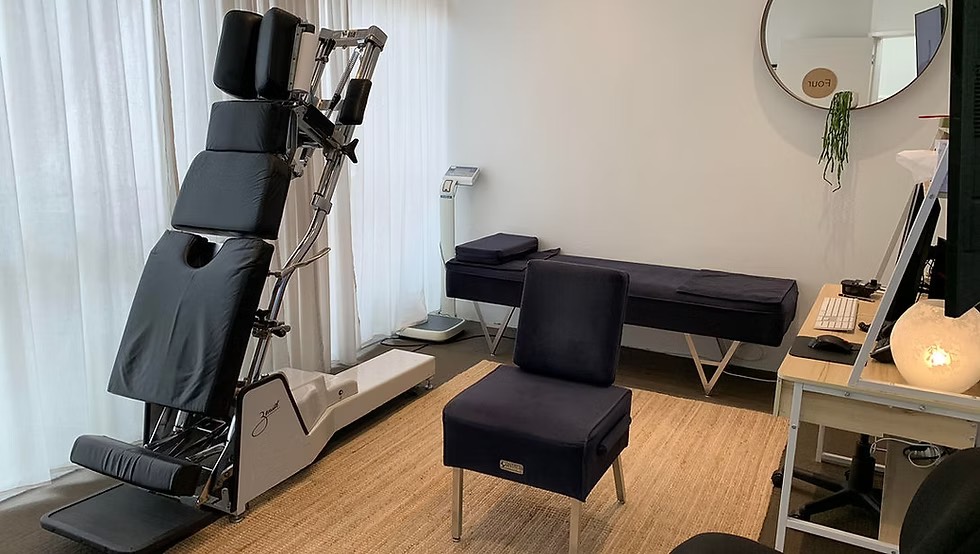
The Limitations of the Gonstead Method
Despite its reputation for engineering-like precision, the primary problem with the Gonstead method is that most of its diagnostic claims remain unverified by modern medical science. For example, motion palpation has consistently been reported in Evidence-Based Complementary and Alternative Medicine to have poor inter-rater reliability. This means if you get multiple chiropractors to palpate the same group of patients, they will frequently come back with completely different findings and “misalignments” for each patient. Because the results are highly subjective and cannot be consistently replicated between practitioners, it is difficult to accept that their motion palpation is as precise as claimed, meaning it holds very little objective diagnostic value.
Similarly, the Nervoscope, which has noticeably fallen out of popularity in recent years, is not a validated instrument of medical measure. Clinical research suggests it is highly unlikely that the Nervoscope actually measures deep nerve inflammation responses. Rather, it is more likely just picking up fluctuating surface skin temperature, which can be influenced by a myriad of external environmental factors.
3. Chiropractic BioPhysics® (CBP): The Ultimate Posture Correction
If your main goal is passive posture transformation, Chiropractic BioPhysics (CBP) is the technique to look for. CBP is a systematic approach that blends traditional chiropractic adjustments with biology, physiology, and physics. Instead of focusing only on individual joints, CBP looks at the global alignment of your entire spine.
- How it works: CBP treatment is often referred to as “orthodontics for the spine.” It relies on a three-pronged approach: specific spinal adjustments and specialised spinal traction.
- The Goal: CBP aims to actually remodel your spinal curvature back to its optimal, textbook shape (like restoring the natural forward curve of your neck that gets erased by looking down at phones).
- Best for: Patients who don’t mind X-rays and prefer passive traction on equipment together with chiropractic adjustments.
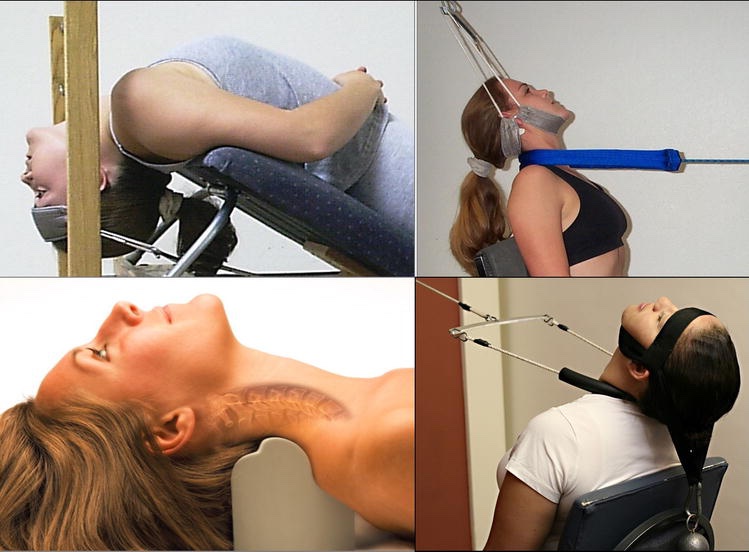
What to Expect: The Reality of CBP Traction
While CBP may help with postural changes, patients need to have realistic expectations regarding the commitment involved. The spinal traction equipment used in CBP is structurally gentle but the prolonged stretching time required to reshape ligaments can be quite uncomfortable and intense for some individuals.
Furthermore, CBP is incredibly time-consuming. Appointment times in the clinic are longer and will be spent passively resting on these rigid traction devices to allow the spinal tissues to adapt. Because of the gentleness of the traction, multiple sessions per week are required and results can be notoriously slow. Patients should prepare for a long-haul commitment, often expecting upwards of 40 to 60 treatment sessions before significant, permanent changes can be seen on follow-up X-rays.
4. Upper Cervical Chiropractic: Focusing on the Master Switch
While most techniques evaluate the entire spine, Upper Cervical Chiropractic focuses almost exclusively on the top two vertebrae in your neck: the Atlas (C1) and the Axis (C2). Because these two bones sit right at the base of your skull, a misalignment here was thought to cause a domino effect of posture distortions and neurological symptoms down the rest of your body.
- How it works: This technique uses precise, 3D imaging (like digital X-rays or cone-beam CT scans) to measure the exact millimetre of misalignment in the upper neck. The adjustment is said to be incredibly gentle though this was not my experience with them.
- Best for: Chronic migraines, tension headaches, vertigo/dizziness, and whiplash injuries.
Cervical Manipulations and Stroke Risk
No discussion about neck adjustments is complete without addressing a critical safety concern that often surfaces in medical literature and media: the potential risk of stroke associated with cervical spinal manipulation. The primary concern involves a condition called vertebral artery dissection (VAD), which is a small tear in the lining of the vertebral (less commonly carotid arteries) in the neck. If a tear occurs, it can trigger blood clot formation, potentially travelling to the brain and resulting in an ischemic stroke.
Understanding Causation vs. Correlation
While the thought of this is understandably alarming, robust clinical data provides vital context on how rare these incidents actually are, putting the statistical risk at roughly 1 in 1 million to 1 in 5 million cervical manipulations. Furthermore, extensive population-based case-control studies (such as landmark research published in Stroke) have revealed a key phenomenon: patients who experience a stroke following a chiropractic visit are often already in the beginning stages of a spontaneous artery dissection before entering the clinic. Because a tearing artery initially presents as severe, acute neck pain and headaches, these individuals naturally seek out healthcare providers for relief.
Even so, because certain high-velocity rotational (“twisting”) neck adjustments put additional mechanical stress on these vessels, patients who are risk-averse often lean toward non-rotational methods like Upper Cervical instruments, or skip passive mechanical manipulation entirely in favour of active rehabilitation. This highlights the importance of thorough pre-screening; a responsible practitioner will carefully evaluate a patient’s vascular history, blood pressure, and neurological baseline before performing any high-velocity neck adjustments. Ultimately, for those who feel uncomfortable with the structural forces involved in passive manual manipulation, shifting towards a proactive, exercise-driven approach remains a highly effective—and completely non-invasive—pathway to restoring spinal mobility and alleviating chronic strain.
Summary: Which Technique is Right for You?
| Technique | Primary Focus & Goal | Treatment Sensation & Experience | Ideal Patient Profile |
|---|---|---|---|
| Square One Active Recovery | Fixing the biomechanical root cause, upgrading tissue capacity, and establishing long-term physical autonomy. | Active rehabilitation, progressive exercise therapy, and targeted loading. Zero passive cracking or short-term adjustments. | Individuals seeking permanent posture resilience, self-management tools, and an alternative to ongoing packages. |
| Diversified | Restoring general joint mechanics, improving range of motion, and unblocking restricted joints. | Manual, high-velocity hands-on thrusts. Accompanied by audible “pops” (cavitation). | General neck/back pain, acute desk-bound posture stiffness, and those seeking rapid, immediate relief. |
| Gonstead | Localised structural foundation. Focuses on exact misaligned segments with minimal spinal twisting. | Highly targeted manual adjustments utilising specialised custom benches and chairs. No heavy rotation. | Patients who prefer precision-targeted manual adjustments without high-velocity neck twisting. |
| CBP® | Passive global spinal remodelling and long-term posture transformation (e.g., restoring neck curves). | Structurally gentle but prolonged and uncomfortable stretching while resting on rigid passive traction devices. | Postural rehabilitation (“tech neck”, scoliosis) for patients willing to commit to 40–60 slow-moving sessions. |
| Upper Cervical | The top two neck vertebrae (Atlas/Axis) protecting the brainstem and upper central nervous system. | Said to be incredibly gentle; utilises light, instrument-guided taps or manual touch behind the ear (no cracking). | Chronic migraine, vertigo, or tension headache sufferers, or individuals risk-averse to rotational neck cracking. |
Why Choose Square One Before All of These Techniques?
While traditional passive adjustment techniques have their place, they often address the symptoms rather than the root cause of why your spine misaligned in the first place. This is why more and more Singaporeans are choosing Square One Active Recovery before jumping into conventional chiropractic treatments.
Square One turns the traditional model on its head by shifting from a passive treatment model to an active, evidence-based recovery model. Here is why starting at Square One makes a massive difference:
- Breaking the Cycle of Dependency: Passive adjustments feel great in the moment, but the relief is often temporary because your muscles haven’t learned how to support your spine. Square One focuses on active rehabilitation and exercise therapy, teaching your body how to stay strong, stable, and pain-free on its own.
- Evidence-Based and Research-Driven: Instead of relying on century-old theories, Square One’s philosophy aligns with current global medical guidelines for musculoskeletal health, which heavily prioritise active movement and strength building over passive manipulation.
- Long-Term Financial and Physical Freedom: Rather than locking you into endless, multi-month packages of 3-minute adjustments, Square One aims to give you the tools, knowledge, and physical resilience to become your own healer, saving you time and money in the long run.
By upgrading your body’s capacity and strength first at Square One, you fix the biomechanical root cause. If you still need specific passive work down the line, your body will be far more resilient and responsive to it.
Final Thoughts for Singaporeans
When choosing a chiropractor in Singapore, don’t be afraid to ask which techniques they specialise in during your initial consultation. Many modern clinics adopt a multimodal approach, combining the quick relief of the Diversified technique with the long-term postural corrections of CBP or functional rehabilitation exercises.
By understanding these techniques, you can better advocate for your health and choose a path that aligns perfectly with your wellness goals. Book an appointment with Square One Active Recovery today and let’s change how you manage your recovery.
Key Takeaways for Your Recovery
Bringing this scientific research into your spinal care strategy, here is how you should approach your treatment:
-
1
Seek evidence-based techniques first. Methods like the Diversified technique are flexible and least likely to rely on rigid pseudoscience, making them standard for modern research-led clinics.
-
2
Understand the limitations of passive tools. Diagnostic tools like motion palpation and the Nervoscope (Gonstead) fail structural medical validation tests, and complex long-term traction (CBP) can be a major, slow time investment.
-
3
Fix the root causes with active recovery. Traditional passive cracking yields transient results. Building long-term physical capacity at Square One protects you from package dependency and equips your body to support its own structure.

