
Picture this: you are running to catch a bus. If you try to hard brace your abs, lock down your lower belly, or consciously squeeze your deep core while sprinting, you will end up running like a cardboard box with legs. You burn double the energy, restrict your breath, miss the bus, and end up with a stiff lower back.
To sprint for that bus, your body needs thoracic rotation so your limbs can counter swing fluidly. It needs your diaphragm to expand so you can actually get oxygen into your lungs. It requires rapid, subconscious micro adjustments to handle uneven pavement and dodge pedestrians. That is real life core function.
When people think of core training for low back pain or chronic pain, they usually imagine one of two extremes: doing thousands of sit ups to build abs of steel, or lying flat on a mat practicing microscopic pelvic tilts while breathing into their belly. Neither approach paints the full picture. If you are navigating persistent pain, your trunk needs to handle a wide range of real world demands: holding steady under heavy loads, generating force across a joint, and dynamically adjusting to unpredictable movements without locking up.
To build a back and body that feels robust and resilient, you need to train all three dimensions of the core: Stability Core, Dynamic Core, and Muscular Core. Here is how they work at Square One Active Recovery and how to train them safely.
| Core Type | Primary Role | Movement Quality | Real World Demand |
|---|---|---|---|
| Stability Core | Trunk control, intra abdominal pressure, transverse abdominis engagement | Rigid foundation, zero aberrant spine movement | Lifting heavy loads, creating a firm anchor for limbs to push or pull against |
| Dynamic Core | Fluid adaptation, spatial adjustments, reactive motor control | Unbraced, supple, continuous balance calibration | Sprinting for a bus, tumbling, navigating uneven terrain without stiffness |
| Muscular Core | Force generation, concentric and eccentric contractions | Lever action, moving mass against gravity | Bending, twisting, carrying weight across a distance |
The 3 Types of Core Everyone Must Train
1. Stability Core: The Anchor
The Core Focus: Bracing strategies, motor control, and intra abdominal pressure through transverse abdominis engagement. The objective is to keep the trunk stable with minimal to no unwanted or aberrant movement.
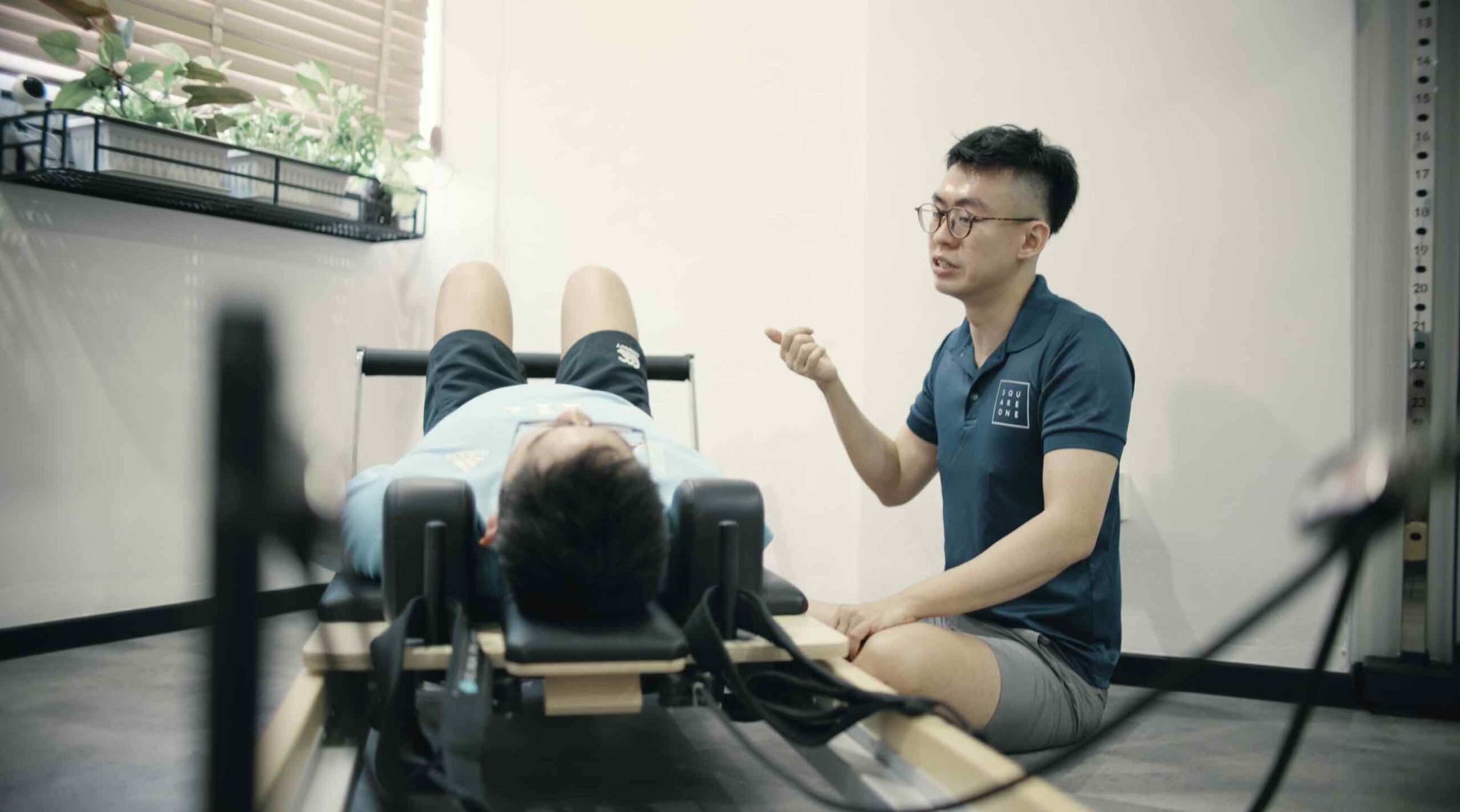
When your core acts as a stable anchor, your limbs have a solid base to pull or push against. Without a stable foundation, limb movement creates chaotic shearing forces across the spine, which can irritate sensitive tissues and trigger lower back pain.
Stability core exercises are often paired with diaphragmatic breathing patterns to ensure the transverse abdominis (TrA) works synchronously with the diaphragm and pelvic floor. Rather than simply holding your breath or forcefully gripping your abdominals, coordinating deep diaphragmatic breathing with TrA engagement helps regulate intra-abdominal pressure. This dynamic interplay creates a solid, fluid anchor for the lumbar spine, allowing you to maintain optimal trunk stability without restricting oxygen flow or creating excessive stiffness during movement.
Exercise Example (Reformer Short Box Bird Dog): If you have ever tried a classic bird dog on a short box situated on an unstable reformer carriage, you know how challenging true stability is. As you elevate your opposite arm and leg into full extension, the carriage wants to wobble and slide out from under you. Reaching full range of motion here is entirely dependent on your core creating a firm foundation. If your core fails to provide that anchor, you immediately lose balance and tilt off the box.
2. Dynamic Core: The Fluid System
The Core Focus: Fluid, reactive movement where your body is constantly adapting to spatial changes without rigid bracing.
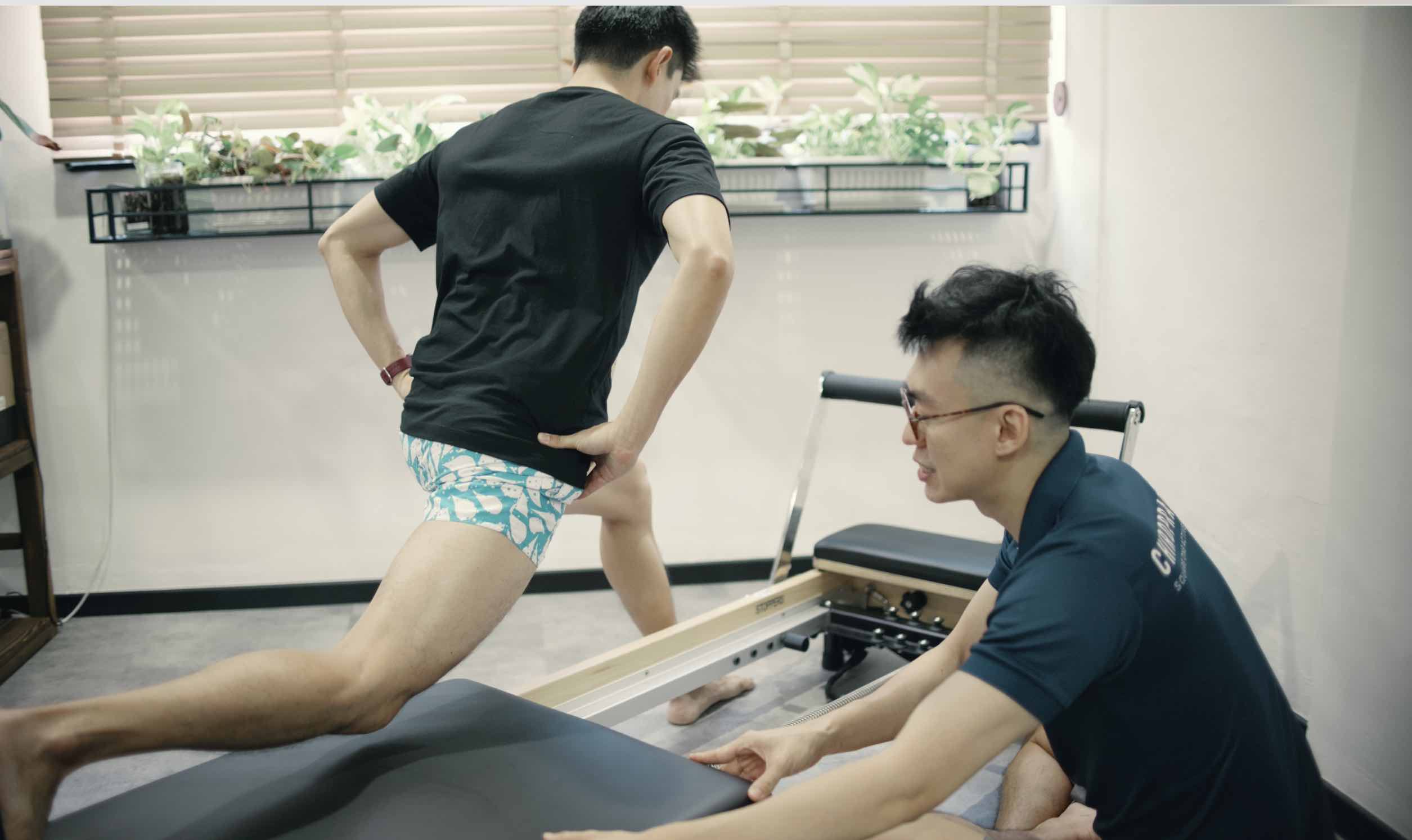
Unlike the Stability Core where the goal is control and bracing, the Dynamic Core requires you NOT to brace. Rigid bracing restricts movement. If you brace continuously during dynamic movement, your movement becomes stiff, inefficient, and prone to overload. Dynamic core training teaches your system to maintain balance and upright posture through subtle, automatic micro adjustments without locking down your trunk or freezing your breath.
Exercise Example (Hands Free Reformer Full Range Lunges): Picture performing a deep, full range reformer lunge with your hands off the footbar. As you drive the carriage back into extreme end range extension, the surface beneath you becomes extremely unsteady. If you try to hard brace your abs, you will not have the movement freedom to smoothly slide the carriage all the way out. However, if your core switches off completely, you will lose your upright posture and fall off. Your dynamic core steps in to continually calibrate balance at end range, keeping you centred without forcing you to lock up.
3. Muscular Core: The Lever
The Core Focus: Approaching trunk muscles in the traditional strength training sense by using concentric and eccentric contractions to move weight against gravity.
Instead of treating the core as a static wall, this method trains the abdominals, obliques, and back extensors as lever muscles that flex, extend, and rotate the spine or manipulate body leverage under resistance. Building muscular capacity here increases the load bearing threshold of the tissues, making them less prone to fatigue and strain.
Exercise Example (The Leg Raise): In a leg raise, your abs and hip flexors work dynamically to lift the weight of your legs across a distance. You are deliberately using the core as a lever system to move mass through space. By progressively loading this movement, you build real torque capacity and muscle in the anterior chain, giving your spine the raw power it needs to lift, carry, and bend comfortably.
How They Fulfill Multiple Roles: The Pilates 100
Many high level exercises fuse these systems together. A classic example is the Pilates 100, which bridges both Stability Core and Muscular Core demands:
- Stability Core Demand: Breathwork combined with transverse abdominis engagement keeps the trunk grounded and stabilised against the floor.
- Muscular Core Demand: An isometric hold of the upper body crunch and elevated legs works the core as a lever against gravity, creating constant tension throughout the abdominal wall.
What Happens When the Systems Fail to Coordinate?
To understand how these three core components interact, consider what happens during an awkward daily task, like moving a heavy Pilates reformer in a tight space or managing disc herniations after a sudden strain.
Imagine trying to step up onto a couch while holding a reformer because you are pinned in a tight corner. You might have plenty of raw Muscular Core strength. The reformer itself is not too heavy for your muscles to lift. Yet, as you step up, your back sprains and you potentially hurt your spinal discs.
Why does this happen if you are already strong? It comes down to poor synergy between the Stability Core and the Dynamic Core:
- The Stability Core Breakdown: Carrying a heavy object requires high enough intra abdominal pressure and bracing support to keep the trunk from collapsing under load. If that bracing engagement drops even for a second, the spine loses its rigid support structure.
- The Dynamic Core Breakdown: Stepping over a couch while pinned in a narrow spot demands agility. You need to move fluidly in an awkward position while holding weight.
Because the task combines a heavy load with climbing over furniture in a tight space, it looks nothing like standard gym exercises. You have not trained for that loaded and climb task, so your body is unprepared. When bracing support and dynamic agility fail to interact, you move awkwardly. The core collapses instead of staying solid, throwing all that stress directly onto the spinal discs and ligaments. If all three core systems were conditioned to work together in that exact movement pattern, you would have been fine.
Rethinking Core Training for Chronic Pain Recovery
If you have been stuck in pain, directed by a chiropractor or therapist to rest, ask yourself which of these three core capacities you have been ignoring:
- Are you only bracing? Making your spine feel stiff, tired, and rigid because you are missing Dynamic Core fluidity.
- Are you avoiding strength training? Because you were told bending or lifting is bad for your spine, leaving you missing Muscular Core torque capacity.
- Are you performing complex movements too early? Without learning how to create a stable anchor first, leaving you missing Stability Core bracing.
Rehabilitating chronic pain is not about avoiding movement or doing endless plank challenges. It is about teaching your core to be a stable anchor when you need control, a fluid system when you need to move naturally, and a strong lever when you need power. Book a clinical assessment with Square One Active Recovery today and let us help you integrate all three dimensions of your core.
Key Takeaways
When recovering from chronic back pain, keep these three key core principles in mind:
-
1
Train all three core dimensions. True trunk resilience requires a balance between stability bracing, dynamic movement fluidity, and muscular lever strength rather than focusing on static planks alone.
-
2
Prioritise core synergy to prevent injury. Back sprains and disc irritations often occur during awkward daily tasks when bracing support and dynamic agility fail to coordinate under load.
-
3
Adapt core engagement to the real world task. Learn when to create a firm anchor for lifting heavy objects and when to remain unbraced for dynamic activities like running for a bus.

