
Pilates FOR CHRONIC PAIN
Clinical Pilates for Low Back Pain: BUILDING A RESILIENT SPINE
Low back pain is the leading cause of musculoskeletal disability worldwide. At Square One, we use Clinical Pilates to bridge the gap between injury and physical independence, shifting your focus from passive symptom management to resilient, long term movement. While traditional passive treatments like manual adjustments or massage can provide temporary relief, permanent freedom from back pain requires building physical resilience, optimising motor control, and progressively loading your spine.
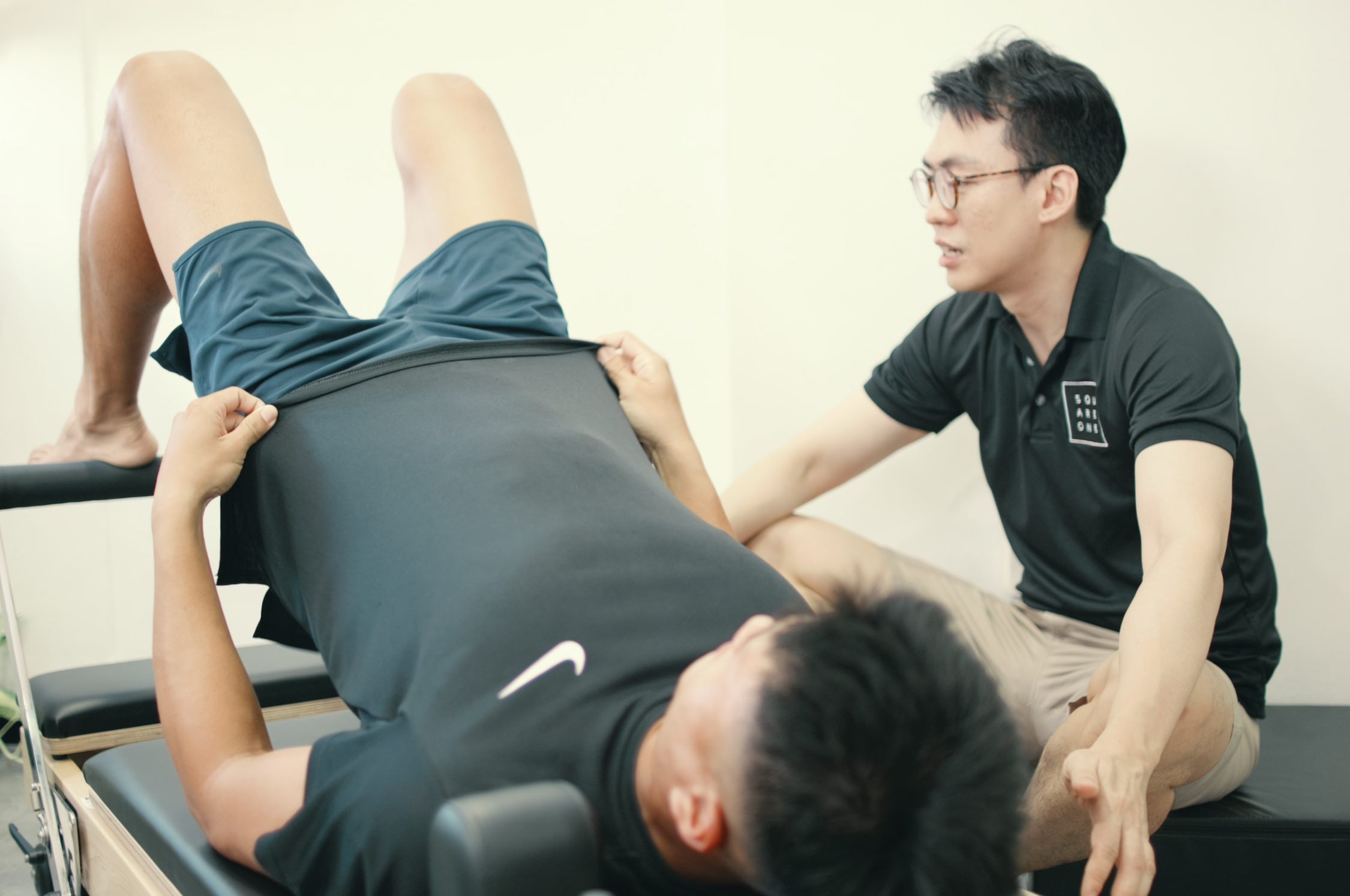
The Shift to Active Rehabilitation
In standard fitness or community settings, workouts are built for general conditioning. When you are managing low back pain, however, generic exercises can frequently aggravate highly sensitive spinal tissues.
When you train with an evidence based chiropractor at Square One, your session is treated as a clinical intervention. We focus on finding your specific pain free directional preference and using targeted mechanical loads to rebuild your physical capacity.
This structured transition from protective resting to active loading helps retrain your nervous system, allowing you to move with confidence and leave chronic discomfort behind.
Building Spinal Resilience by Strengthening the Primary Source
True resolution comes through reconditioning. Once we have isolated the primary drivers of your low back symptoms, we move away from temporary passive therapy and focus on active load tolerance. Rebuilding strength in your deep spinal stabilisers and restoring mobility to the hip and thoracic joints allows your body to distribute physical forces efficiently. This systematically reduces mechanical stress on your lumbar spine, giving you the long term resilience needed for daily life.
Methodology Comparison
Clinical Pilates vs. Regular Fitness Pilates
Many people who experience back pain try a general fitness Pilates class, only to find that certain standard movements aggravate their symptoms. Fitness classes operate on a “one size fits all” framework, whereas pain rehabilitation requires highly specific, directionally targeted intervention.
| Feature | Regular Fitness Pilates | Clinical Pilates (with a Chiro) |
|---|---|---|
| Primary Goal | General muscle toning, core conditioning, and overall flexibility. | Targeted pain reduction, restoring functional capacity, and clinical rehabilitation. |
| Assessment | Minimal to no clinical screening. Focuses on general fitness background. | Comprehensive clinical assessment analysing motor control and orthopaedic status. |
| Prescription | Generic choreography where the whole group performs the same movement flow. | Highly customised, direction specific exercise strictly matched to your symptoms. |
| Supervision | Large groups (10 to 20 people) where form flaws or pain triggers are easily missed. | One on one clinical supervision by an evidence based musculoskeletal clinician. |
Conditions Treated with Clinical Pilates
By adjusting mechanical loads passing through the lumbopelvic complex, we systematically modify exercises to safely manage and resolve a wide variety of lower back pathologies:
- Non Specific Chronic Low Back Pain (NSCLBP): Correcting deep motor control impairments, structural bracing, and movement adaptations.
- Lumbar Disc Herniations and Bulges: Offloading hypersensitive structures while establishing safe thresholds for forward or backward bending.
- Sciatica and Radiculopathy: Restoring proper neural dynamics and relieving mechanical compression along the sciatic pathway.
- Spinal Stenosis and Facet Joint Arthropathy: Applying custom flexion biased exercise strategies to alleviate compression and reduce localised joint friction.
- Spondylolisthesis: Strengthening deep spinal stabilisers to safely resist unstable segment shearing.
- Post Pregnancy Pelvic Girdle and Back Pain: Safely retraining foundational core, hip, and pelvic floor coordination following pregnancy.
Combining targeted mechanical assessment with strength training and clinical pilates builds the robust physical threshold needed to safeguard against future flare ups.
Apparatus Highlights
Precision APPARATUS for Targeted Recovery
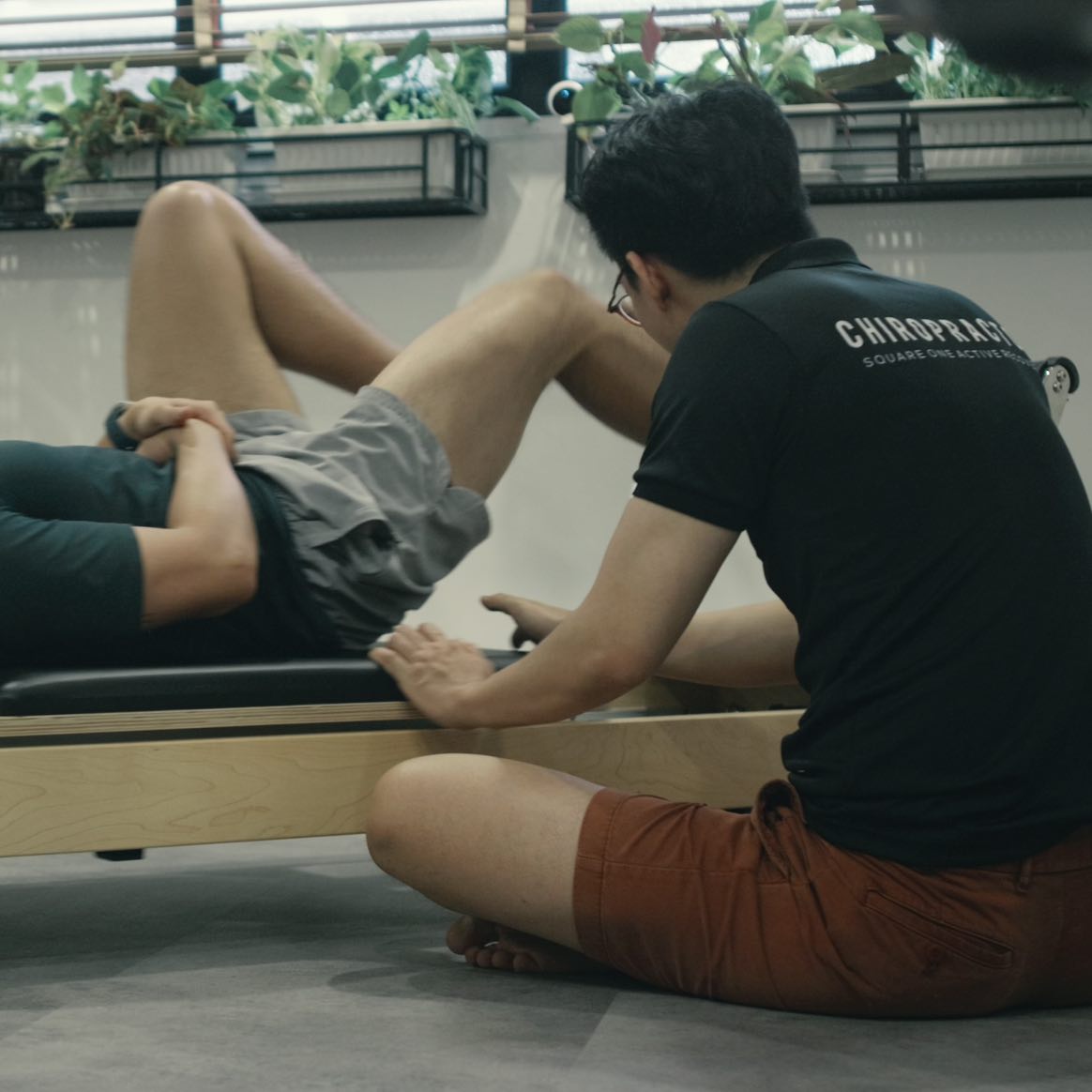
The Reformer for Acute Pain
Ideal for clients managing acute discomfort. The horizontal, lying down setup unloads the spine from gravitational compression, allowing for gentle, supportive movements. The adjustable spring tension allows us to reintroduce essential hip and knee patterns without triggering protective muscle guarding.
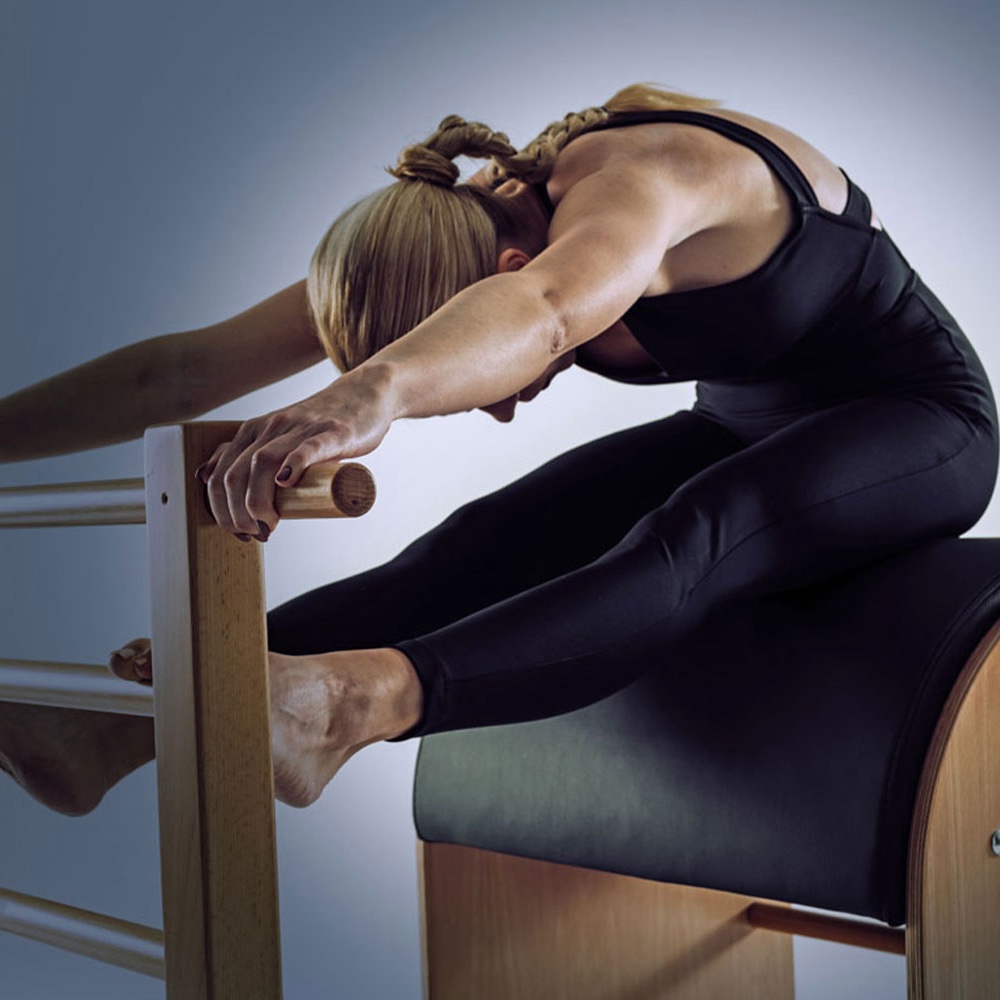
The Ladder Barrel for Range of Motion
A versatile tool that facilitates structured, passive stretching across all functional planes: flexion, extension, and lateral flexion. Crucially, it provides an unparalleled environment to actively train the back extensors and hip extensors (glutes and hamstrings), which are key to stabilising low back conditions.
The Science: Evidence Based Spinal Rehabilitation
Our protocols are rooted firmly in peer reviewed data rather than fitness trends. High quality randomised controlled trials confirm that direction specific Clinical Pilates delivers definitive outcomes:
- Proven Pain and Disability Reductions: A double blind RCT published in Disability and Rehabilitation (2025) demonstrated that direction specific Clinical Pilates produces superior, long term improvements in physical function and pain scores over standard generic core exercises at both 6 and 12 week intervals.
- Immediate Flexibility and Control Gains: Clinical trials published in Gait & Posture (2025) show that brief, targeted sessions yield immediate, objective improvements in single leg functional control, lumbar flexion, and hamstring flexibility.
- Targeting the True Source: Research published in Biology (Basel) (2021) highlights that chronic lower back dysfunction is fundamentally tied to faulty motor control. Identifying and prioritising your body’s specific directional movement preferences eliminates repetitive mechanical overload.
Visit Our Chinatown Clinic
Our clinic at Hong Lim Complex is centrally located for busy professionals based in Chinatown, Raffles Place, or Tanjong Pagar. Enjoy convenient direct transit connections via the North East, Downtown, and Thomson East Coast lines.
Transport Access
- 📍 3 min walk from Chinatown MRT
- 📍 5 min walk from Clarke Quay MRT
- 📍 7 min walk from Maxwell or Raffles Place MRT
- 📍 Directly above Hong Lim Food Centre
538 Upper Cross Street, Hong Lim Complex, Singapore 050538
If you are treating the symptom without addressing the functional movement source, you are managing the problem but not solving it.