
When low back pain strikes, the internal debate usually starts straight away. Did I just strain a muscle, or have I damaged a disc? Because the symptoms can overlap, distinguishing between the two is not always straightforward. Here is what you need to know about muscle strains versus disc issues, what directional preferences and centralisation mean, and when you should actually book an appointment.
The Misconception About Disc Pain
Most people associate disc issues exclusively with sciatica or radiculopathy. That is the classic, electric shock like pain, numbness, or tingling shooting all the way down the leg. Normally, it is because a spinal nerve root is involved. Most people only realise they have a disc problem when they experience these neurological symptoms.
Because of this, many assume that if there are no nerve symptoms running down the leg, the discs must be completely fine. However, that is not always the case.
The “Hot Disc” (Discogenic Pain)
It is entirely possible to experience a hot disc, referred to clinically as discogenic pain, in the complete absence of radiculopathy. This occurs when the outer wall of the disc, known as the annulus fibrosus, develops micro tears or inflammation. The pain receptors on the outer edge of the disc become irritated, causing localised symptoms without shooting nerve pain down the leg.
A hot disc typically presents as:
- Pain with flexion: Bending forward, sitting for long periods, coughing, or sneezing makes the pain noticeably worse.
- Relief with standing or walking: Changing positions or moving around tends to ease the pressure compared to sitting.
- A feeling of deep instability: Your back feels weak or locked up, as though it cannot properly support your body weight.
At a Glance: Muscle Strain vs Disc Issue
| Feature | Muscle Strain | Disc Issue (Discogenic) |
|---|---|---|
| Pain Location | Localised to specific muscle belly or flank area | Deep low back, glutes, or radiating down the leg |
| Aggravating Movements | Direct muscular stretching or active resistance contraction | Spinal flexion (bending forward), sustained sitting, coughing |
| Movement Response | No centralisation pattern observed | Displays directional preference (e.g. extension causes centralisation) |
| Typical Recovery | Rapid improvement within 3 to 5 days, full resolve by 2 weeks | Requires structured mechanical loading and targeted movement rehabilitation |
Directional Preferences & Centralisation
Two key indicators used to differentiate disc pain from muscle strains are directional preference and centralisation.
Initial State
Peripheralised Pain
Pain located far down the leg or buttock
Positive Outcome
Centralised Pain
Pain retreats upward back into lower back
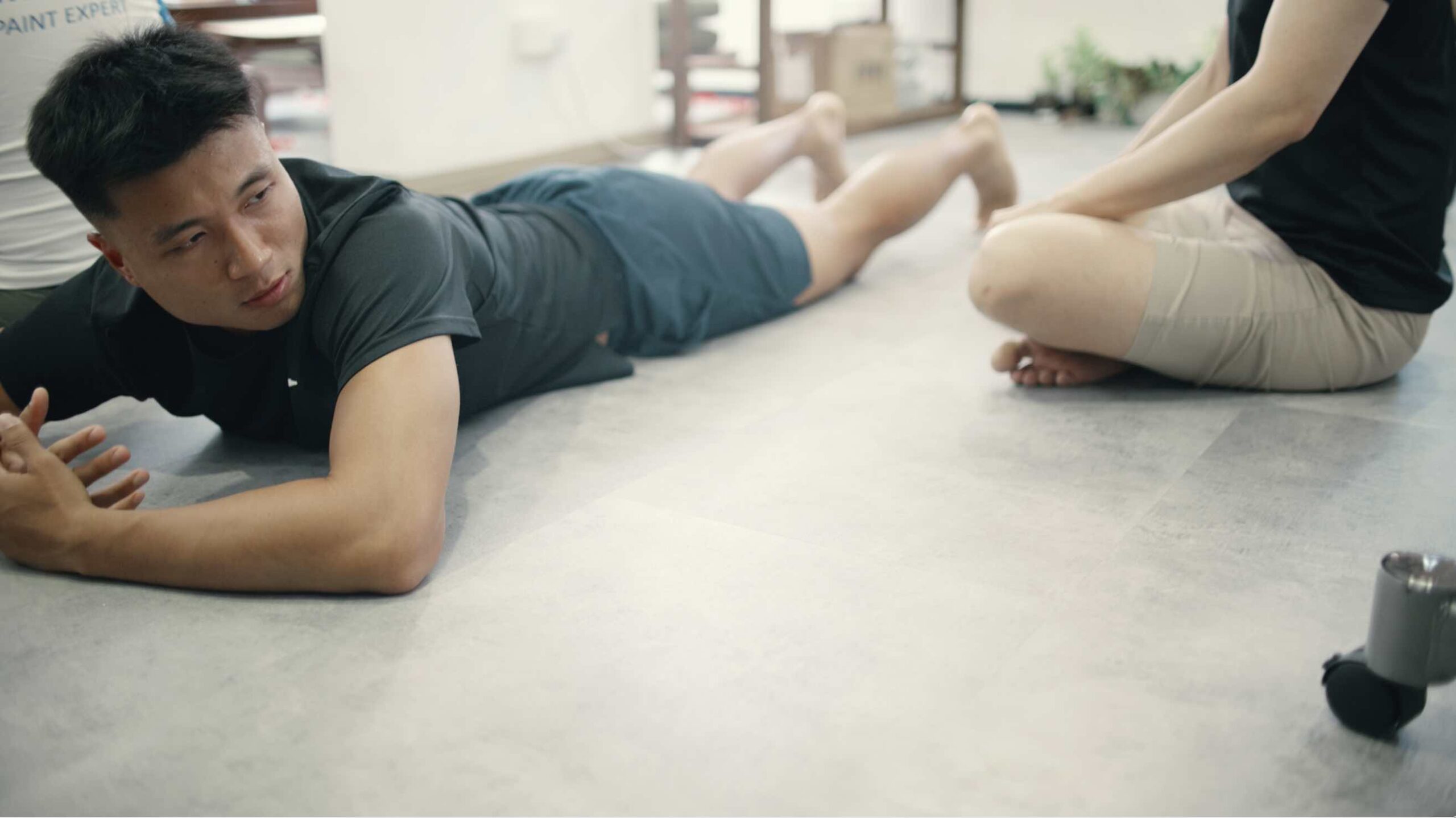
- Directional Preference: Disc related pain often responds predictably to specific movements. For instance, repeatedly arching your back backwards into extension might relieve your pain, whereas bending forward into flexion exacerbates it.
- Centralisation: If performing a specific movement causes pain to retreat away from your leg or buttock and move closer towards the centre of your lower back, that is centralisation. This is a hallmark feature of mechanical disc issues and a very positive sign of recovery.
Muscle aches or mild strains, by contrast, tend to feel tender directly on the muscle belly, hurt when stretched or contracted, and rarely display this distinct centralisation behaviour.
Why a Sedentary Lifestyle Increases Disc Risk
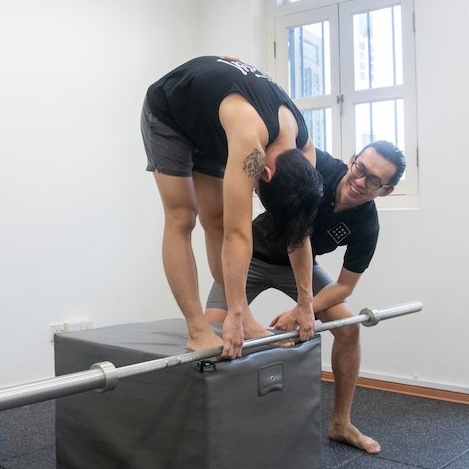
If you have been sedentary and experience back pain, seek professional help. A sedentary lifestyle is one of the biggest risk factors for disc issues.
Our spinal discs rely on exercise and mechanical loading to stay robust. Without regular physical activity, especially weight bearing exercise or weight training, the annular fibres of our discs weaken. Over time, this weakening makes disc herniations far more likely to occur under daily strain.
So if you have been living a sedentary lifestyle and develop any form of musculoskeletal symptoms, get it sorted. Seeking help early is not just about managing current pain, but also about improving overall disc health to avoid future issues.
When Should You Seek Professional Help?
1. Muscle Aches and Mild Sprains: Give It 3 to 5 Days
For basic muscle aches, mild strains, or mild joint sprains, most pain self resolves within two weeks. In fact, symptoms usually improve significantly within the first 3 to 5 days.
We usually do not recommend seeking hands on treatment before day 5. When an injury or pain episode is very acute, there is a lot of local inflammation present. It is often best to let that initial inflammation settle first. Once it calms down, we can perform a far better clinical assessment, and you can evaluate whether you still need to come in.
2. Chronic Back Pain: Seek Help Early
For all chronic cases, however, we strongly recommend seeking professional help. As a rule, the more chronic a condition becomes, the harder it is to treat. Persistent pain leads to altered movement habits and nervous system sensitivity that require structured guidance to undo.
Red Flag Symptoms
Always be mindful of red flags. Seek immediate emergency medical attention if your back pain is accompanied by loss of bowel or bladder control, numbness in the groin or saddle area, progressive leg weakness, unexplained weight loss, or high fever.
Get in Touch With Us
No matter what you are experiencing, feel free to drop us a message. We conduct a mini triage for all of our clients before booking them in. If there is no need for you to seek treatment right now, we will let you know honestly so you can let things settle naturally.
If you are unsure whether your back pain is muscle or disc related, book an assessment with Square One Active Recovery today or send us a message to get started.
Key Takeaways
When figuring out if your back pain stems from a muscle strain or a spinal disc issue, keep these points in mind:
-
1
Disc pain is not always sciatica. You can have discogenic pain (a hot disc) causing localised back pain without any nerve symptoms shooting down the leg.
-
2
Discs need mechanical loading. Sedentary lifestyles weaken annular fibres, whereas exercise and weight training help keep spinal discs robust.
-
3
Timing matters. Let acute muscle strains settle for 3 to 5 days before booking, but seek help promptly for chronic pain or sedentary onset.

