
When you are ready to start taking your physical health seriously, deciding who to work with can be surprisingly confusing. Should you hire a personal trainer, book an appointment with a clinical practitioner for rehabilitation exercise, or sign up for Pilates?
While all these options involve exercise, they serve fundamentally different purposes. Here is a clear breakdown to help you decide which path makes the most sense for your body, your goals, and your wallet.
As a clinical and movement-focused chiropractic practice, we want to help you make the right choice for your long term recovery and physical fitness.
1. Qualifications and Fees: What Are You Paying For?
The most obvious difference between a clinical practitioner and a personal trainer comes down to education and scope of practice.
- Clinical Practitioners (Physiotherapists, Chiropractors): These professionals undergo rigorous university education, often spanning four to five years, to learn how to diagnose, treat, and manage complex musculoskeletal conditions. You are paying for clinical expertise and diagnostic safety.
- Personal Trainers (PTs): The barrier to entry for personal training varies wildly. A PT certification can cost a few hundred dollars and take as little as a single weekend. In Singapore, some certifications are even fully covered by SkillsFuture credits, meaning zero out of pocket expenses.
Do Not Let Price Completely Fool You: Because of the heavy educational investment, clinical sessions are typically more expensive. However, that is not always the case. Highly experienced and high demand PTs can actually charge more than chiropractors or physiotherapists, with some charging 220 dollars or more per session. Meanwhile, to stay competitive and accessible, clinics like Square One Active Recovery offer Personal Training as a more affordable option for clients who just want to get moving or lose weight without needing full clinical care.
2. Your Primary Goal: Pain Recovery vs The Big Picture
The single biggest factor in your decision should be what you are trying to achieve right now.
| Feature | Rehabilitation Exercise | Personal Training |
|---|---|---|
| Primary Focus | Chronic pain, injury recovery, joint rehab | General strength, weight loss, physique and aesthetics |
| Scope | Highly specific to your injury or condition | Big picture including longevity, overall fitness, and flexibility |
| Primary Goal | Get you pain free as fast as possible | Improve general health, body composition, and fitness |
- Choose Rehab if: Recovering from an injury or chronic pain is your absolute top priority. Rehab exercises are pinpointed precisely to resolve your pain condition.
- Choose Personal Training if: You are generally healthy and want to look at the bigger picture like building muscle, shedding body fat, boosting long term longevity, or improving overall strength.
3. What About Pilates and Clinical Pilates?
Pilates has surged in popularity, but it sits in a unique space between fitness and rehabilitation. It is important to distinguish between standard Pilates and Clinical Pilates, especially when it comes to the level of training behind your instructor.
Private Pilates vs Personal Training: A private Pilates class shares similarities with personal training because it offers dedicated one to one attention. However, their scopes are quite different:
- Pilates is a movement method: It focuses primarily on assessing how you move, improving movement efficiency, control, and core stability. Any secondary benefits, such as feeling stronger or lighter, are indirect outcomes of moving better.
- It will not target physique goals: Unlike personal training, standard Pilates does not address nutritional strategies, nor is it designed to directly drive muscle hypertrophy (building muscle mass) or body recomposition and weight loss.
- Instructor certification is short: Most standard Pilates instructor courses require fewer than 50 hours of training and can be completed within a single week.
Clinical Pilates vs Rehabilitation Exercise: Clinical Pilates is far more specialised than a general Pilates class. It uses Pilates principles specifically to reduce pain and restore physical function for individual conditions.
- Extensive background required: Most reputable Clinical Pilates certification programs strictly accept only qualified allied health providers, such as chiropractors and physiotherapists. This means an instructor has undergone at least four years of formal university education, or five years in my case as a chiropractor, before even qualifying to undertake Clinical Pilates training.
- It is bound to Pilates apparatus: Clinical Pilates functions like rehabilitation exercise in its clinical intent, but it relies strictly on specialised Pilates equipment such as the Mat, Reformer, Cadillac, Ladder Barrel, and Wunda Chair.
- Generic Rehabilitation is modality agnostic: A full rehabilitation program utilises a much broader toolset. It freely incorporates bodyweight setups using gymnastic rings, dip bars, or pull up bars alongside traditional resistance equipment like dumbbells, barbells, and cables to craft whatever stimulus best achieves your recovery goals.
4. The Vibe and Pace of Training
Rehab and personal training feel very different in practice.
Rehab is technical, precise, and objective driven. It is not necessarily meant to be a fun new hobby or an entertaining workout session. It is about doing exactly what your body needs to heal. Enjoying the movement comes second to recovering function.
Personal Training prioritises long term engagement. A good PT wants you to love exercise so it becomes a sustainable lifestyle habit. If you want a workout that feels good, keeps you motivated, and pushes you at a pace you enjoy, PT is usually the better fit.
5. Time Sensitivity and Milestones
Rehabilitation moves at an intentional, clinical pace because recovery is time sensitive.
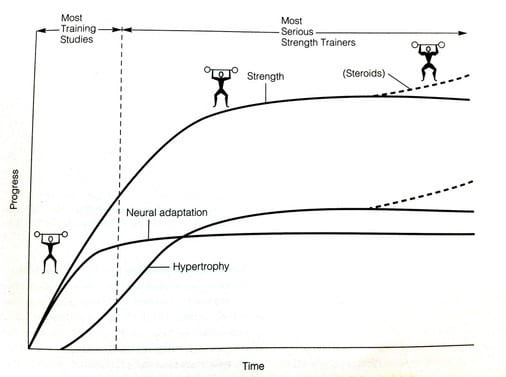
When you start rehab, clinicians capitalise on biological timelines. For instance, neural adaptation, which is how quickly your brain and nervous system learn new movement patterns and recruit muscle fibers, peaks within the first 4 to 6 weeks of training. Clinical rehab crams intensive motor learning and movement re-education into this window to hit strict recovery milestones as quickly as possible. Personal training, on the other hand, is a marathon rather than a sprint. It is built around gradual, steady progress over months or years.
Summary: Which Should You Pick?
At the end of the day, your choice depends on what matters most to you right now:
Key Takeaways For Choosing
Before making your decision, consider these three core guidelines:
-
1
If you are in pain and want fast, targeted results: Go with Rehabilitation Exercise. The clinical investment gets you back to full function quickly using whatever tools are most effective.
-
2
If you want to improve movement quality with specialised apparatus: Clinical Pilates or Private Pilates can be a great focused approach.
-
3
If you are pain free, working on a budget, or aiming for weight loss and muscle building: Personal Training is likely your best and most versatile option.
Still unsure where to start? At Square One Active Recovery, we offer both clinical rehab and personal training services so you can get the exact level of care your body needs. Book a clinical assessment with Square One Active Recovery today and let us help you achieve your goals.

