
EVIDENCE BASED CHIROPRACTOR
Hip & Groin Pain Recovery in Singapore
Hip and groin pain in Singapore is frequently driven by a “load vs. capacity” mismatch. Whether it is high-impact running, field sports, or the adaptive shortening caused by prolonged sitting, your hip’s stability relies on precise neuromuscular control.
At Square One, we look beyond temporary rub or stretch. By utilising dynamometer strength testing and movement analysis, we address the root of adductor and gluteal dysfunction to build the acetabular resilience you need to return to your sport or daily life without limitation.
Rated 5/5 stars 🌟 by 150+ Google reviews.
Book your assessment today!

Common Hip & Groin Presentations
Adductor Strain
Sharp pain in the inner thigh during exercise or daily movements
Lateral Hip Pain
A dull ache on the outside of the hip that is worse when pressure is applied
Deep Gluteal Pain
Persistent stiffness or “tightness” in the buttock region that worsens with sitting
Clicking & Snapping
Audible “pops” or catching sensations during leg lifts or daily movement
Impingement (FAI)
Pinching pain in the front of the groin when squatting or pulling your knee to your chest
Pelvic Instability
A feeling of “giving way” or weakness in the pelvic floor and hip during single-leg loading
CLINICAL PERSPECTIVE
WHY DOES MY HIP HURT?
-
•
The Load Mismatch: Pain occurs when the physical stress placed on your hip during sport or daily life is greater than what your joints and muscles are currently strong enough to handle. -
•
The Stability Gap: Injury often happens because your “dynamic stabilisers,” like your glutes and adductors, lack the power to control your movement during high-speed activities like running or kicking. -
•
More Than Just Age: Most chronic groin pain isn’t just “wear and tear.” It is usually the result of muscles becoming deconditioned, which is a problem we can solve by optimising how you move and train.
THE WHY
Key Factors for Hip & Groin Pain in Singapore’s Population
Adductor & Gluteal Weakness
Insufficient strength in the hip stabilisers fails to support the pelvis, leading to excessive shearing forces during movement.
Loading Errors
Rapid increases in running mileage or sport intensity that often outpace soft tissue tolerance.
Previous Strains
Poorly healed or insufficieently groin or hamstring tears that are prone to re-injury
Joint Morphology
Subtle variations in hip socket shape (FAI) require specific strength strategies to avoid mechanical impingement pain.
Pelvic Control
Poor coordination between the core and hip muscles increases irritation at the pubic symphysis or labrum.
Sedentary Strain
Long hours at a desk lead to “gluteal amnesia” and tight hip flexors, sensitising the joint to sudden weekend activity.
← Swipe to view all factors →
HIP & GROIN CONDITIONS WE TREAT
At Square One Active Recovery, we don’t use a cookie-cutter approach. Hip and groin pain is often a failure of local capacity to meet movement demands. We identify the specific mechanical stressors in your pelvic alignment and hip rhythm to ensure long-term robustness.
A precise diagnosis is vital to move beyond temporary relief. Unlike lower back issues that refer pain to the leg, true hip conditions involve mechanical limitations in walking, squatting, or rotating. Our SQ1 protocol transitions you from mere pain management to building the physical capacity required to excel in your sport or daily life.
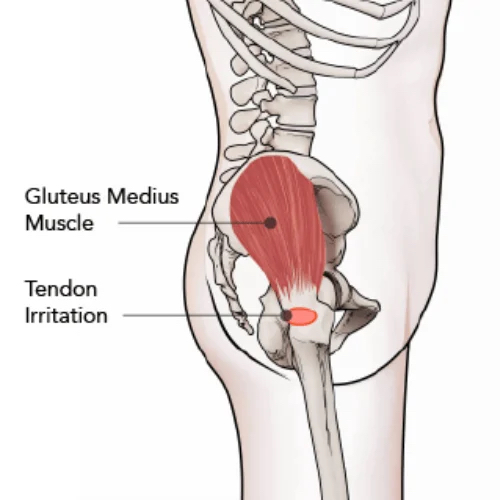
Gluteal Tendinopathy
Goal: Restore lateral stability
How: Utilising isometric and isotonic loading to facilitate tendon adaptation and reduce lateral hip sensitivity.
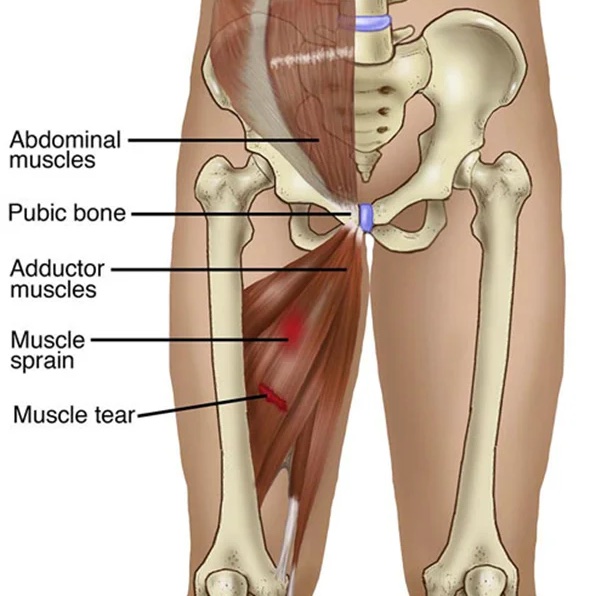
Adductor-Related Groin Pain
Goal: Improve adductor-to-abductor ratio
How: Implementing the Copenhagen protocol and multi-planar strengthening to handle high-speed cutting forces.
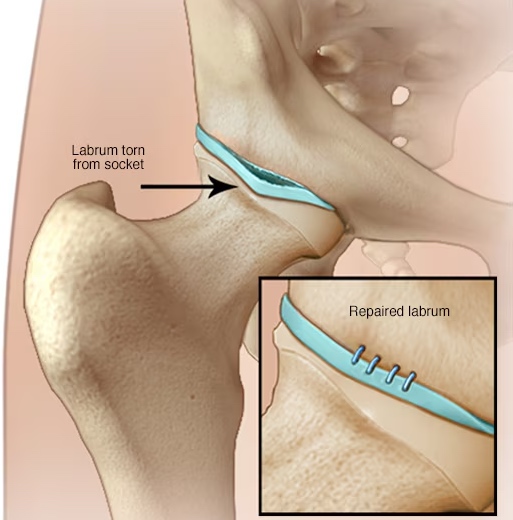
FAI & Labral Tears
Goal: Maximise pain-free range
How: Neuromuscular recalibration to improve joint centration and reduce anterior impingement sensations.
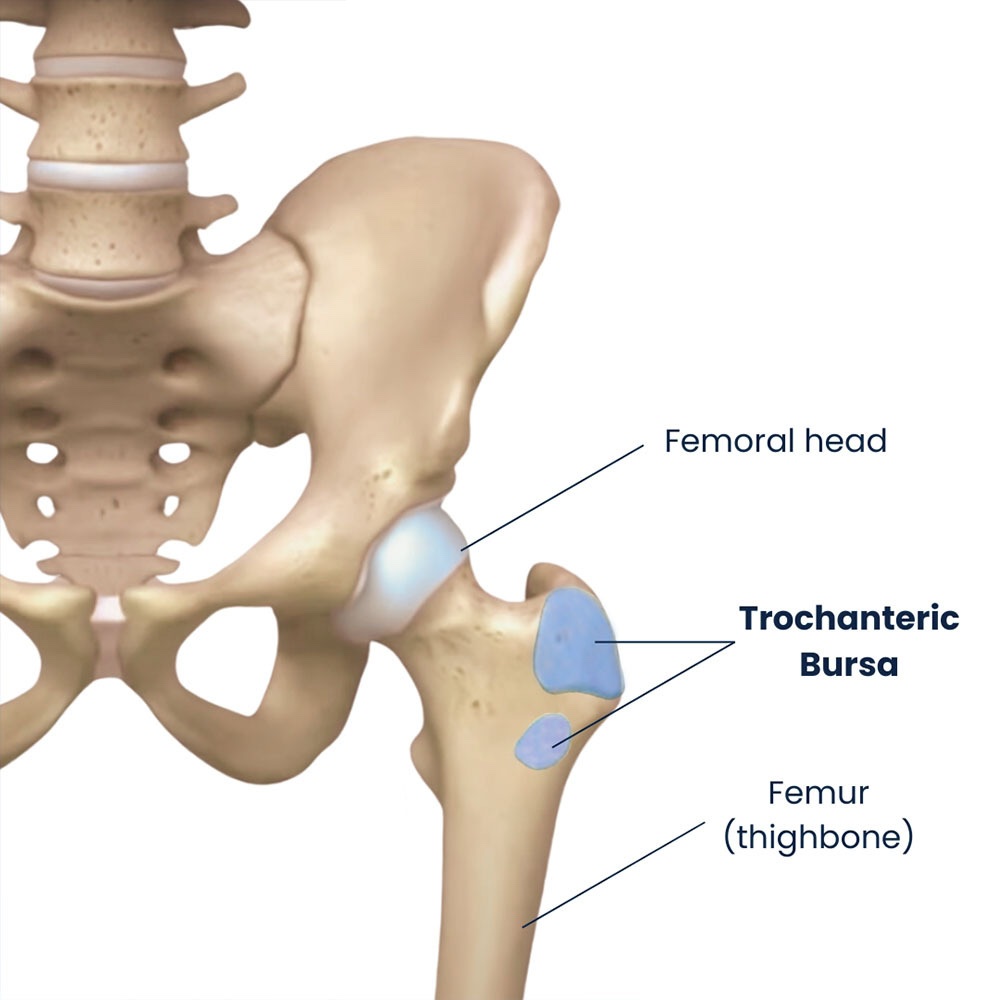
Trochanteric Bursitis
Goal: Reduce compression sensitivity
How: Correcting pelvic “drop” through gluteus medius strengthening to offload the sensitised bursa.
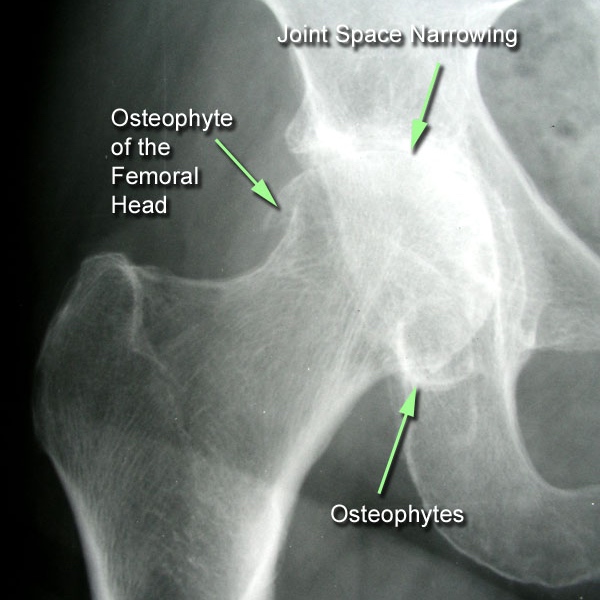
Hip Osteoarthritis
Goal: Maintain joint longevity
How: High-load, low-impact training to stimulate bone health and increase global hip support.
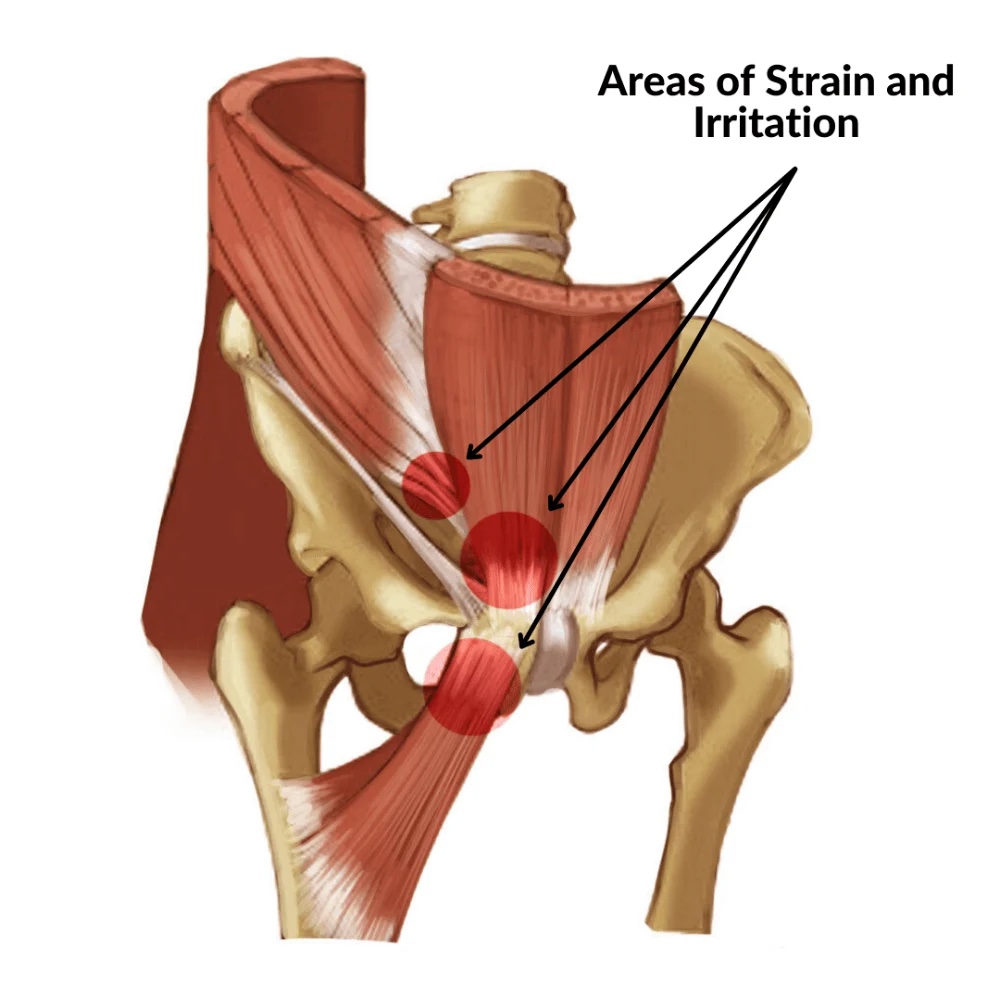
Athletic Pubalgia
Goal: Resolve midline groin pain
How: Global lumbo-pelvic loading to improve the synergy between the abdominals and hip adductors.
Hip & Groin Treatments: Chiropractic Rehab & Strength Coaching
EVIDENCE-BASED PAIN SOLUTIONS
Hip
Rehabilitation
Addressing FAI, labral sensitivity, and adductor strains through mechanical loading. We utilise targeted resistance to build the Acetabular resilience you need to squat, run, and lunge without restriction.
Clinical
Pilates
Refining motor control for the lumbopelvic region. This approach focuses on pelvic stability and hip dissociation, ensuring your gait remains efficient and the joint stays supported during multidirectional movement.
Strength and
Conditioning
The ultimate protection for long-term joint health. We focus on building gluteal power and groin capacity, creating the structural robustness required to outlast hip “wear and tear” or sports demands.
Typical Recovery Timeline
While every hip is unique, most active recovery journeys follow this staged pathway to permanent resilience.
Weeks 1 – 4
Desensitisation
Focus on reducing acute groin pain and inflammatory “noise.” We gently restore movement “windows” through controlled active mobilisation and isometric holds.
Weeks 5 – 12
Load Integration
Progressive strengthening of the gluteal and adductor groups. We utilise targeted loading to remodel tendon tissue and improve pelvic stability during gait.
Weeks 12+
Robustness
Advanced multi-planar strengthening once you are pain-free. We build high-capacity tissue to ensure your hips can handle pivoting and sprinting without relapse.
← Swipe to view timeline →
The Objective Recovery Matrix
Tensile Load
Adductor & hamstring resilience.
Compressive Load
Deep squat & impact tolerance.
Movement Pattern
Lumbopelvic rhythm optimisation.
Lateral Stability
Level pelvic control in gait.
Load Capacity
Total mechanical hip work volume.
Why This Data Drives Results
Gluteal & Adductor Remodelling
Recovery is a mechanical adaptation. We track load progression (e.g., side-planks or squats) because it confirms tissue has physically adapted to handle stressors.
Pelvic Centration
We monitor single-leg balance to ensure dynamic stabilisers are effectively “holding” the femoral head, crucial for FAI or labral sensitivity.
The Hip-Core Synergy
Mobility without control is risk. We measure “functional range” to ensure your brain allows movement because the core and hips are strong enough to support it.
Clinical Note: By prioritising objective data over subjective relief, we bridge the gap between “not hurting” and “truly robust.”
Clinical Reality
Why Active Recovery Beats Passive Hip Adjustments
Popping or clicking the hip provides a “window” of relief but does nothing to strengthen the gluteal or adductor tendons.
Passive therapy ignores muscle deconditioning, leaving the lumbopelvic complex vulnerable to mechanical overload and groin strain.
Resting or “protecting” the hip leads to rapid muscle loss and a further reduction in your ability to run, squat, or climb stairs.
The First Visit & Beyond
Consultation
We’ll review your history to understand your specific loading goals from simply walking without groin catching to squatting a new PB.
Assessment
Physical evaluation of your gluteal strength, adductor resilience, and pelvic stability. We test what you *can* do to find your current entry point for loading.
SQ1 Protocol
Desensitising the hip joint and groin while progressively building the muscular capacity to stabilise the femur under dynamic, multi-planar stress.
Self-Management
Learn to manage load independently. We provide you with the tools to prevent future “flare-ups” and maintain your athletic hip resilience.

The Founder
Jesse Cai
Jesse Cai is a published chiropractor with a singular mission. He aims to make his own services redundant to you by making you injury-proof. Since founding Square One Active Recovery in 2018, Jesse has worked to bridge the gap between “patch-up” care and elite-level performance. His perspective is shaped by extensive experience with professional athletes in Australia, including work within the Australian Football League (AFL) and various national sporting clubs. Having served as the Head Sport Trainer for Forrestfield FC, a board member of Sports Chiropractic Australia, and a member of Sports Medicine Australia, he brings a high-performance clinical standard to his Singapore practice. Today, Jesse utilises a Solution-Focused Coaching approach to identify your physical deficits and build a level of robustness that ensures you graduate from rehab. You will leave his care with the exact tools needed to return to your sport stronger than before.
Solution-Focused
Sports Chiropractic

Managing Expectations
The Clinical Reality of Hip & Groin Recovery
Hip recovery is about remodelling tissue. As we strengthen your gluteal and adductor complex, you may experience temporary discomfort. This isn’t “damage”! It’s the joint and tendons adapting to new levels of physical capacity.
The Myth
“If my groin hurts when I pivot, I should stop all activity until it feels normal again.”
The Reality
“I need to apply progressive loading to teach my hip and adductors to handle force safely.”
We don’t just treat the pain. We build the athlete inside you.
Understanding Your Hip & Groin Pathway
Restoring function by building tissue tolerance and pelvic stability.
Progressively loading the adductor and gluteal tendons to facilitate remodelling and capacity.
Gluteal & Adductor Remodelling, Pelvic Centration, The Hip-Core Synergy
Targeted work to ensure the femoral head remains centred in the socket during dynamic movement.
Improving the coordination between deep abdominals and hip rotators for lateral stability.
Restoring internal and external rotation to reduce impingement and groin sensitivity.
Reserved for significant labral tears or structural hip pathologies.
Invasive anti-inflammatories which may mask symptoms but do not address hip deconditioning.
Surgical “cleaning” of the labrum or bone shaving. Evidence suggests exercise is often equally effective.
Surgical bone realignment for dysplasia, which involves significant recovery and rehab time.
Replacement of the joint for end-stage osteoarthritis or severe avascular necrosis.
FREE DOWNLOAD: THE TRUTH ABOUT CHRONIC HIP & GROIN PAIN
Discover why passive treatments fail and how to build gluteal and adductor capacity for permanent hip resilience. Please ensure your details are correct so we can send the guide to you within 24 hours.
RECLAIM YOUR HIP
The Square One Difference
Perfect for those who…
- ✔ Are tired of “managing” pain with temporary massage or foam rolling
- ✔ Have been told they have “bursitis” or a “labral tear” but want to avoid surgery
- ✔ Want to run, squat, and walk without catching or groin discomfort
- ✔ Value evidence-based care over traditional “passive” treatments
What to expect…
- ★ Autonomy: Tools to manage your own hip recovery independently.
- ★ Clarity: A clear roadmap for gluteal, adductor, and pelvic health.
- ★ Strength: A hip joint that is objectively more resilient than before.
- ★ Longevity: Results that last years, not just until your next session.
Our mission is to reduce your dependency on unnecessary treatments and restore your freedom of movement.
HIP & GROIN PAIN FAQ
How is this different from traditional hip physiotherapy or chiropractic?
Most traditional clinics focus on passive modalities like stretching, massage, or manual therapy to “release” the hip. While these might offer short-term relief, they don’t address underlying weakness. The SQ1 Protocol focuses on active gluteal and adductor loading to build a hip that stays pain-free under mechanical stress.
I've been told I have 'Hip Impingement' (FAI). Do I need surgery?
Modern research shows that surgery for FAI is rarely more effective than high-quality, progressive loading. Impingement is often a sign of a hip joint that isn’t strong enough to handle its current load. We focus on building capacity and stability to ensure your hip is safe to move in all ranges.
Can you help with Hip Bursitis or Tendinopathy?
Yes. Bursitis is almost always secondary to how the hip handles load. We focus on strengthening the gluteal tendons to take the pressure off the bursa, allowing the inflammation to settle naturally through movement rather than rest.
Will I be able to return to heavy lifting or running?
Absolutely. That is the primary goal. We don’t just want you “pain-free” while sitting; we want you robust enough to handle deep squats, sprinting, or change-of-direction sports without the fear of your groin catching or hip aching.
Do I need an MRI for my labral tear before seeing you?
In most cases, no. Labral tears are very common in people with zero pain. We treat the person, not the scan. If your hip is functional and we can progressively load it, we can usually achieve great results. We only refer for imaging if we suspect acute traumatic failure.
READY TO FIX YOUR HIP FOR GOOD?
Stop managing the symptoms and start building a high-capacity hip.
From acute groin strains to chronic hip instability, our evidence-based protocol provides the roadmap to permanent recovery and athletic longevity.
No referral needed • Evidence-based active recovery • Singapore