
Bone LONGEVITY with SQUARE ONE
Reversing Bone Loss: Evidence-Based Osteoporosis Treatment in Singapore
Receiving an osteoporosis diagnosis can feel devastating, leaving you terrified that your skeleton is too fragile to handle normal life. But your body will not collapse like a jellyfish. At Square One, we use cutting-edge, evidence-based loading protocols to stimulate bone mineral density, reinforce structural safety, and restore your confidence in your body’s strength.
The Silent Crisis in Singapore
Osteoporosis is notoriously known as a silent disease because bone density drops without a single warning symptom until a sudden fracture occurs. A local study published in Archives of Osteoporosis revealed that osteoporosis goes severely undiagnosed among older men with chronic illnesses, leaving a massive portion of the population completely unaware of their vulnerability.
Worse yet, the danger often begins smaller than you think. Clinical tracking data from a Tan Tock Seng Hospital (TTSH) initiative shows that an ordinary wrist fracture from a minor fall is frequently the primary warning sign of underlying bone thinning. Yet, many patients treat the localised break and fail to address the systemic issue. At Square One, we move you away from passive recovery to implement an active solution before a catastrophic hip fracture occurs.
National Healthcare Context:
- ✔ Wrist fractures are critical early warning markers for systemic bone loss
- ✔ Older men with chronic illnesses represent a highly undiagnosed risk group
- ✔ National policy changes allow Medisave use for preventative health screenings
- ✔ Advanced clinical artificial intelligence is now being deployed to catch silent bone drop
A New National Shift Toward Screening
Singapore’s healthcare landscape is fundamentally changing its approach to women’s and seniors’ health. As announced by the Ministry of Health, a major systemic shift is introducing expanded Medisave flexibilities for preventative health screenings alongside advanced clinical artificial intelligence tools. This AI automatically reviews routine X-ray scans to detect hidden bone mass decline before a trauma happens. These policy changes underscore a critical medical consensus: catching structural decline early allows you to alter your skeletal future.
The LIFTMOR Breakthrough: Heavy Loading is Safe
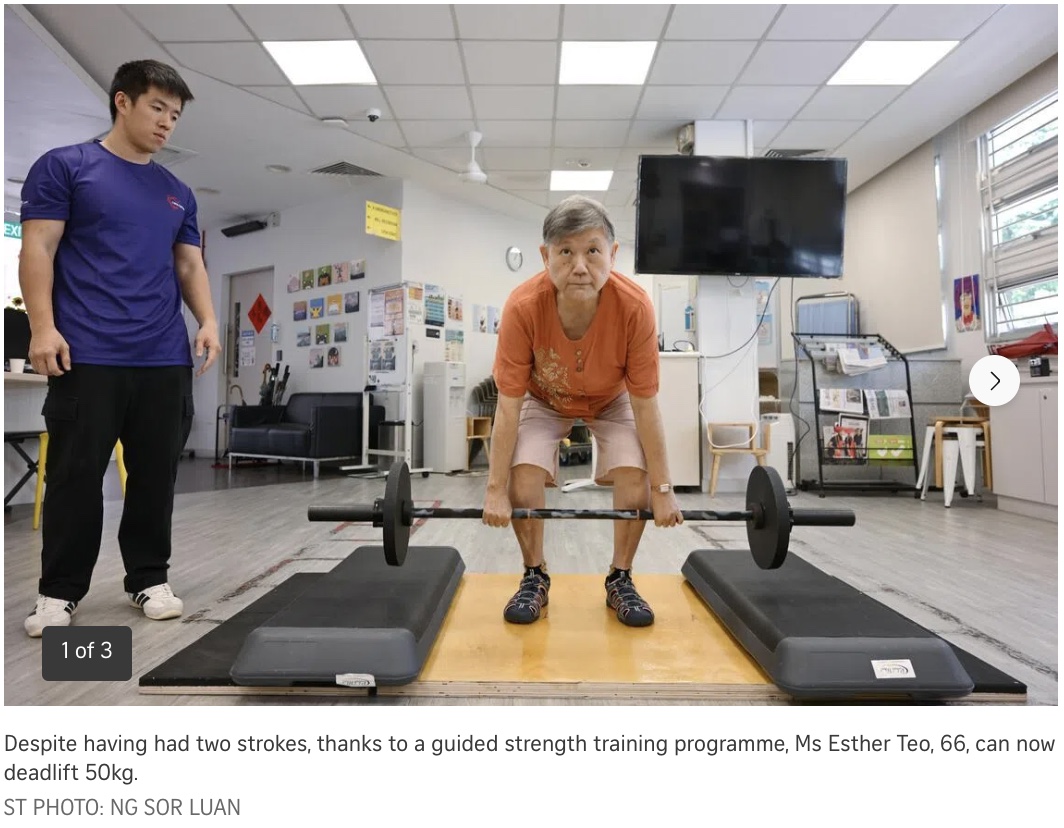
For decades, traditional medical advice told osteoporosis patients to stick to light walking and gentle swimming out of fear that heavy lifting would cause fractures. The landmark LIFTMOR clinical trial completely upended this cautious paradigm. Published in the Journal of Bone and Mineral Research, researchers evaluated postmenopausal women with low bone mass who underwent twice-weekly, 30-minute high-intensity progressive resistance training (HiPRT) featuring heavy deadlifts, squats, and overhead presses.
The results were revolutionary. Not only did the participants experience zero injuries under strict supervision, but they achieved significant, measurable increases in bone mineral density at the lumbar spine and femoral neck. Long-term follow-up data compiled in the LIFTMOR longitudinal analysis confirms that these skeletal density improvements are safely sustained over time. Real-world tracking of individuals following this exact framework over extended multi-year periods shows structural bone score gains that completely defy standard expectations of age-related degradation.
How Mechanical Loading Rebuilds Bone
Bone tissue operates under a biological principle known as Mechanostat Theory. Your bones adapt directly to the mechanical loads placed upon them. When you subject your skeleton to heavy, axial resistance training, the physical bending forces trigger specialised bone cells called osteocytes. These cells signal your body to deposit calcium and phosphate crystals along the lines of mechanical stress, effectively filling in the porous gaps left by osteoporosis. Swimming and casual walking simply do not provide the necessary mechanical impact required to trigger this bone-building response. True skeletal protection requires progressive loading.
The Power of Muscular Bracing
Building stronger bones is only half of the equation. To truly eliminate fracture risk, you must address why people fracture in the first place: they fall. By pairing axial bone loading with deep muscular strength work, we construct an internal musculoskeletal armour that wraps around your skeleton.
Our training focus goes beyond standard exercises to develop powerful lower body stabilisers and exceptional core reactivity. By building high capacity in your glutes, quadriceps, and spinal erectors, you gain the dynamic balance needed to catch yourself if you trip on an uneven pavement. Robust muscle mass dampens impact forces during daily activities, absorbing shock waves that would otherwise travel directly into fragile joint structures.
The Fallacy of Fragility
Slowing down and wrapping yourself in bubble wrap is the fastest way to accelerate bone decline. Muscles and bones must be given a reason to stay strong. Under precise, structured coaching, high-effort strength work is not the danger; it is the definitive solution.
Moving From Fear to Physical Freedom
Living with osteoporosis shouldn’t mean constantly worrying about your body giving out. True long-term protection doesn’t come from restricting your life; it comes from actively building structural resilience. By combining advanced medical insight with targeted weight training, we help you take control of your skeletal future through structured, active personal training.
Visit Our Chinatown Clinic
Our chiropractor clinic at Hong Lim Complex is a short walk for professionals based in Raffles Place or Tanjong Pagar. We are centrally located with direct access via the North East, Downtown and Thomson East Coast lines.
Transport Access
- 📍 3 min walk from Chinatown MRT
- 📍 5 min walk from Clarke Quay MRT
- 📍 7 min walk from Maxwell or Raffles Place MRT
- 📍 Directly above Hong Lim Food Centre
538 Upper Cross Street, Hong Lim Complex, Singapore 050538
Stop fearing the weights and start rebuilding the structural density your skeleton needs