
/
CHIROPRACTIC REHAB
/
SHOULDER MOBILITY
/
WHY YOUR FRONT SQUAT ELBOW DROP IS NOT A MOBILITY ISSUE
The front squat is an exceptional test of upright torso and core strength as well as spinal positioning. When executed correctly, the barbell rests securely across the front deltoids, hands sit just outside the shoulders with a light grip, the chest drives proudly upward, and the elbows are punched high so the upper arms remain parallel to the floor. Yet, the moment many lifters unrack a challenging weight, everything collapses. The elbows drop, the upper back rounds forward, and the bar starts rolling off the shoulders. For years, coaches and athletes have rushed to the same conclusion: it is a shoulder mobility restriction. However, a vast majority of the time, the joint itself is completely fine.
1. How to Know: The Passive Mobility Test
To determine whether your joint is restricted or if your muscle stamina is failing, you must differentiate between mobility and active mobility. Mobility refers to the total range of motion accessible at a joint regardless of if it is guided by an external force. Active mobility, on the other hand, requires your muscles to actively generate tension and hold that end range against gravity or external load.
Testing your passive shoulder range without active muscle contraction reveals whether your joint capsule, triceps, and lats have sufficient physical length for a textbook front rack. If you achieve full range passively but collapse under the barbell, the limitation is not a structural mobility restriction, it is an active mobility and isometric endurance failure.
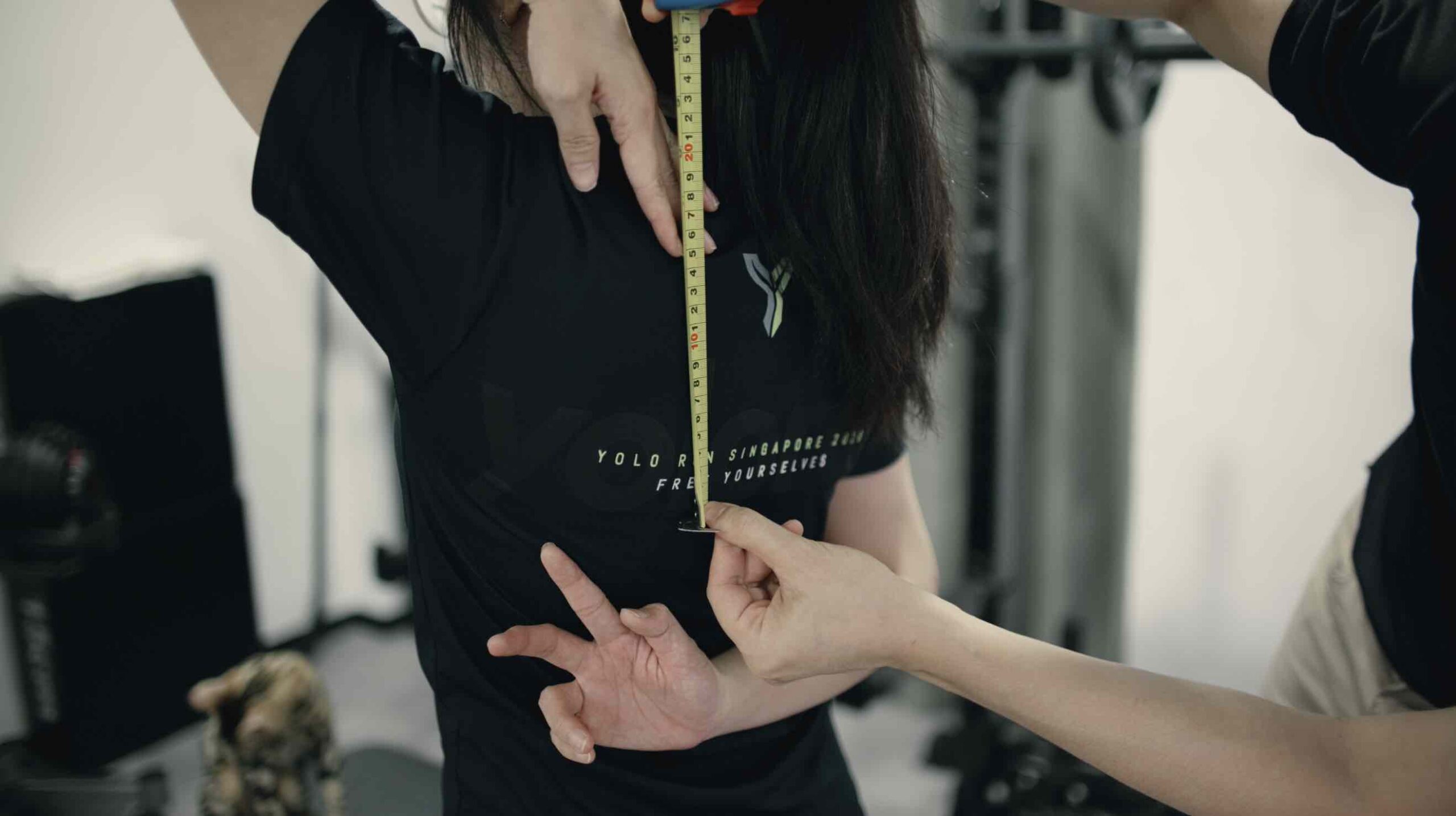
To test passive shoulder mobility for a front squat, lie flat on your back on the floor. Have a partner gently guide your upper arms into shoulder flexion and external rotation, mimicking the rack position with upper arms parallel to the floor, while keeping your ribcage locked down. Alternatively, stand flat against a wall and bring your arms into the front rack alignment.
If your upper arms easily reach parallel without forcing your lower back to arch or your shoulders to pinch, your joint capsule, triceps, and lats have sufficient physical length. The elbow drop you experience under load is not a mobility limitation! It is an active endurance failure.
2. The Real Culprit: The Anterior Deltoid
If passive mobility is sufficient, why do the elbows plummet under load? The primary culprit is the anterior deltoid (front deltoid). In standard training programs, athletes rarely isolate the front deltoid for sustained postural work.
Even bodybuilders treat the front deltoid primarily as a lever muscle through dynamic movements such as overhead presses or front raises. In these dynamic exercises, the time spent with the humerus locked at a horizontal position is brief before the joint angle shifts or rests.
In a front squat, the front delt acts as a fixator and postural muscle. It must sustain continuous, unwavering isometric contraction to hold the upper arm horizontal under heavy axial loading for the entire duration of the set. Because the muscle is rarely prepared for this specific endurance load, it fatigues rapidly.
3. Movers vs Stabilisers: Muscle Fibre Adaptation
Targeting the correct muscle group is only half the equation. Exercise programming must target the appropriate muscle fibres by introducing the correct stimulus. Muscles contain different fibre types suited for specific functions:
- Fast-Twitch Fibres (Type II): Designed for heavy dynamic movements, joint displacement, and rapid force production over short durations.
- Slow-Twitch Fibres (Type I): High endurance, fatigue resistant fibres designed for prolonged isometric contraction, holding joints in stable positions without changing angles.
When front deltoid training consists exclusively of heavy, dynamic pressing, slow-twitch isometric endurance remains under-developed. Under the sustained load of a heavy front squat, fast twitch fibres fatigue quickly, leading to an inability to hold the humerus elevated.
At a Glance: Mobility Limitation vs Muscular Endurance Deficit
| Feature | True Mobility Limitation | Front Delt Endurance Deficit |
|---|---|---|
| Passive Test Result | Unable to reach position even without weight | Full range achieved easily during passive test |
| Root Cause | Joint capsule restriction, lat stiffness, or triceps tightness | Fatigue of postural fixators under sustained loading |
| Breakdown Timing | Immediate upon attempting setup or unracking bar | Progressive elbow drop mid set or during high volume |
| Solution Strategy | Targeted stretching and soft tissue mobilisation | Isometric holds and targeted endurance programming |
4. Can You Fix Front Deltoid Failure by Just Front Squatting More?
When faced with an elbow drop, the common advice is to simply front squat more until the body adapts. However, if you already suffer from anterior deltoid failure, the answer is an emphatic no.
Because a loaded barbell imposes a high absolute demand, once the front delts reach fatigue, they cannot generate the force needed to maintain the humerus parallel to the floor. The load is too heavy for the exhausted muscle fibres to fire effectively, meaning no positive adaptive stimulus is provided to the front delt fixators. Instead of training shoulder endurance, you end up reinforcing compensatory movement patterns by overusing your upper trapezius, levator scapulae, and lumbar erectors as your torso collapses forward to keep the bar from dropping entirely.
5. Progressive Exercise Protocols for Front Deltoid Endurance
To build true isometric endurance in the front delts without forcing compensatory patterns, exercises must be performed strictly in the horizontal plane to mirror front squat demands.
Phase 1: Resistance Band Standing Pec Fly (Horizontal Plane Focus)
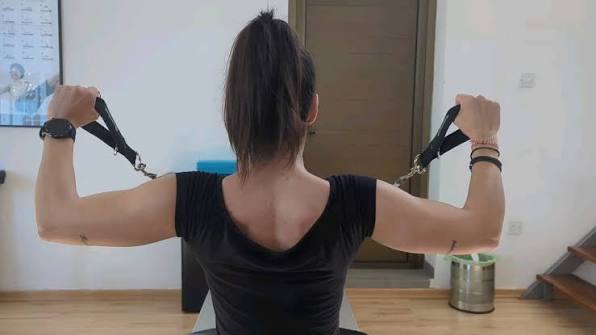
Perform a standing pec fly using a light resistance band, keeping the humerus locked strictly on the horizontal plane throughout the entire movement. Do not use a cable machine! Higher external resistance on a cable shifts the primary load onto the pectoralis major. With a resistance band, the weight of your arm itself provides the primary gravitational load on the front deltoid, while the band offers horizontal guidance. Maintaining pure horizontal positioning requires continuous anterior delt engagement. To have the most transferable effect to a front squat, keep elbows bent at 90 degrees with the hands pointing to the ceiling. Avoid letting the arm drift up or down, as these micro-movements provide micro-breaks that relieve tension from the target fibres. Aim for 15 to 20 strict repetitions before progressing.
Phase 2: Light External Resistance (1 to 2 kg Dumbbells)
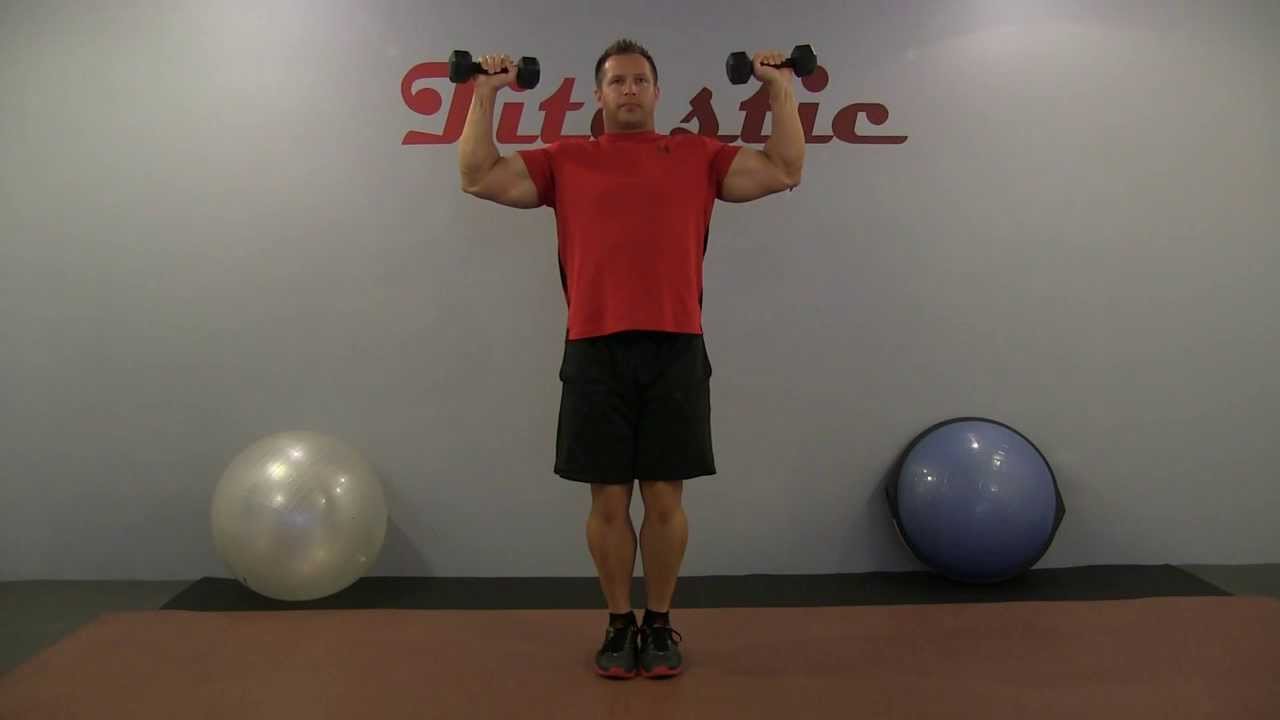
Once 20 reps become manageable, keep the same movement pattern but add a 1 to 2 kg dumbbell in each hand. The goal is to provide the first direct external load for the front deltoid to resist against. Keep the weight light. Overly heavy dumbbells will cause the body to cheat by recruiting the chest and upper traps. Build up your capacity to perform 15 to 20 reps, or up to 35 reps, to establish a robust endurance foundation.
Phase 3: Empty Barbell and Partial Range Front Squats
Transition to an empty barbell (a 10 to 15 kg technique bar is ideal, or an unloaded 20 kg bar). Focus on holding the humerus horizontal without allowing the elbows to dip as you initiate a squat. Because the weight is considerably light for a squat, there is a temptation to perform a full-range squat while letting the elbows collapse or relax downwards. This renders the exercise ineffective due to position breaks. Instead, maintain a strict horizontal arm position and squat only as deep as your anterior deltoid can sustain without dipping. You can choose to reset and re-establish arm positioning at the bottom of your available range before driving back up.

6. Other Structural Considerations
While front delt weakness is a primary culprit, other kinetic chain breakdowns can lead to an elbow drop during front squats:
- Poor Scapular and Mid-Back Stability: If the rhomboids, middle trapezius, and lower trapezius lack strength, the shoulder blades are forward into uncontrolled protraction under load, pulling the humerus downward.
- Poor Shoulder Joint Centration: Inadequate deep rotatory stability prevents the head of the humerus from remaining centered within the glenoid fossa during active elevation.
- Restricted Thoracic Mobility: If the thoracic spine cannot extend sufficiently to maintain an upright chest, the entire torso leans forward, causing the bar path to dip.
7. How Square One Active Recovery Can Help
If front delt weakness or shoulder collapse has affected your front squat, you have likely developed secondary movement compensations to make up for it. At Square One Active Recovery, our clinical approach systematically rebuilds your movement foundation without compromising on core mechanics.
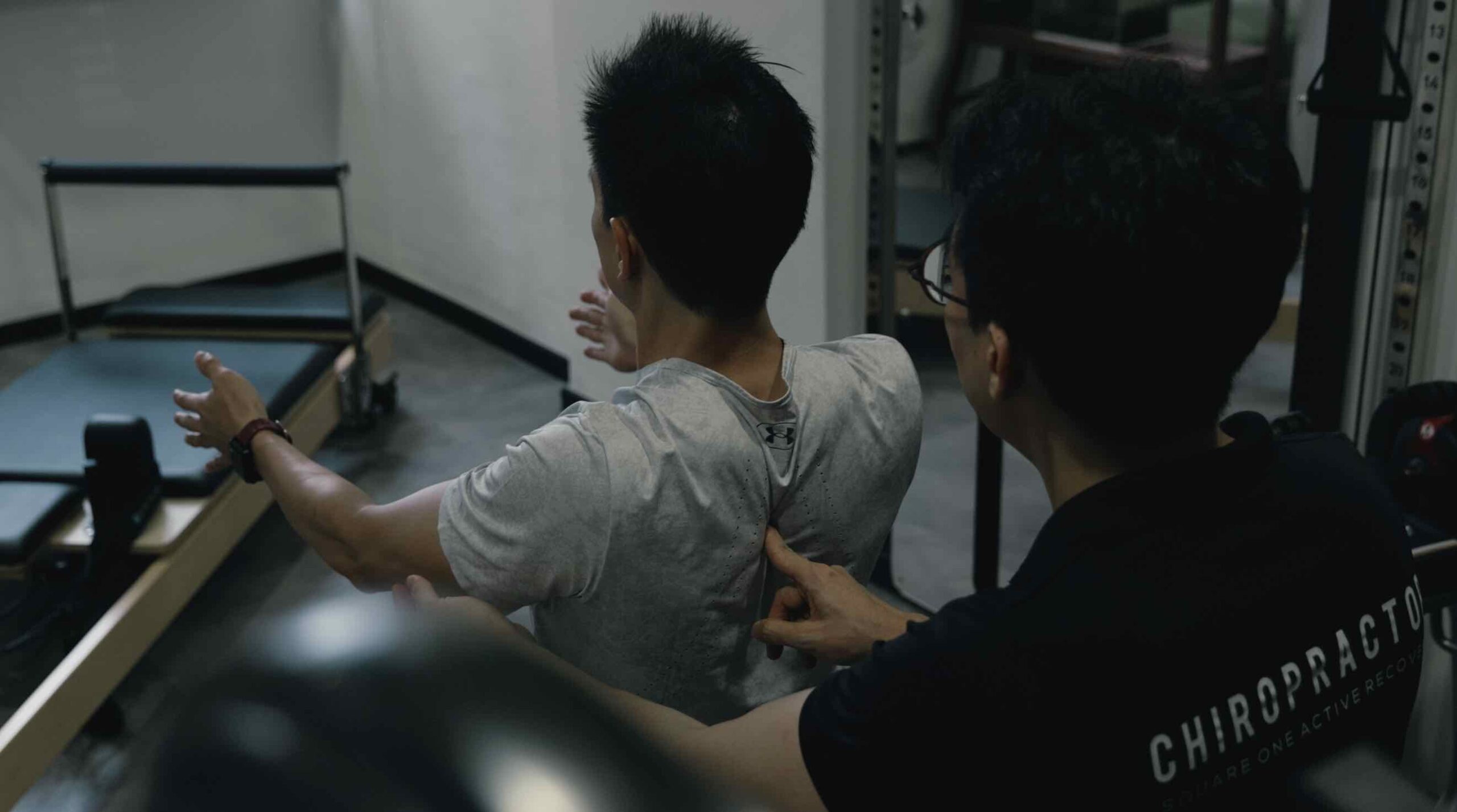
In your private Pilates class, we will focus on mid-back retraction and scapular control as well as shoulder centration. We then progress to advanced apparatus work, such as the Cadillac Teaser, to train shoulder fixators in direct coordination with the deep core (transversus abdominis and abdominal wall) and upper back. From there, we transition into load-based strength conditioning before performing detailed barbell technique refinement.
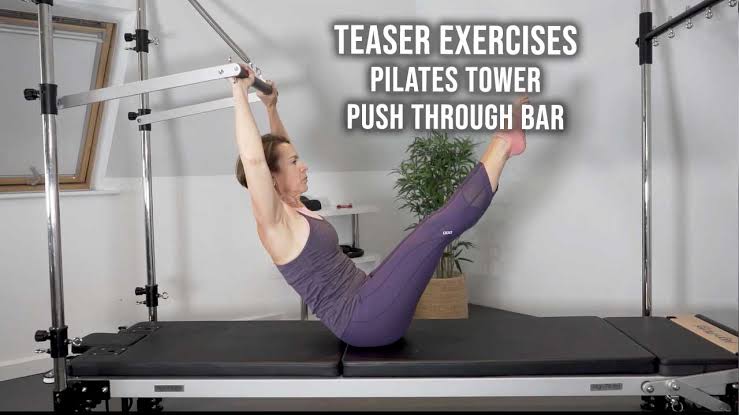
Working with movement specialists, such as a chiropractor or clinical Pilates instructor, allows you to identify subtle movement errors, correct compensatory habits, and return to heavy front squatting safely and efficiently.
Ready to address your front rack position and improve your front squat performance? Book a comprehensive assessment with Square One Active Recovery today.
Key Takeaways
When addressing front squat position issues, remember these core principles:
-
1
Test passive range first. If your arms reach parallel to the floor during a passive test, your joint mobility is adequate for the front squat rack position.
-
2
Do not just front squat through failure. Pushing heavy squats when the front delts are exhausted forces compensation through the upper traps and lower back without building front delt endurance.
-
3
Build strict horizontal endurance. Progress from resistance bands to light dumbbells and empty barbells while maintaining strict horizontal humerus alignment to retrain fixator stamina.

