
When joint pain strikes, the immediate instinct for many people is to demand a scan. You want clear answers, and traditionally, that means getting an MRI to find what is broken so an orthopaedic surgeon can fix it.
However, a landmark ten year study tracking arthroscopic knee surgery vs conservative exercise therapy confirms what evidence based practitioners have advocated for years. For degenerative tears, surgery provides no extra long term benefit over exercise therapy.
If you are navigating joint pain or cartilage issues, rushing into an MRI or scheduling keyhole surgery might actually set your recovery back. As an exercise based chiropractor in Singapore, I advocate for active conservative care because it delivers strong outcomes without unnecessary invasive risks.
The MRI Trap in Conservative Care
If you are committed to conservative management and you are not actively considering surgery, getting an MRI scan is usually unnecessary. In the absence of clinical red flags such as major trauma, a true locked joint, fever, or severe neurological loss, imaging rarely changes your treatment path.
MRIs frequently catch normal age related changes like meniscal tears that exist in completely healthy, pain free adults. Seeing these structural findings on paper often creates severe anxiety, causing people to protect their joints excessively, move less, and prematurely opt for surgical repairs they never actually needed.
We treat the individual and their physical capacity, not just an image on a screen.
What 10 Years of Clinical Data Really Show
The study behind these findings is a landmark randomised controlled trial published in The New England Journal of Medicine. Researchers tracked patients over a decade to compare arthroscopic partial meniscectomy against sham surgery (i.e., affected meniscus tear not removed) for degenerative meniscal tears. The results were clear. Over ten years, patients who underwent keyhole surgery experienced no clinically meaningful advantages compared to those who completed exercise rehab.
Even more concerning, radiographic scans at the ten year mark revealed that patients who had surgical tissue removed faced a significantly higher prevalence of joint space narrowing and accelerated osteoarthritis compared to the placebo/sham surgery group. This decade of data provides proof that invasive procedures offer no long term advantage over conservative care, whilst actively increasing joint risks.
| Treatment Pathway | 10 Year Long Term Reality |
|---|---|
| Arthroscopic Surgery | Trimming or repairing cartilage offers no greater pain relief or function than exercise, whilst carrying surgical risks. |
| Unnecessary Scans | Early MRIs often reveal normal degenerative findings, creating fear and pushing individuals toward unnecessary operations. |
| Natural Soft Tissue Healing | Tissues have remarkable capacity to heal, with studies showing even full ACL tears rejoining through progressive rehab. |
| Active Exercise Rehabilitation | Strengthens surrounding muscles, restores joint function, and protects long term cartilage integrity naturally. |
Surgery Does Not Always Superior Outcomes Yield
The long term decade follow up data comparing arthroscopic partial meniscectomy against structured exercise therapy shows equal improvements in pain and mobility. Surgery provided no distinct clinical edge for degenerative conditions.
We must move away from the assumption that every structural defect requires a knife. The human body possesses phenomenal self healing capabilities under the right conditions. Recent research demonstrates that even complete ACL tears can spontaneously heal and continuously reunite without surgical intervention when managed with an appropriate rehabilitation framework.
The Long Term Risk of Accelerated Joint Degeneration
Invasive procedures are not merely equivalent in outcome, they carry secondary risks. When tissue is surgically trimmed or removed from a joint, you lose natural cushioning that absorbs daily impacts.
Tracking data indicates that removing this tissue can accelerate osteoarthritis and joint wear. Given the clear lack of superior results, surgery carries unwanted risks and should be actively avoided whenever conservative options remain unexplored.
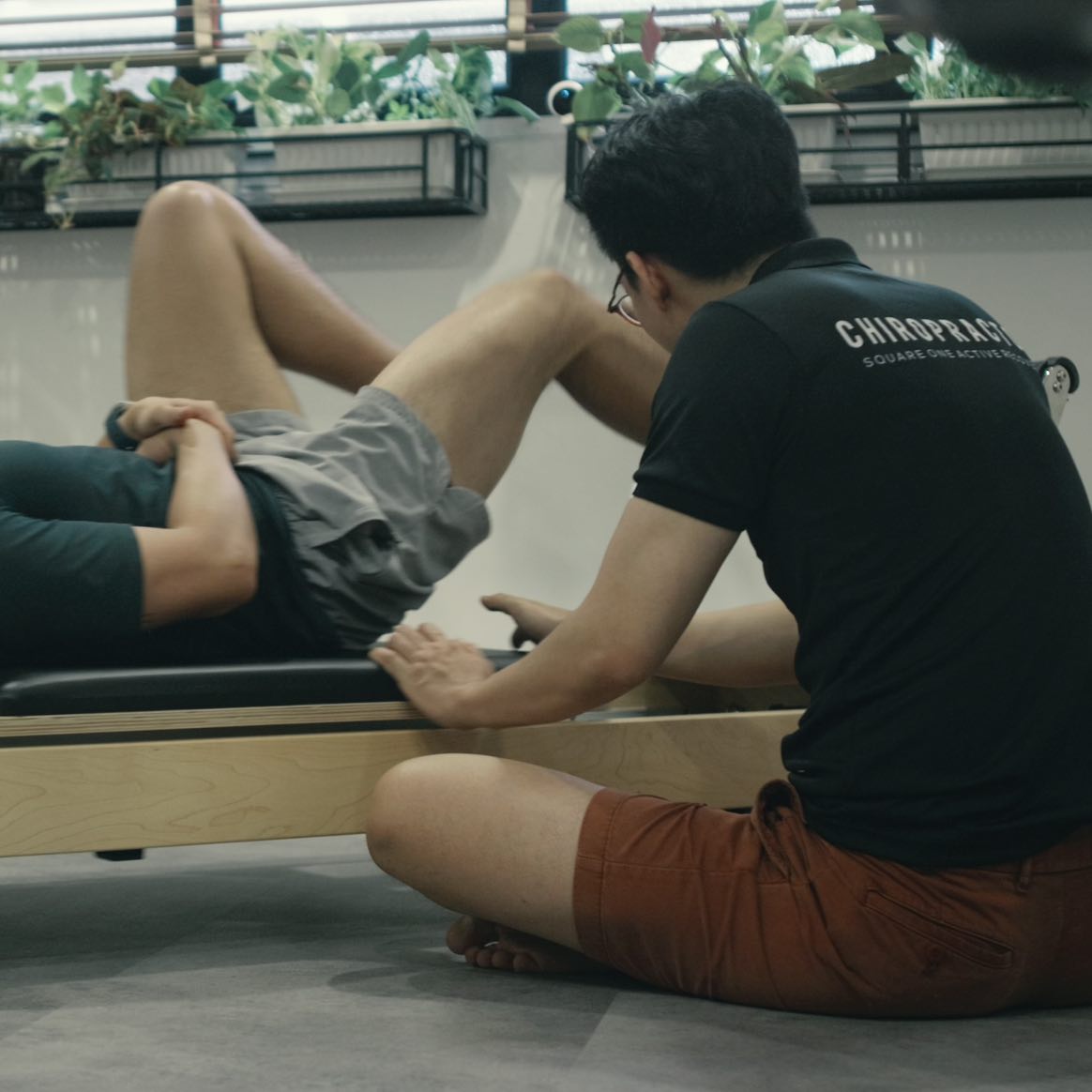
Active Recovery Over Invasiveness: Surgical procedures are not automatically superior. Targeted exercise rehabilitation builds durable tissue loading capacity while preserving your joint architecture for the long run.
Trusting Your Body Potential
You do not need to cut away tissue to resolve discomfort or restore joint stability. Strengthening the surrounding musculature allows your body to adapt, distribute loads efficiently, and manage structural changes without operative downtime.
By skipping unnecessary MRIs and focusing on progressive loading, you protect your joint structures and build sustainable, long lasting functional resilience.
How to Start Your Active Recovery
Choosing active rehabilitation over unnecessary procedures gives you direct control over your joint health. Working with an exercise focused practitioner ensures you train safely within your current capabilities.
At Square One Active Recovery, our Singapore chiropractor uses evidence based exercise protocols to help you overcome joint issues without relying on surgery or continuous scans. Visit our Hong Lim Complex practice in Chinatown to take charge of your recovery trajectory today.
Key Takeaways for Joint Care
Before considering invasive options or demanding extra imaging, keep these core principles in mind:
-
1
Skip unnecessary scans. In the absence of medical red flags, MRIs reveal irrelevant structural changes that fuel unnecessary medical interventions.
-
2
Recognise natural healing. Tissues like menisci and even full ACL tears can heal or adapt spontaneously without undergoing operative repair.
-
3
Protect joint architecture. Surgery carries the risk of accelerated joint degeneration, making targeted exercise therapy the safer first line choice.

