
Walking out of your first active recovery or rehab session, you probably expect to feel an immediate wave of relief. So, it can be incredibly jarring, and even a little frustrating, if you wake up the next day feeling more aches, soreness, or a slight uptick in your usual symptoms.
If this is happening to you right now, take a deep breath. You have not broken anything, and your condition is not getting worse. An initial spike in discomfort is completely normal when you begin active care.
Let us pull back the curtain on exactly what happens in your first session, why your body responds this way, and how we work together to navigate your recovery safely as a leading chiropractor in Singapore.
Breaking Down Your First Consultation and Assessment
Your initial session with us is all about consultation and assessment. We need to establish an exact baseline of your current physical capacity. To do this safely and accurately, the assessment is broken down into two distinct parts.
| Assessment Part | What We Do & What You Feel |
|---|---|
| 1. Max Strength Testing | Done via isometric contractions in mid muscle length. It is not possible to tear or sprain a joint here. You can experience cramps or post assessment aches, but there is no worsening of your actual condition. |
| 2. Functional Testing | Movement analysis is done almost entirely injury risk free positions. Exercises can be strenuous, but they are designed to not cause further injury or tissue damage. |
| 3. Home Exercise Prescription | You are given 2 to 3 targeted exercises to perform at home to begin building specific tissue resilience between sessions. These prescribed exercises are safe for you to do independently without supervision. |
Once we have completed your baseline assessment, we discuss the best path forward to achieve your goals. Depending on your needs, some people will choose to join our 6-week structured exercise programme for a guided, step-by-step recovery process, while others may prefer to work with us on an ad-hoc consultation basis. We offer different flexible options designed to meet you exactly at your personal preferences and lifestyle constraints. Additionally, for clients who prefer an exercise-as-lifestyle approach rather than traditional rehab, we also provide personal training and clinical pilates to help you build long-term strength and vitality.
Why Soreness Often Increases in the First 2-3 Weeks
When you combine the physical exertion from the maximum strength testing, the movement patterns of the functional tests, and your new home exercise practice, the cumulative load on your body increases. Because of this added stimulation, we ask our clients to expect their symptoms to increase in the first 2 to 3 weeks.
However, it is vital to recognise that this does not mean your underlying condition is getting worse. Your nervous system is simply reacting to unfamiliar mechanical loads, and your muscles are adapting to the work required to heal them long term.
Customising Exercise to Your Comfort Threshold
We completely understand that everyone has a completely unique pain threshold and pain tolerance. If you feel like your prescribed home exercises are giving you more DOMS (delayed onset muscle soreness) or pain than you are comfortable with, let us know immediately. We will definitely regress the exercises for you to find a more manageable baseline.
Exercise as a clinical intervention requires significant customisation. This tailored approach is only possible with your regular feedback. Keep in mind that there is also a physical lag time; even after we modify your exercises, the reduction in discomfort may not occur immediately, so give your body some time to settle down.
Biological Reality: Adaptation Takes Months, Not Days
It is also crucial to align our expectations with actual human biology. Your body takes a significant amount of time to structurally adapt to loaded exercise. For instance, actual skeletal muscle growth and structural remodeling only begin to happen around two to four months of consistent training.
Worse yet, dense connective tissues such as cartilage, tendons, and ligaments are even slower to adapt. Because these structures have a notoriously poor blood supply compared to muscle tissue, they heal and rebuild at a snail’s pace. It can easily take 6 or more months of dedicated, progressive loading before a noticeable improvement in these tissues can be experienced. Patience during this biological timeline is absolutely mandatory.
Recovery is a Journey, Not a Destination
Ultimately, true recovery is far more about the journey than a sudden destination. It is not about making your pain magically vanish or becoming incredibly strong overnight. Instead, it is about learning more about your body, understanding its signals, and working on it a little bit at a time so that the exact same pain or injury does not keep happening to you over and over again.
Nobody gets jacked or builds superpower strength in just 3 to 4 months. It is about committing to the exact same foundational practices day in and day out for months and years before you really start to witness outstanding, life-changing results. Consistency is what separates a temporary fix from permanent physical resilience.
That is not to say you need to keep coming to see me for years. My clinical job is simply to help you find your footing and work as an expert guide to help you safely navigate your condition. Once you have built that baseline confidence and are ready to exercise entirely on your own, you can confidently take the reins and continue your own training out in the real world.
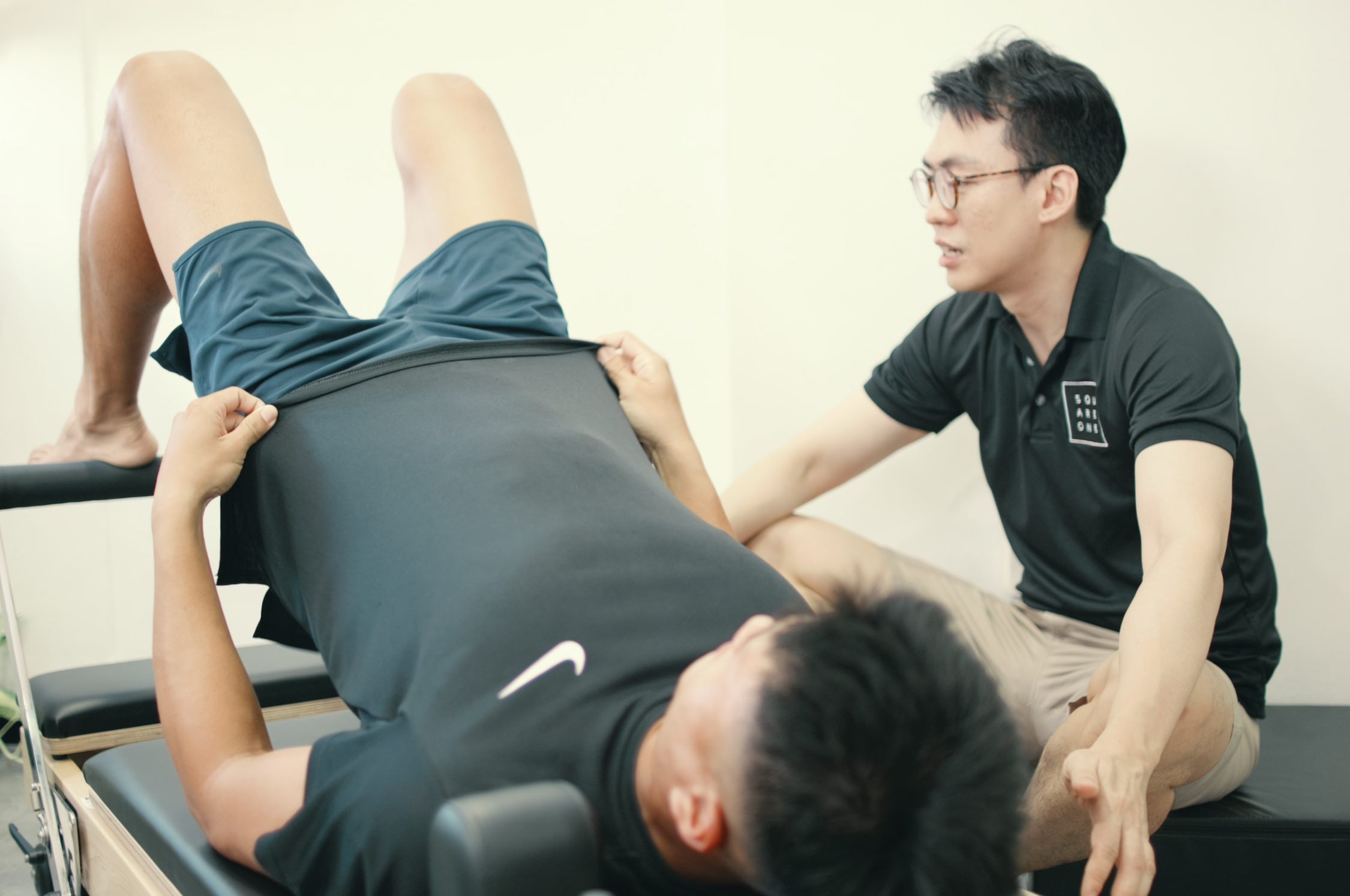
Active Recovery in Action: Initial soreness is a normal physiological response to loaded movement. True rehabilitation relies on open communication to safely adjust your exercises as your capacity improves.
A Bilateral and Collaborative Partnership
True recovery is a bilateral, open, and deeply collaborative approach. We depend heavily on honest feedback from you to know exactly what is working and what is not working. We also need your patience, understanding that meaningful physiological results are not immediate.
By doing the right things over and over again, we believe we can help you build the strength, mobility, and confidence needed to achieve lasting, long term relief.
Take Action with Square One
Do not let the fear of temporary post exercise soreness stop you from making progress. Navigating active recovery with an evidence based chiropractic adjustment to your lifestyle and movement habits is the fastest path to sustainable health.
At Square One Active Recovery, we coach you through a customised, strength based framework designed to help you regain complete function. Connect with our clinic at Hong Lim Complex in Chinatown today, and let us work collaboratively toward your physical freedom.
Key Takeaways for Your Recovery
Understanding your body’s response to your initial assessment helps keep your active rehab on the right track:
-
1
Assessments are injury risk free. Isometric max strength testing and functional movement checks cannot structurally worsen your condition or tear tissues.
-
2
Expect initial fluctuations. A cumulative spike in soreness or temporary symptom increase is completely normal during the first 2 to 3 weeks of starting care.
-
3
Respect biological timelines. True muscle adaptation takes 2 to 4 months, while connective tissues like cartilage and ligaments take 6 or more months to show significant improvement due to low blood supply.

