
If you have ever dealt with a stubborn, aching neck, you know how quickly it can drain your energy and derail your day. Whether it is a constant dull ache from staring at a monitor or a sharp pinch every time you check your blind spot, seeking help is a massive first step. However, entering a rehabilitation program is not always smooth sailing. Neck pain rehab comes with real world hurdles such as financial investment, time commitments, temporary discomfort, and the physical reality of how your body moves. Here is an honest look at the challenges, the underlying science, and what you should consider along the way.
1. The Financial Factor: Beyond “Just Do These at Home”
One of the first hurdles patients face is cost. Quality rehab requires a financial commitment, especially during the initial stages.
Why can you not just grab a few exercises off the internet and do them in your living room?
- Supervision is crucial early on: When you are in pain, your brain naturally tries to trick your body into compensating. At the start, having a professional physically guide your movement ensures you are targeting the right muscles rather than fueling bad habits.
- Specialised equipment makes a difference: High level rehab often leverages specialised apparatuses. In Clinical Pilates, for example, we frequently use the Reformer and the Cadillac. These machines provide variable spring resistance and assistance, allowing us to offload heavy joint pressure while safely retraining neck and upper body movement. Because most people do not have a Pilates setup at home, these initial phases naturally require in person sessions.
Read more: How much does it cost to see a chiropractor in Singapore?
2. The Time Investment (and Making It Work)
Rehab is not a quick 10 minute fix, as it demands space in your calendar. Between the dedicated session time and commuting back and forth, finding room in a busy work schedule can feel daunting.
To stay consistent, convenience is everything. Choosing a location that fits seamlessly into your daily rhythm removes friction. For example, our studio is nestled right in Chinatown, just minutes on foot from the Raffles Place CBD and easily accessible via the Downtown Line (DTL), North East Line (NEL), and Thomson East Coast Line (TEL at Maxwell Station). Finding a studio that lets you pop in during a lunch break or right after work can make the difference between sticking with your program or dropping out.
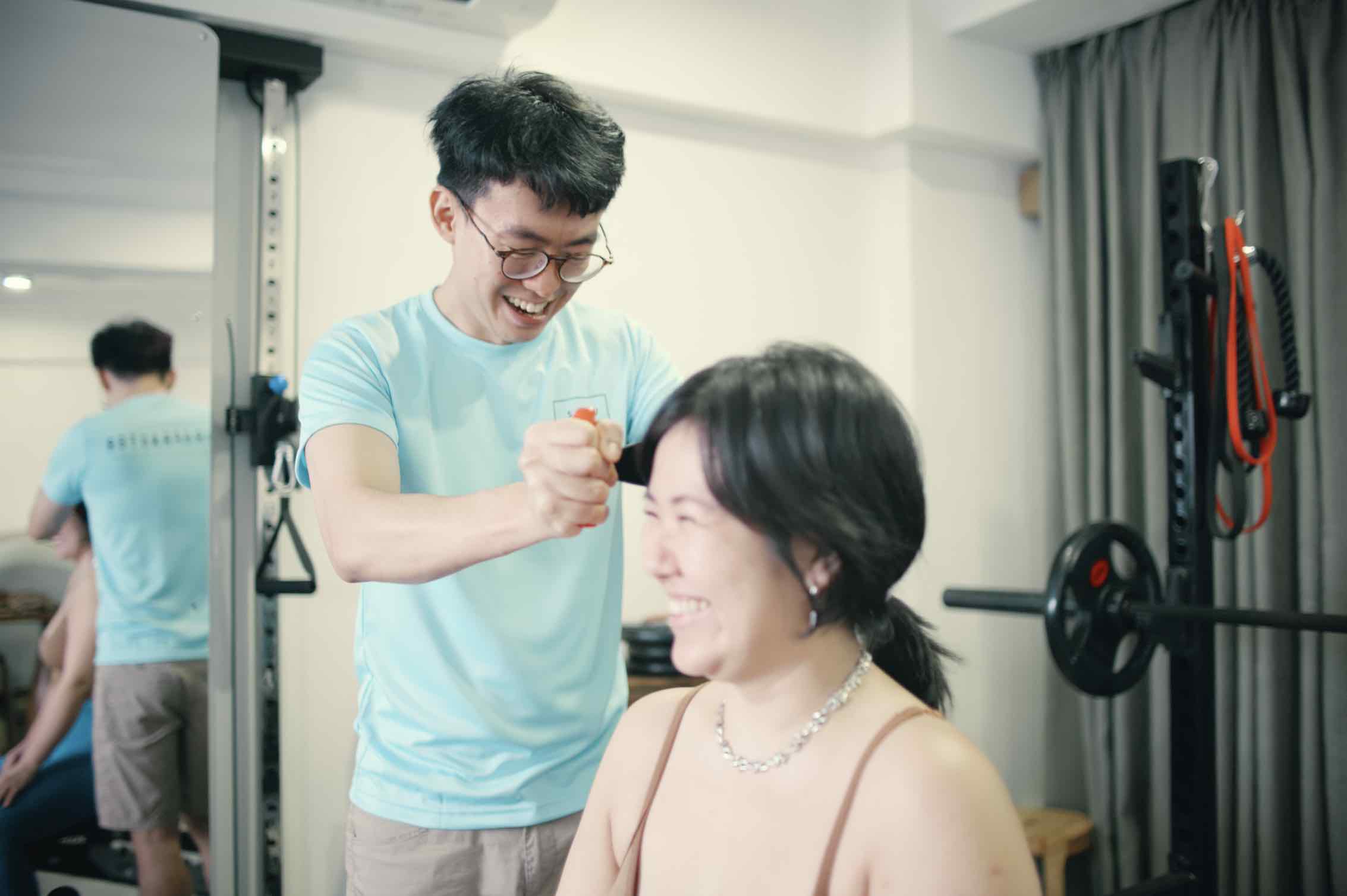
At a Glance: In-Clinic Rehab vs DIY Home Exercise
| Feature | DIY Home Exercise | Supervised Clinical Rehab |
|---|---|---|
| Movement Guidance | Unsupervised, high risk of compensatory patterns | Real time clinical feedback and technique correction |
| Equipment Access | Limited to bodyweight or basic resistance bands | Specialised apparatuses (Reformer, Cadillac Pilates) |
| Targeted Scope | Generic stretches focusing only on local neck tissue | Systemic loading addressing thoracic and scapular chains |
| Long-Term Outcome | Temporary relief with frequent symptom flare ups | Builds deep neck endurance and permanent physical autonomy |
3. Discomfort and “Rehab Headaches”
Let us set expectations early: rehab is not always a relaxing spa session.
Initial State
Sleepy / Stiff Muscles
Tension, fatigue, and poor joint mobility
Positive Outcome
Deep Endurance
Robust deep flexors supporting head weight
When you start waking up sleepy, underused muscles or gently mobilising stiff joints, your body will react. It is very common to experience mild soreness or temporary discomfort during or after your sessions.
Because the nerves and blood vessels in your upper neck are closely linked to your head, working on cervical mobility can sometimes trigger temporary tension headaches. A skilled therapist expects this, monitors your tolerance, and adjusts the intensity so you stay in a safe, constructive zone of recovery without flaring up your symptoms.
4. It Is Rarely Just About the Neck
If a practitioner only looks at your neck, they are missing a huge piece of the puzzle. The cervical spine does not operate in isolation, and it relies on the surrounding structural scaffolding.
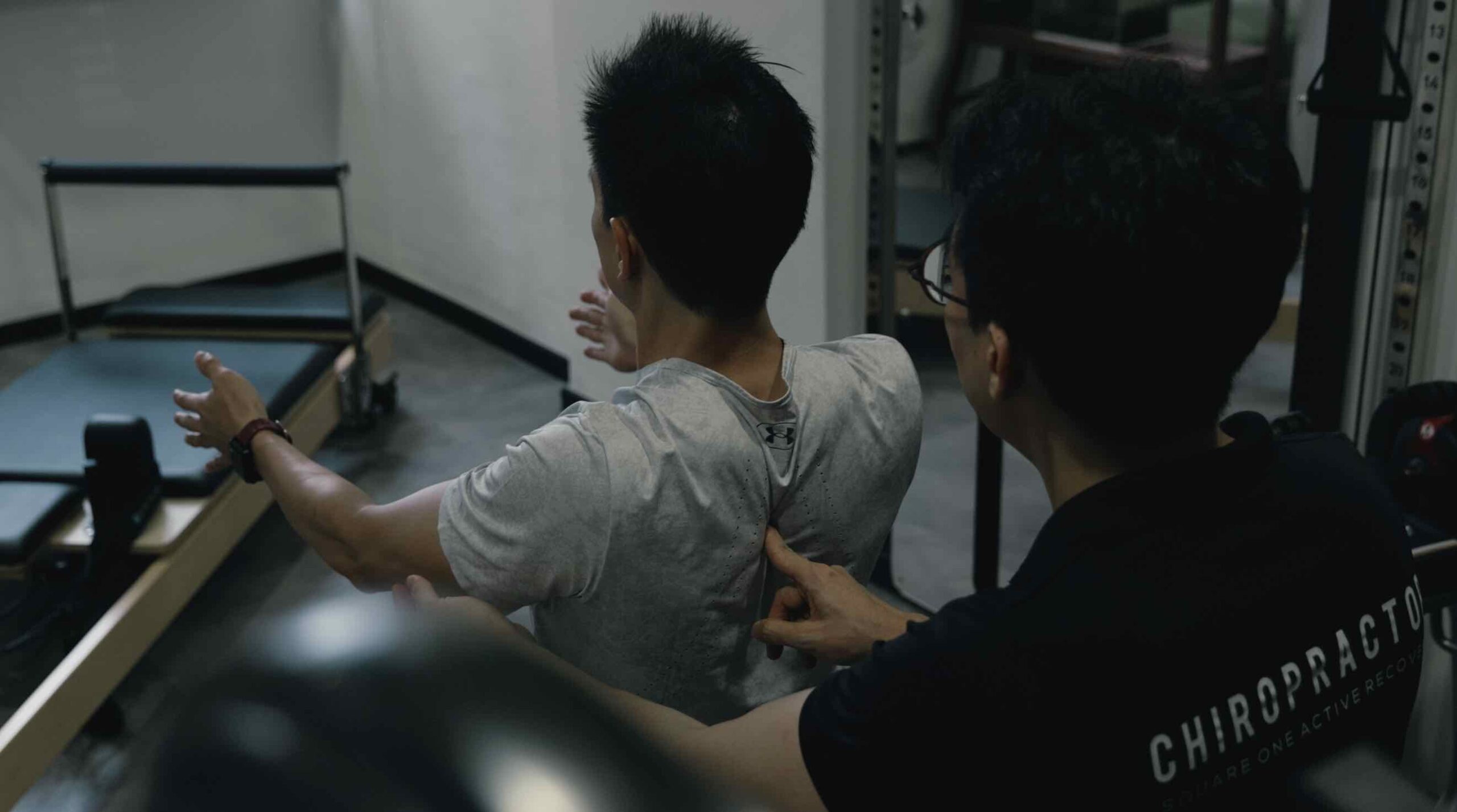
- The Mid-Back (Thoracic Spine): Think of your mid back as the core of your upper body. It anchors your trunk and upper limbs. If your thoracic spine is rigid and locked, your neck has to overwork and twist awkwardly to compensate.
- The Shoulders and Scapulae: Your neck muscles physically connect down into your shoulder blades. If your shoulders are misaligned or moving poorly, they drag directly on the neck joints.
5. Movement Quality, Joint Tracking, and “Cracking” Sounds
If you have been living with neck stiffness, your joints likely are not tracking smoothly. You might even hear or feel popping, clicking, or grinding, which we call crepitus. While crepitus is not always dangerous, it often signals poor joint mechanics and uneven pressure distribution that needs addressing.
Rehab focuses heavily on biomechanics:
- Segmental Cervical Movement: Can you move your neck joint by joint (segmentally), or does your cervical spine move like one solid, frozen block?
- Scapular Dyskinesis: We closely evaluate how your shoulder blades move across all six essential directions: elevation, depression, protraction, retraction, upward rotation, and downward rotation. If your shoulder blades are not moving rhythmically in these six directions, your neck will continuously bear the brunt of the load.
6. Endurance Over “Perfect Posture”
We spend hours sitting at office desks, typing on laptops, and looking down at smartphones. You have probably been told a thousand times to stand up straight or fix your posture.
However, modern neck rehab is shifting away from the myth of rigid, perfect posture. The real issue is not sitting in a certain position, but muscle endurance.
Your deep neck flexors are the small, deep lying stabiliser muscles situated right along the front of your cervical spine (think of them as the abs of your neck). When you look at a screen for hours, these muscles fatigue. Once they tire out, the larger, superficial muscles on the back and sides of your neck take over, tightening up and causing intense strain.
Rehab trains these deep flexors so they have the endurance to support your head effortlessly throughout a long workday, no matter what posture you happen to shift into.
Red Flag Symptoms
Always be mindful of red flags. Seek immediate emergency medical attention if your neck pain is accompanied by loss of bowel or bladder control, numbness in the groin, progressive limb weakness, unexplained weight loss, or high fever.
7. Modern Chiropractic Rehabilitation: From Passive Care to True Empowerment
When many people hear the word chiropractic, they picture quick, passive adjustments, such as a crack here, a twist there, and a recommendation to come back forever.
While manual techniques can offer short term symptomatic relief, modern, evidence based chiropractic rehabilitation operates on a fundamentally different paradigm.
Today’s approach bridges clinical joint care with functional movement, active exercise, and current musculoskeletal science. Rather than relying solely on passive treatments that keep you dependent on a practitioner, the modern model focuses on:
- Separating Fact from Hype: Rather than chasing unproven claims, evidence based care uses clinical research to guide treatment, ensuring every exercise and intervention targets the true root drivers of your pain.
- Active Rehabilitation Over Passive Fixing: A quick adjustment will not build deep neck flexor endurance or fix shoulder blade mechanics. Passive therapy might open a temporary window of relief, but active exercise is what keeps that window open long term.
- Empowering Client Autonomy: The ultimate goal of modern rehab is not to make you a lifetime patient, as it is to give you the physical capacity, confidence, and tools to manage your own spinal health.
By combining clinical expertise with structured movement training, modern chiropractic shifts the narrative from being fixed to taking active control of your recovery. It is an investment in your long term independence, ensuring that once you get your neck feeling and moving better, it stays that way.
If you are currently navigating neck pain or considering starting a rehab routine, book an assessment with Square One Active Recovery today or reach out to us to get started.
Key Takeaways
When navigating neck pain rehabilitation, keep these fundamental principles in mind:
-
1
Look beyond the neck. Effective rehabilitation addresses surrounding structural scaffolding, including thoracic spine mobility and all six movements of the shoulder blades.
-
2
Prioritise muscle endurance over perfect posture. Training deep neck flexors gives your neck the endurance needed to support your head throughout long workdays in any position.
-
3
Embrace active autonomy. Modern chiropractic moves away from lifetime passive adjustments to give you the strength, confidence, and tools to manage your own long-term health.

