
Living with chronic shoulder instability or recurring dislocations is physically painful and mentally exhausting. Over time, fear of another sudden subluxation leads many people to give up on swimming, overhead lifting, or sports altogether. You can be cautions and play it safe, but an accidental dislocation can still happen during routine daily tasks like reaching into the back seat of a car or rolling over in bed. If you feel trapped in a cycle of shoulder apprehension, targeted exercise is one of the most effective ways to reclaim joint integrity. Specialised apparatus Pilates, specifically on the Reformer and Cadillac Trapeze Table, offers a unique environment to re-educate your shoulder muscles, train joint centration, and restore full physical function.
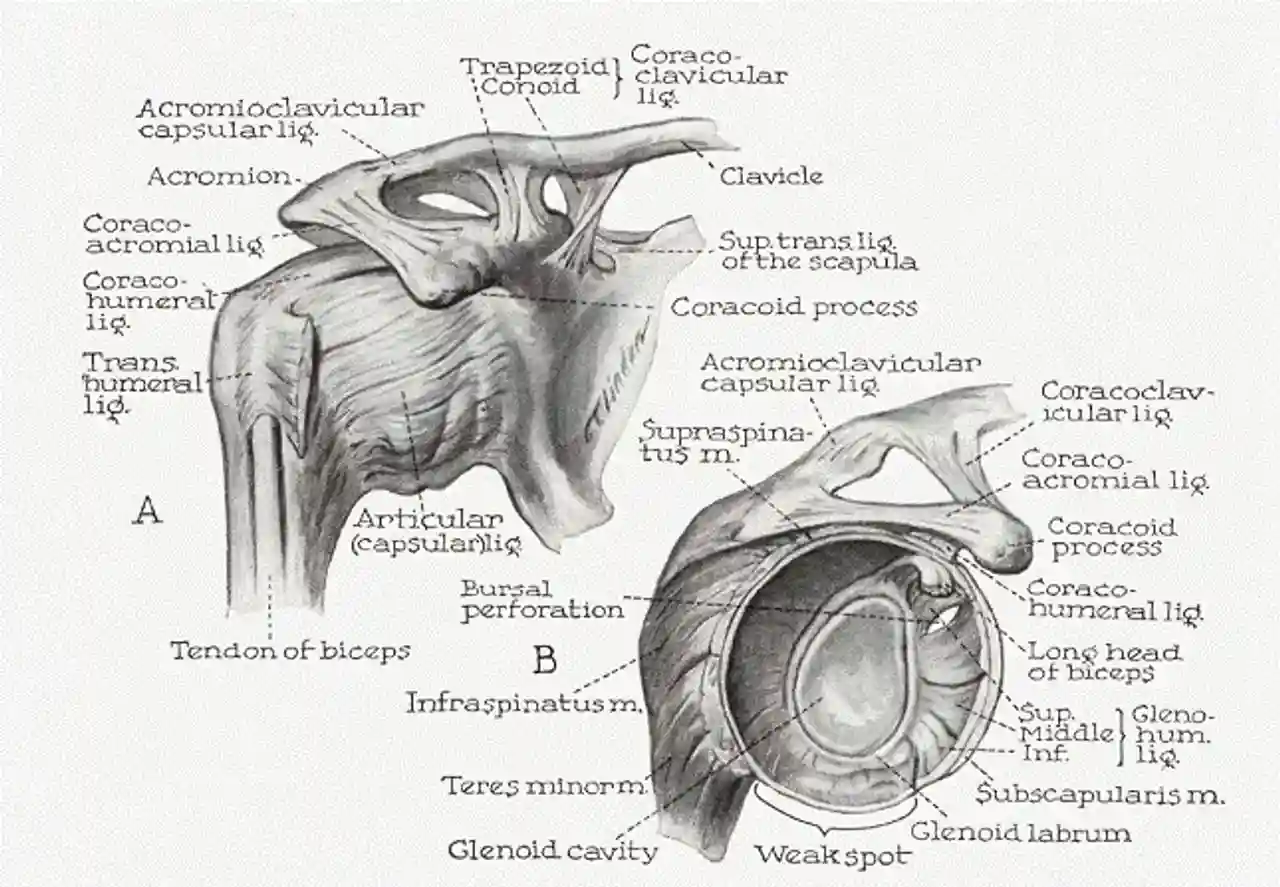
The shoulder glenohumeral joint is designed for mobility over stability. It resembles a golf ball resting on a tee, where the large head of the humerus sits against the shallow glenoid cavity of the scapula. To deepen this shallow socket, a ring of flexible fibrocartilage sits around the rim called the glenoid labrum.
During repetitive sports injuries, forceful overhead movements, or traumatic dislocations, this fibrocartilage lip can tear or peel away from the bone. Without an intact labrum, the physical suction and structural bumper preventing the humerus from slipping out is compromised, leading to chronic instability.
An MRI or magnetic resonance arthrogram provides clear visualisation of torn labral tissue or underlying structural defects. However, if you are not actively considering surgical repair, an MRI is usually unnecessary. Knowing the exact tear angle rarely alters non-surgical rehabilitation.
Conservative recovery focuses on global shoulder rehabilitation. By strengthening the dynamic rotator cuff muscles, stabilising the scapula, and retraining neuromuscular reflexes, the body learns to hold the joint centered globally regardless of localised structural damage.
2. Bone Loss and Severe Shoulder Dislocation
When a traumatic shoulder dislocation occurs with high force, structural damage often extends beyond soft labral cartilage to cause actual bone defects. Two of the most common osseous complications following a dislocation are Bony Bankart lesions and Hill-Sachs lesions.
A bony Bankart lesion occurs when a piece of the anterior (front) rim of the glenoid socket fractures off during an anterior dislocation. This chipping away of the bone flattens the front rim, effectively shortening the width of the socket and removing a vital physical barrier that keeps the arm centered.
At the same time, as the ball (humeral head) slips forward out of its socket, its softer posterolateral surface impacts violently against the hard, sharp anterior glenoid rim. This creates a compression fracture or “dent” on the back of the humeral head known as a Hill-Sachs lesion.
Together, this combination of a flattened socket rim and a dented humeral head significantly reduces joint stability, making the shoulder far more prone to slipping or popping out during routine overhead or reaching movements.
If you choose not to undergo surgical reconstruction to fix these bone defects, the only viable non-surgical option is structured physical rehabilitation. Because the passive bone structures are altered, you must strengthen the surrounding shoulder musculature to take over the job of stabilising the joint. Targeted strength training builds dynamic muscle capacity to keep the shoulder securely centered during daily activities.
3. How Motor Control Relieves Shoulder Pain
Due to frequent dislocations, people naturally develop a deep fear of movement, known as kinesiophobia. They become anxious about moving the shoulder into specific ranges, such as abduction and external rotation, because the brain associates those positions with threat and joint collapse.
Because our brain exhibits high neuroplasticity, living in a state of chronic instability causes the central nervous system to automatically adopt maladaptive motor control strategies. To shield the shoulder, the brain initiates high-level protective mechanisms, including involuntary muscle guarding, reflex muscle spasms, and altered firing patterns. Over time, these protective responses freeze up movement, create chronic stiffness, and disrupt smooth joint mechanics.
Rehabilitation is therefore not merely a physical process of building tissue strength, as seen in traditional gym overload programs. It is an active neurological process of working directly with the central nervous system to rewire these threat pathways through targeted neuromuscular training.
Neuromuscular training sharpens proprioceptive feedback, enabling more accurate motor control and precise joint positioning throughout movement. By training the brain to sense exactly where the shoulder is in space, you significantly reduce the likelihood of sliding into vulnerable end-ranges that trigger a dislocation. Furthermore, in unpredictable events like a trip, fall, or sudden slip, refined neuromuscular control speeds up protective reaction times, allowing the shoulder stabilisers to reflexively contract and protect the joint before injury occurs.
Through graded exposure, we progressively challenge the affected ranges of motion in a safe, non-threatening environment. This approach allows the brain to experience movement without triggering apprehension. Over time, graded exposure removes protective muscle spasms, calms maladaptive guarding, and grooves out smooth, controlled movement patterns once again.
4. Pilates Reformer for Dynamic Joint Centration
Rehabilitation for an unstable shoulder must strike a delicate balance between providing enough structural support to prevent apprehension and introducing sufficient challenge to stimulate dynamic stability.
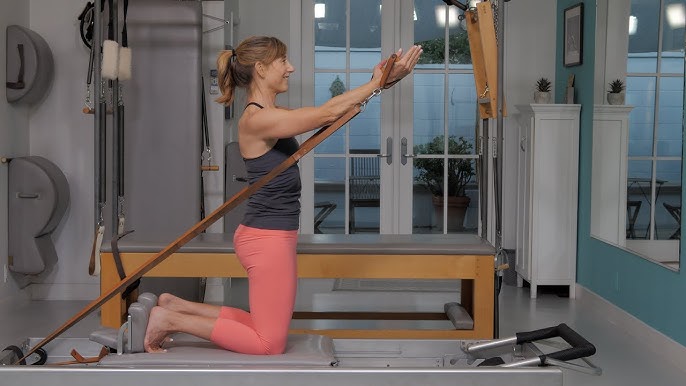
The Pilates Reformer uses spring-loaded resistance delivered through straps and loops. Although holding loops on an unstable carriage can initially feel slightly wobbly, the Reformer provides a safe, guided movement plane. The continuous pushback from the springs provides a compressive vector that helps seat or hold the humerus securely within the glenoid socket, promoting optimal joint centration.
Working with spring tension allows you to train proprioception and gradually expand active range of motion without forcing the joint into extreme, unprotected end-ranges. For example, during arm circles in reformer loops, you can start with a reduced range of motion within your safe zone. As the dynamic stabilisers adapt to the spring feedback, you can progressively increase the arc into a full range of motion.
If a shoulder is severely unstable and loops cannot be adequately supported, exercises can be modified using the fixed footbar for support. Closed-chain loading against the stationary footbar grounds the joint, allowing you to build foundational shoulder strength before progressing to moving straps.
5. Cadillac Trapeze Table for Advanced 3D Loading
While the Reformer builds foundational control, the Cadillac Trapeze Table introduces multi-planar, three-dimensional movement patterns that physically prepare the body for real-world functional demands.
Inversion exercises on the Cadillac, such as candlestick positions, allow for joint distraction where gravity creates gentle traction across the shoulder joint. By stepping on slider bars or pulling on fuzzy straps while inverted, the shoulder undergoes active mobilisation under a tensile load. Exposing the capsule to controlled distraction forces builds joint integrity and reduces apprehension during complex overhead movements.
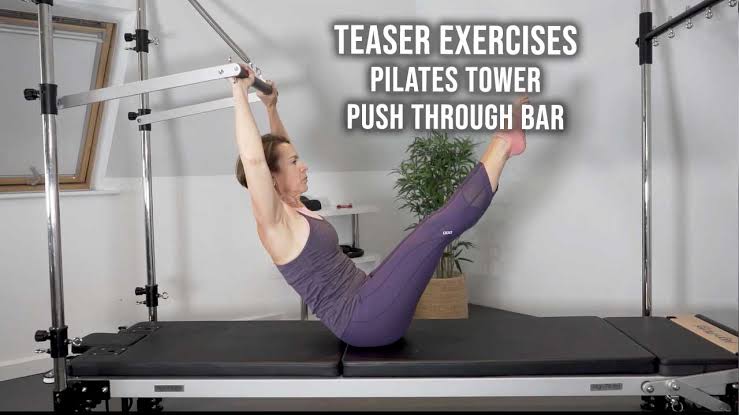
Advanced movements like the Cadillac Teaser involve pushing the push-through bar against spring resistance, providing gradual loading into overhead positions. The pushback from the overhead springs improves joint centration while recruiting the mid-back, core, and hip flexors. This compound engagement conditions the entire body to function as a unified unit with a strong bias toward overhead stability.
At a Glance: Home Exercises vs Specialised Pilates Equipment
| Feature | Home Band and Dumbbell Drills | Specialised Pilates Apparatus |
|---|---|---|
| Resistance Profile | Unidirectional gravity or linear band tension | ✅ Multi-planar spring resistance with continuous feedback |
| Joint Loading | Direct axial loading or unassisted open chain force | ✅ Centrating compression and active tensile distraction |
| Guided Vectors | Free space movement relying entirely on self-control | ✅ Carriages, tracks, and bars providing structural paths |
| Rehab Environment | Self-directed general conditioning | ✅ Real-time clinical modification and precise progression |
6. Home Exercises vs Clinical Equipment
There is no shortage of free online resources for shoulder strength and conditioning, or home rehabilitation. Countless videos demonstrate band exercises, rotator cuff rotator drills, and floor stability work that can be easily executed at home. Because accessible guidance is readily available online, we do not need to list basic home drills here.
Instead, it is important to understand why specialised equipment offers a distinct mechanical advantage. Standard elastic bands pull in a single direction and increase resistance as they stretch, which can overload a vulnerable joint at end-range. In contrast, Reformer and Cadillac springs provide continuous, smooth feedback that dynamically supports joint centration throughout the entire movement arc.
Furthermore, working with specialised equipment under expert supervision is not simply about doing an exercise correctly or wrongly. Professional guidance provides real-time decision making. A qualified instructor determines the best exercise for your joint on a given day based on your current progress, real-time fatigue levels, and subtle movement compensations.
7. How Square One Active Recovery Can Help
Recurring shoulder dislocations are unpleasant to live with. In chronic cases, instability becomes part of daily life, leading many individuals to give up on physical activities, sports, or gym workouts. Even when avoiding high-risk movements, accidental dislocations can remain a recurring monthly or yearly occurrence.
At Square One Active Recovery, our clinical approach helps you move past fear and rebuild joint resilience. We systematically progress you from guided Reformer exercises to advanced Cadillac 3-dimensional loading, ensuring your shoulder develops the dynamic strength and neuromuscular control needed for full recovery.
Nobody else can decide when it is time to fix your shoulder, but when you are ready to reclaim your physical independence, professional services are available to support you every step of the way.
Ready to restore your shoulder stability and movement confidence? Book a comprehensive clinical assessment with Square One Active Recovery today.
Key Takeaways
When addressing shoulder instability, shoulder pain, and recurring dislocation, keep these core principles in mind:
-
1
Global rehab over MRI reliance. Non-surgical rehabilitation focuses on strengthening dynamic shoulder muscle capacity to manage structural issues like labral tears, Bony Bankart fractures, or Hill-Sachs lesions.
-
2
Neuromuscular control and fear reduction. Neuromuscular retraining refines joint positioning and speeds up protective reaction times during accidents, while graded exposure relieves shoulder pain and removes protective muscle spasms.
-
3
Reformer and Cadillac provide guided loading. Continuous spring feedback and 3D tensile forces help centrate the humeral head and prevent a sudden shoulder dislocation under real-world demands.

