
When back or neck pain strikes, turning to high-velocity joint cracking might seem like an enticing quick fix. However, manual chiropractic adjustments trigger a distinct range of physiological reactions and physical side effects that deserve careful consideration before you lie down on a treatment table.
While many people experience temporary relief, visiting a chiropractor can also leave you with post-adjustment soreness, muscle stiffness, or joint irritability. What side effects should you realistically expect after treatment, why do they occur, and how can you move beyond temporary relief toward sustainable, long-term spinal health?
1. Common Post-Adjustment Side Effects: Soreness, Aches, and Fatigue
The most widespread side effects following a spinal adjustment are short-term neuromuscular reactions. Research published by the National Institutes of Health indicates that roughly 50% of patients experience localised discomfort, stiffness, or aching within 24 hours of treatment.
Typical side effects reported after an adjustment include:
- Post-adjustment soreness and fatigue: Temporary stiffness, localised aching, or a feeling of systemic lethargy that typically resolves within 24 to 48 hours.
- Soft tissue strain: Rapid, high-velocity thrusts can overstretch surrounding tendons and ligaments, leading to sharp localised tenderness or mild swelling around the joint.
- Transient nerve irritation: Sudden pressure shifts within joint capsules can occasionally provoke shooting or radiating sensations down an arm or leg.
| Side effect | Risk | Duration | Cause |
|---|---|---|---|
| Muscle soreness, joint stiffness, mild fatigue | Common (~50%) | Lasts 24 to 48 hours | Micro-sprains or rapid stretching of surrounding muscles and joint capsules |
| Increased pain, nerve numbness/tingling, soft tissue sprain | Moderate Risk | Lasts several days to weeks | Ligamentous overstretching or aggravation of pre-existing disc inflammation |
| Vertebral artery dissection, stroke, disc herniation progression, rib fracture | Severe Risk | Medical emergency | Vascular shear forces from rapid rotational thrusts or excessive forces on brittle bone |
2. Structural Stress & Bone Density Factors
High-velocity spinal manipulation applies sudden force to spinal segments. For individuals with reduced bone density, such as those with osteopenia or osteoporosis, these rapid compressive and rotational forces can place excessive stress on vertebral bodies.
Because early bone loss rarely presents obvious symptoms, many people remain unaware of their reduced bone density. Clinical resources on bone mineral density management emphasise that applying passive thrusts to weakened skeletal structures without prior screening can result in unintended micro-fractures or painful joint sprains.
The new osteoporosis guidelines published by Singapore in 2026 recommend screening for osteoporosis from 50 years old (or post-menopause) for women and 65 years old for men.
3. Severe Neurological & Vascular Complications
Beyond routine soreness, high-velocity neck adjustments carry documented risks of severe physiological complications. Rapid rotational twisting can stretch or shear the cervical arteries supplying blood to the brain, occasionally resulting in arterial tears or vertebrobasilar stroke.
Although severe adverse events such as strokes are infrequent, early vascular distress often manifests as standard neck tightness or headaches. Consequently, patients seeking adjustments for routine stiffness may unknowingly aggravate an existing arterial tear.
Additional rare side effects include exacerbation of pre-existing disc herniations or severe nerve root compression, underscoring the need for thorough clinical evaluation prior to high-force intervention.
4. Practice Landscape & Regulation in Singapore
For patients undergoing manual therapy locally, understanding how services are governed provides helpful context. In Singapore, chiropractors operate as independent private practitioners, but are not registered medical doctors or statutory allied health professionals under the Singapore Medical Council.
Because statutory registration is absent, treatment approaches and diagnostic standards vary widely between clinics. Choosing evidence-based practitioners who emphasise rigorous clinical assessment and active management ensures your care aligns with modern musculoskeletal standards.
In 2026, Senior Minister of State for Health Tan Kiat How maintained that chiropractic is a form of complementary and alternative treatment and will remain unregulated.
5. Evaluating Different Adjustment Techniques
The severity and frequency of post-treatment side effects depend heavily on the technique selected by your provider:
A. High-Traction Maneuvers
Long axial traction tools like Y-strap adjustments apply sudden longitudinal force to the cervical spine. These intense maneuvers generate significant stress on joint capsules and spinal ligaments with limited clinical benefit compared to gentle, controlled loading.
B. Standard High-Velocity Thrusts
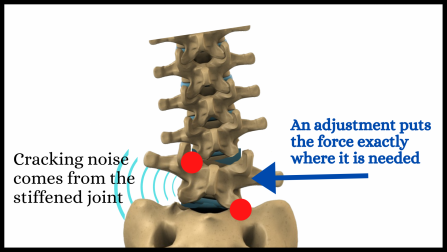
Traditional low-amplitude thrusts aim to restore brief joint motion. It is often accompanied by a cavitation or an audible pop. While more controlled than traction straps or long axis adjustments, they remain passive inputs that do not build muscle strength or long-term structural resilience.
C. Spine Positioning & Mechanics
Practitioners who prioritise neutral alignment minimize unnecessary torque on spinal structures, reducing post-treatment soreness and joint strain. Adjustments made with aggressive maneuver or holds the neck at true end range extension is more likely to cause injury.

6. Moving Beyond Temporary Adjustments with Active Recovery
While passive spinal adjustments can temporarily alter pain signals, they do not resolve underlying muscle weakness, poor load tolerance, or biomechanical dysfunction. Relying solely on repeated joint cracking often leads to a cycle of temporary relief followed by returning symptoms.
To achieve lasting, self-sustaining relief, physical care must transition from passive manipulation to progressive active modalities:
Clinical Pilates
Unlike group fitness classes, Clinical Pilates is customised to your specific symptom history and physical limitations. Guided by a healthcare professional, it emphasises core alignment, movement control, flexibility, and gradual muscle endurance. It offers a gentle, low-load starting point for individuals reintroducing movement after acute pain or injury.
Chiropractic Rehabilitation at Square One Active Recovery
At Square One Active Recovery, we focus on evidence-based chiropractic rehabilitation. We completely replace passive joint cracking with targeted exercise therapy, strength training, and structured load management.
Instead of creating dependence on ongoing treatments, chiropractic rehab systematically conditions your muscles, joints, and connective tissues to handle daily physical demands. By empowering you with exercise medicine, we help you overcome persistent neck pain, back issues, and shoulder aches permanently. Learn more in our complete guide to rehabilitation chiropractic care in Singapore.
Ready to build a stronger spine and achieve long-term relief without passive cracking? Book a clinical assessment with Square One Active Recovery today.
Key Takeaways
Key insights on adjustment side effects and achieving lasting relief:
-
1
Post-treatment soreness is common: About half of patients experience mild stiffness or fatigue after an adjustment, usually resolving within 24–48 hours.
-
2
Adjustments offer temporary relief: Passive joint cracking changes pain perception temporarily but does not address weakness or poor load tolerance.
-
3
Active care drives long-term outcomes: Progressive exercise rehab and Clinical Pilates build tissue capacity and long-term functional strength.

