
If you are considering starting a formal recovery programme or Clinical Pilates, it is natural to wonder whether it is right for you. But before asking what specific exercises you should be doing or the cost of seeing a chiropractor in Singapore, we need to consider your readiness for rehabilitation.
Recovery and sports science is not a vague, airy fairy discipline. There is robust empirical evidence on what works and what is possible. It is true that seeking professional help always yield the best outcomes. But for it to make sense for you, we need to consider what is the commitment you need for you to find success.
1. Are Your Goals Clear and Achievable?
It is not possible to achieve client- or patient-centred care if there are no clear goals. Having clearly defined and achievable goals will allow us to work together towards a singular outcome.
When you pay for a professional service, you will have expectations. If these expectations are poor communicated or if the expectations keep changing as you make progress, it is very hard to keep on the same page.
The said expectation must also be realistic and possible given your unique context. If not, the probability of success is low and supervised rehab may not be the best course of action at this stage.
Having pre-agreed clear and achievable goals is important because we don’t want to take your money only to circle back after ten sessions asking: Why do my knees still hurt after playing pickleball? Why do my knees still hurt going downstairs?
Those questions can and must be prospectively considered.
Need help defining your goals? That is entirely reasonable. Most of our rehab clients who join us on a formal recovery programme book a consultation and assessment to discuss and clarify their goals, as well as what is achievable versus unachievable.

2. Are You Willing to Address Aggravating Factors?
There is nothing a clinician can do to make a lifestyle aggravating factor become a non-aggravating factor in the short term. In the context of pickleball as an aggravating factor, reducing your training intensity or frequency might lessen the toll, but it doesn’t make pickleball non-aggravating. It still does aggravate your knee, just less.
This is also when rest as a construct becomes confusing. Complete long-term rest is indeed not helpful. However, removing existing aggravating factors cannot be conflate with complete rest. It is a balanced between a meaningful deload and overtraining. There are always rehab exercises and activity you can participate in without aggravating your pain or injury.
By removing the aggravating factors, you are giving your body an opportunity for your affected tissues to heal. Take a cut on your skin: if you repeatedly tug on the injury site daily, will it heal?
Yes, but poorly.
If you tug on it hard and often enough, it will not heal and eventually become infected.
Within a sports or exercise context, if you do pull-ups and muscle-ups until your hands are raw and bloody and yet continue to do them daily without rest, skin healing becomes a physical impossibility. By not removing the aggravation or overtraining, there is a repeated assault on the affected tissues. Healing becomes a physical impossibility.
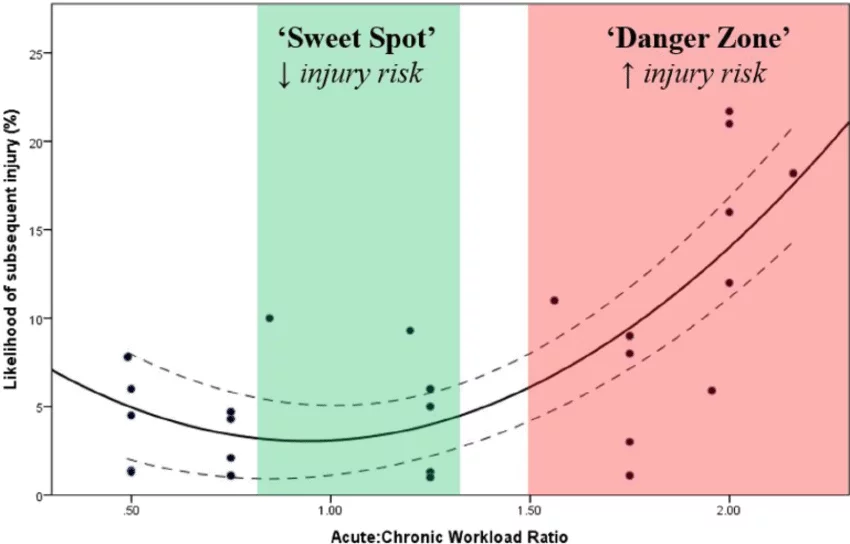
How to Know Your Tissues Are Injured Without a Scan:
- You have pain during or after sports or activity participation, suggesting an active injury or reduced capacity for said activity.
- You have stiffness after activity or in the early morning, suggesting active inflammation.
- You feel better taking inflammatories such as arcoxia (etoricoxib).
- You cannot carry out activities of daily function without modification (e.g., need arm support to stand from a chair).
The Recovery Progression for Longevity:
- Affected tissues must be given a chance to heal
- Rehab exercises can be done during this time to promote healing (without overloading affected tissue)
- Inflammation cycle stops once aggravating factors are removed (i.e., no continued repetitive assault
- Strength and conditioning can begin once tissues are sufficiently healed to increase structural robustness and overall capacity
3. Is There Congruence in Your Thoughts and Behaviour?
If there is no congruence in thoughts and/or behaviour, it’s very hard to get good results. How we think and make decisions determines our outcome.
If you cannot stand from a chair without support, can you play pickleball? Most people will intuitively say no because they can recognise that playing pickleball is more complex and strenuous task than standing from a chair. If there is congruence, a break from pickleball will be recognised as necessary.
A lot of athletes are also reluctant to deload from their sports participation but yet unwilling to commit more time to rehab. This is also suggests a lack of congruence. If training three times per week yields better sports outcomes, it should be clear that training more often for rehab leads to better recovery outcomes. Showing up infrequently for your rehab, regardless of how genuine your reasons are, will dilute recovery success.
Your body has no grace for your scheduling or commitment challenges. At the end of the day, you reap what you sow. It is okay to show up for rehab on an adhoc basis as long as you can accept that your outcomes will also be subpar compared to someone who is able to commit.
Similarly, your results will also be subpar if you cannot sufficient deload from activity compared to someone who can practise restrain from sports or activity participation.
4. Clarity of Priorities
A lot of people feel that they have no choice but this perceived lack of choice can be your stumbling block. If you play pickleball socially, your motivation is intrinsic. No one is forcing you to play. You are not paid to play. In many sense, you have a choice.
Similarly, you also have a choice in regular exercise. Going to the gym can be a chore for sedentary individuals but it is physically possible. Even if it seems impossible, there are also exercises that can be done at home or at a fitness corner in your neighbourhood.
It is important to benchmark how important is recovery to you against other competing priorities. If recovery is a low priority, then it will indeed be hard to find time to exercise or find the restrain to deload from pickleball or HYROX training.
While clarity of priorities alone does not improve recovery outcomes, it helps you understand why recovery can feel like a struggle. It can also help you understand what needs to change, intrinsically and on a motivation level, to help you participate in healthier health behaviours that will eventually lead to long term success.
Conflicts can make recovery success impossible
Let’s try to put everything we have discussed so far together. Assuming pickleball is an aggravating factor, it will be physically impossible to achieve knee healing if you cannot significantly reduce or stop pickleball participation in the near term.
To get good results, you must reconcile this conflict:
- If Playing Pickleball > Knee Longevity: You must be willing to accept poorer recovery outcomes in view of keeping playtime.
- If Knee Longevity > Playing Pickleball: You must be willing to accept the discomfort of restraining from playing in view that your knees will heal.
Without reconciliation, you will be stuck. For example, continually asking why you still have pain even though you have put in the time and effort to show up for rehab or pilates. In such instances, showing up alone is unfortunately insufficient.
5. Return to Sport Is Grounded in Empirical Evidence
Prescribed rest and return to sports is not some vague construct that (evidence-based) clinicians randomly advise when you are not getting better. There are objective, validated markers for when a person can go back to sports. If you don’t meet the criteria, you don’t meet the criteria. There is nothing grey about that.
Even if you feel like a million dollars and on top of the world, if you don’t meet the criteria, you objectively are not ready to return to play.
For example, standard single-leg sit-to-stand testing has validated performance benchmarks (such as 22 reps on one leg, or timed variations like 15 reps in 30 seconds). Relying on feeling and the ability to “push through” works for amateur sports grit, but it is not a valid predictor of joint longevity.
This is not to say you cannot return to sports early or cannot continue with your sports despite being injured or in pain. You absolutely can. All you need to do is assume the increased risks of further injury or delayed recovery.
At Square One Active Recovery, we are not delulu and we don’t sell snake oil. We also believed in share decision making. We do respect your prerogative in making your own life choices. Where we draw the line is when the goals or the expected outcomes is not what is physically impossible with evidence-based rehabilitation.
Key Takeaways
Consider these talking points when evaluating your readiness for supervised rehab or pilates:
-
1
Clear, Achievable Goals: Recovery services require realistic expected outcomes matched to your unique context to ensure success.
-
2
Removal of Aggravating Factors: Tissue healing requires giving the body a break from repetitive assault (like active post-pickleball inflammation).
-
3
Thought & Behaviour Congruence: Consistent attendance and aligned behaviors are vital to avoid diluting recovery outcomes.
-
4
Clarity of Priorities: Explicitly reconcile whether maintaining recreational hobbies or pursuing long-term joint health takes precedence.

