
If you search online for whether chiropractic care has to be a lifelong commitment, the answers you find will probably say yes. It may make you worry about being locked into a long term financial commitment and becoming dependent on a chiropractor just to function without pain.
The truth is that chiropractic care does not have to be a lifelong commitment. It is not addictive and your spine certainly wouldn’t start falling apart if you stop going for treatments.
At Square One Active Recovery, our approach is simple. Care should be a journey towards physical well-being and independence, not a lifetime subscription of passive treatment.
Breaking the Dependency Myth and Choosing Active Recovery
For years, many people have found themselves caught in a frustrating loop. They feel pain, go for a quick chiropractic adjustment, feel better for a few days, and then watch the pain creep back shortly after. This cycle often creates the false impression that you will need treatments forever.
Understanding where this fear comes from helps clarify why it is false and how structured, evidence-based care help you find freedom from pain.

The Biology of Physical Dependency and Passive Care Cycles
From a biological perspective, chiropractic treatment is not addictive. There is no real withdrawal effect or physical dependence. Your spine also does not collapse or decay if you skip treatments.
When people feel like they must keep returning week after week, it is usually because they are stuck in a passive care model. In a passive model, manual treatments are used as the sole solution for your pain. While hands-on care offers short term pain relief and temporary joint movement, it does not help your body handle daily life stressors, fix movement patterns, or build muscle strength.
Because passive treatment leaves the underlying movement and tissue capacity unaddressed, your pain naturally returns once treatment stops.
Moving from Short Term Relief to Long Term Results
The main goal of recovery is to give you your life back so you no longer need us. To break free from needing endless treatments, you must learn to actively care for yourself. This transition follows three distinct phases.
Phase One: Acute Pain Relief and Joint Reset
When you first walk into a clinic with severe back pain, neck stiffness, or an acute joint flare up, your primary goal is simply to get out of pain. Most treatments in the first phase is to focus on immediate pain relief and to restore baseline joint function. Some medications can also be helpful during this initial stage.
Although many pain patients often seek out hands on care, joint mobilisation, and soft tissue work, they are often not required. Gentle exercises like pilates can also be used to calm down irritated nerves, reduce protective muscle spasms, and restore a pain-free range of motion with longer lasting benefits.
Across all phases of recovery, active care and exercise consistently outperform hands-on passive treatment. Active care creates real physiological change that promotes joints and muscles to remodel in response to exercise stimulus.
Phase Two: Spinal Stabilisation and Movement Retraining
Most people never reach phase two in their recovery because they stop treatments once their initial pain subsides. Many chronic pain patients mistakenly believe that pain resolution means full recovery, but this is not the case.
Once acute pain subsides, the hard work begins. You are in a position to address the root causes of your pain through higher load or more intense exercises. If you don’t want your pain to keep coming back, pushing through phase two is essential.
Targeted strengthening exercises, postural re-education, and movement training can help rebuild your core stability, improve how your joints handle daily physical stress, and teach your body how to load safely during work, sports, or daily chores.
By building true physical capacity and tissue strength, phase two bulletproofs your body against future flare ups and turns short term relief into durable, long term physical recovery.
Phase Three: Maintenance Care and Personal Training
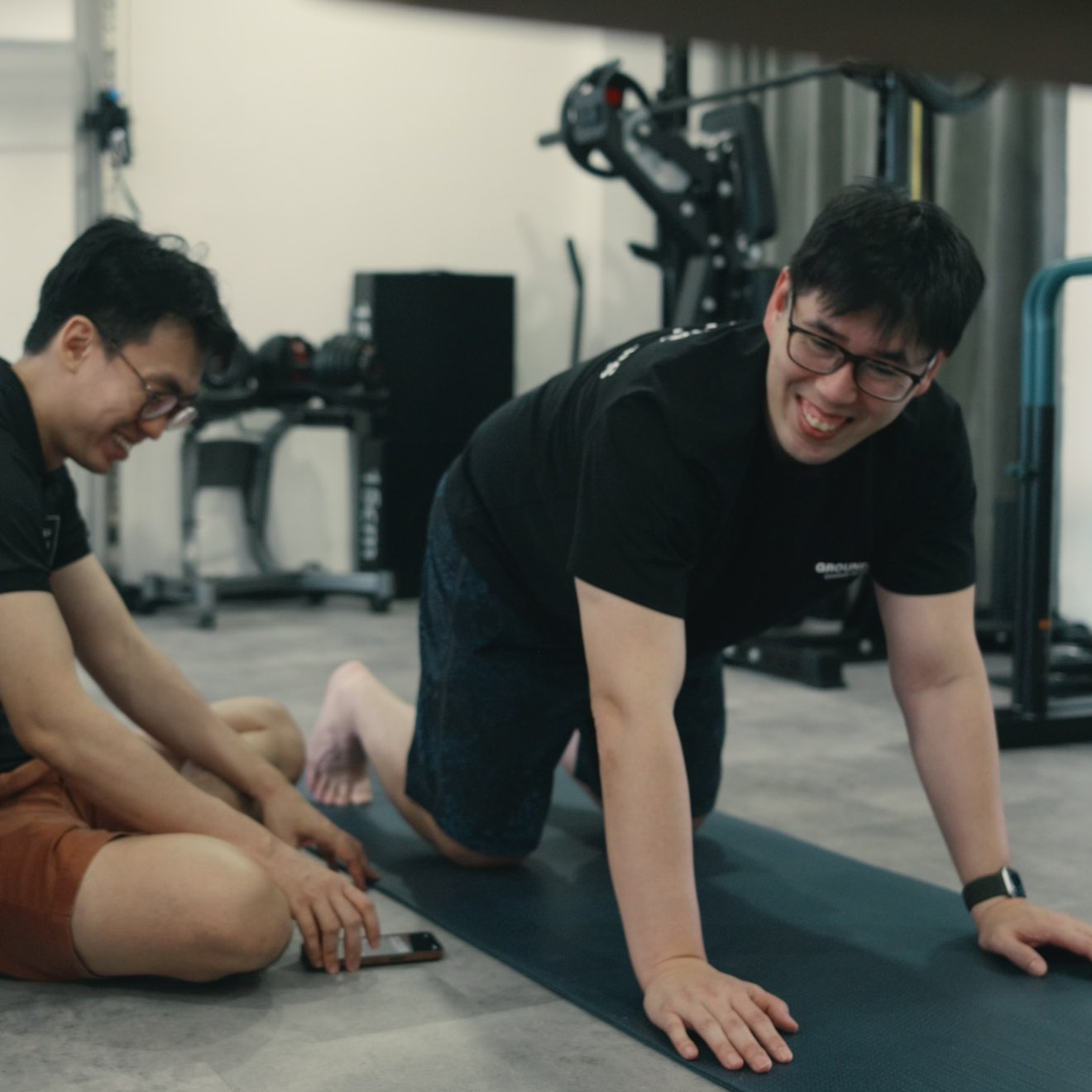
Once you feel better and can exercise on your own with little to no issues, you can prepare for discharge. For many patients, care ends completely after phase two because they have gained the tools, knowledge, and confidence needed to keep themselves pain-free at home or in the gym.
Others prefer to continue guided training sessions because they struggle to exercise on their own or want to push their strength training further to protect against age-related conditions like sarcopenia (muscle wasting) and osteoporosis (bone loss).
These additional sessions function more like personal training and are entirely optional. Whether you graduate permanently or choose to continue training with us, the decision remains entirely in your hands, and you can stop at any time. When people choose to return for long term care, it should never be out of fear or dependency.
What Clinical Evidence Says About Chiropractic Maintenance Care
What does health research actually say about scheduled maintenance care? The strongest research comes from large European trials that looked at people with recurring and long term lower back pain.
These studies found that scheduled maintenance care reduced the total number of days people lived with painful back episodes over a full year.
The Trade Off Between Appointments and Pain Free Days
The maintenance group experienced fewer bad days, but they did require a higher total number of appointments over the year.
This benefit applies mainly to a specific group of people who suffer from recurring or persistent back problems. It refutes the idea that everyone needs lifetime care, but it proves that scheduled check ins can be a practical strategy for managing ongoing, recurring patterns.
| Care Approach | Primary Action | Tissue Impact | Long Term Outcome |
|---|---|---|---|
| Traditional High-Volume Packages | Frequent adjustments without exercise or active loading | Provides short-term relief without any long-term change | Perpetual clinic dependency and recurring symptoms |
| Evidence-Based Maintenance Care | Periodic check-ins for chronic, recurrent back conditions | Manages persistent symptoms and reduces acute flare-up frequency | Fewer painful days per year with optional visits |
| Square One Active Recovery | Targeted exercise rehabilitation & movement training | Builds physical tissue capacity and robust joint resilience | Complete long-term self-reliance |
Deciding Who Needs Ongoing Care and Who Does Not
Not everyone needs the same approach to recovery. Your treatment length should match your specific situation.
People Who May Benefit from Periodic Maintenance
Individuals living with chronic back pain or long standing spinal stiffness often notice a measurable drop in painful flare ups when they schedule periodic spinal adjustments. Instead of waiting for a painful episode, structured maintenance visits help prevent recurring pain before it escalates.
If you are comfortable learning to self manage your condition through exercise, you likely do not need lifelong care. Most pain patients stop treatment as soon as they get pain relief, which is why their pain recurs and requires ongoing visits. If you are willing to learn how exercise prevents future pain episodes, you can comfortably opt out of maintenance adjustments.
People Who Do Not Need Lifelong Care
Anyone recovering from a single injury, such as a quick strain from lifting, that heals completely with no ongoing issues generally has no clinical need for ongoing visits once full movement capacity is restored.
Committing to Your Health Instead of a Schedule
Chiropractic care is a practical tool and not a life sentence. For some people, that tool is useful for a short recovery period. For others, periodic check ins are a sensible way to stay active and pain free over the long term.
The right question to ask is never about how long you must keep coming back. It is simply whether your care is still helping you do the things you love and what are you willing to do to wean yourself of passive treatments.
Key Takeaways
Keep these fundamental concepts in mind when deciding on long term chiropractic care:
-
1
Active Recovery Focus: True care empowers you with movement capacity and strength rather than trapping you in an endless cycle of passive treatments.
-
2
Evidence Based Maintenance: Scheduled check ins can help manage chronic recurring patterns, but they should always be optional and goal directed.
-
3
Personal Freedom: Your care plan should have clear goals, flexible scheduling, and a defined exit strategy so you always feel in control.

