
It usually happens when you least expect it. You turn your head to check traffic, or worse, you wake up in the morning and realise you are permanently locked looking sideways like an owl. Your neck muscles seize up, a sharp cramp shoots down your shoulder, and suddenly every single movement feels like a major crisis.
If you have ever dealt with this, you know how frustratingly disabling a neck spasm can be. Most people try to stretch it out, massage it aggressively, or wait for it to eventually subside. However, neck spasms are rarely random. They are usually a sign that your body needs help because a muscle, joint, or nerve is under way too much stress.
Understanding What Happens During a Severe Neck Spasm
Your neck is a complex structure of muscle, joints, and bones. It has to balance a bowling ball of a head all day long while allowing you to look up, down, and side to side. To do this, it relies on a delicate balance of superficial muscles like your upper traps and deep neck stabilisers.
When these muscles get overloaded, irritated, or feel threatened, they lock down. A muscle spasm is essentially an involuntary, sustained contraction. Your nervous system hits the emergency brake and tightens the muscle fibers to protect the area from further perceived damage.
The catch is that this protective tightening restricts your movement, pinches local blood flow, and creates a vicious cycle of neck pain and stiffness.
Types of Neck Spasms and How They Present Differently
Not all spasms are created equal. Depending on the root cause and how long they stick around, they usually fall into a few distinct buckets:
Acute Muscle Strain and Protective Guarding
This is the classic sudden onset spasm. It often hits right after a specific movement, like a clumsy reach overhead, a heavy lift at the gym, or waking up sleeping in a terrible position. The muscle fibers experience micro-tears or extreme irritation, and your body instantly triggers a protective spasm to immobilise the joint. While intensely painful, these typically settle down within a few days to a week with the right care.
Chronic Low Grade Neck Spasms and Stiffness
If your neck movement is always a little restricted and you never quite feel right, you are dealing with chronic spasms. These are long-term, stubborn tension patterns usually fueled by daily postural strain, prolonged desk work, or unmanaged stress. The muscles never truly get a chance to switch off to fully recover, which leads to persistent fatigue and stiffness.
Spasmodic Torticollis and Cervical Dystonia
This is a much rarer, more complex neurological condition where the neck muscles contract involuntarily on a continuous basis, pulling your head into an abnormal twisted position. Unlike a simple muscle strain, this involves the central nervous system signalling the muscles to fire relentlessly and requires specialised rehab treatment.
Common Triggers and Lifestyle Factors Driving Neck Muscle Spasms
Because your neck acts as the central hub between your torso and your head, it absorbs the impact of almost everything you do. Often, an awkward reach or a sudden movement is just the final straw. Behind the scenes, everyday lifestyle factors and triggers keep the fire burning and turn a minor tweak into a stubborn recurring issue:
Desk Life and Tech Neck
Staring down at your smartphone or hunching over a laptop for hours at a time fundamentally alters the mechanics of your cervical spine. Instead of resting balanced on top of your spine, your upper traps and levator scapulae are forced to act as a relentless winch to prevent your head from falling onto your chest. Over time, this constant isometric overload exhausts the tissue, leads to micro-fatigue, and triggers an involuntary protective spasm as your body attempts to brace against the ongoing strain.
Physical Trauma and Whiplash
Sudden physical impacts, such as motor vehicle accidents, contact sports injuries, or unexpected falls, subject the neck to rapid acceleration and deceleration forces. This quick, violent motion overstretches soft tissues, including muscles, ligaments, and joint capsules. In response to perceived or actual structural threat, your central nervous system initiates an immediate and aggressive muscular guarding response. The surrounding musculature locks up tightly in an effort to immobilise the neck and prevent further structural damage, resulting in an acute severe spasm.
Everyday Stress and Nervous System High Alert
Emotional and psychological stress directly manifest as physical muscle tension. When work demands, personal pressures, or daily anxiety pile up, your sympathetic nervous system triggers a fight-or-flight response. You may notice yourself unconsciously shrugging your shoulders toward your ears, clenching your jaw, or shallow breathing throughout the day. Holding your cervical spine in this guarded, high-alert state restricts blood flow to local tissues and maintains elevated muscle tone, keeping your neck muscles in a state of ongoing irritability that easily flips into full spasms.
Sedentary Habits, Sleep Posture and Tissue Fatigue
Remaining seated for prolonged periods without changing position starves spinal discs and surrounding soft tissues of proper fluid exchange and nutrient delivery. When sedentary habits are paired with inadequate sleep, unsupportive pillows that hold your neck in twisted angles, or general dehydration, the physical capacity of your muscles plummets. Under-rested, under-hydrated, and fatigued muscle fibers lose their ability to contract and relax efficiently, making them far more susceptible to painful cramping and sudden locking during everyday movements.
Underlying Joint Stiffening and Disc Irritation
Spasms are frequently secondary responses to deeper articular issues within the cervical spine. When a facet joint becomes stiff or jammed, or when an intervertebral disc experiences heightened pressure or inflammation, local nerve endings send strong warning signals to the brain. To protect the vulnerable segment from further strain or compression, your body deliberately contracts the surrounding muscle groups to act as a natural internal splint. Until the underlying joint mobility or disc irritation is appropriately addressed, the muscle will continue to lock down to safeguard the spine.
Associated Symptoms You Might Experience Alongside Neck Spasms
When neck muscles stay locked in a tight grip, they rarely stay localised. They can refer pain, alter blood flow, and disrupt sensory input, leading to two very common secondary complaints:
Cervicogenic Headache Relief and Referral Patterns
Have you ever felt a headache start right at the base of your skull and creep its way up into your temples, forehead, or behind your eyes? That is often a cervicogenic headache. Because the sensory nerves from your upper cervical spine share pathways with the nerves in your head and face, irritation or extreme tightness in your upper neck muscles and joints gets misinterpreted by your brain as head pain. It is not a traditional tension headache or migraine as the root cause is sitting right in your cervical spine.
Cervicogenic Dizziness from Neck Tightness
Cervicogenic dizziness often catches a lot of people off guard. You might experience a strange, unsettling sensation of lightheadedness, unsteadiness, or a floating feeling when you move your head. This happens because your neck is packed with tiny sensory receptors that tell your brain where your head is in space. When severe muscle spasms or stiff joints distort these signals, a mismatch occurs between what your neck tells your brain and what your eyes and inner ears see, resulting in a false sense of motion or imbalance.
How to Relieve Neck Spasms Home Remedies and What to Avoid
Managing neck spasms effectively means calming down the immediate alarm system while fixing the underlying lifestyle and movement drivers.
Home Care First Aid for Sudden Neck Spasms
- Gentle Heat Therapy: Applying a heating pad or taking a warm shower helps relax tight muscle fibers, increases local blood circulation, and dials down your nervous system’s panic response.
- Modified Activity: Avoid aggressive, painful stretching or forcing your neck through tight ranges of motion, which only provokes more protective guarding. Instead, find comfortable resting positions and keep moving gently within a pain-free envelope.
- Ergonomic Tweaks: Raise your computer monitor to eye level, support your lower back while sitting, and ensure your pillow keeps your neck in a neutral, supported alignment overnight.

Why Aggressive Stretching for Neck Spasms Backfires
When you feel a severe knot or spasm, your first instinct is almost always to grab your head and yank it into a heavy stretch to force the muscle open. This is a classic beginner trap. When a tissue is locked in an acute spasm, it is hypersensitive and over-guarded. Forcing it into a deep stretch adds tensile stress to an already irritated area. Instead of making the muscle relax, stretching triggers a deeper stretch reflex, causing your nervous system to clamp down even harder. Fighting fire with fire is a bad idea for neck pain.
Professional Neck Spasm Treatment at Square One Active Recovery
If your neck spasms keep bouncing back or refuse to settle, chasing the symptoms at home will only get you so far. At Square One Active Recovery, we look beyond the surface knot to address why your body felt the need to lock up in the first place.
Desensitising and Restoring Movement with Clinical Pilates
For clients dealing with sensitive, highly reactive spasms, we utilise targeted Clinical Pilates as a gentle exercise approach. When tissues are too angry for heavy loading or aggressive manipulation, structured Pilates exercises allow us to work with your neck muscles safely.
Rather than forcing length, Pilates helps improve flexibility by coaxing muscles to relax. By moving within a comfortable, controlled envelope, we help your nervous system desensitise, allowing normal resting tissue length to be restored naturally.
Building Resilience Through Neck Strength and Conditioning
True recovery is not just about pain resolution. Achieving a healthy neck is the ultimate goal! Remember, health is not just the absence of disease.
If you have lived a sedentary lifestyle, your neck muscles and deep cervical flexors may simply be too weak to support your head against the demands of daily life. When your baseline capacity is low, everyday activities act as an ongoing stressor, making spasms recurring visitors.
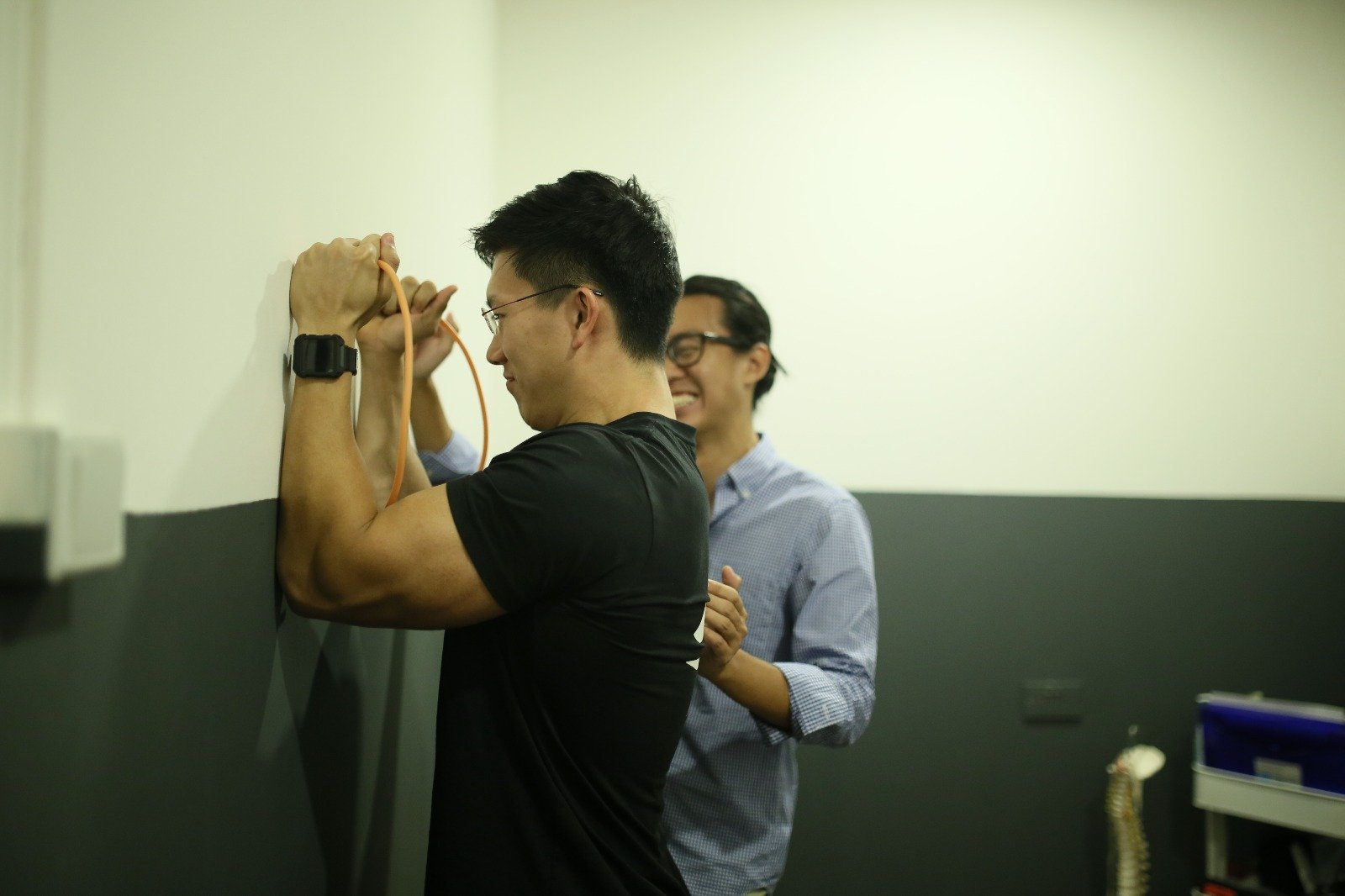
Once your pain has settled, we transition you toward targeted strength and conditioning for the neck. Building genuine physical capacity ensures your neck can easily handle whatever your day throws at it.
Objective Biomechanical Testing for Precision Care
If you are unsure where your baseline stands, we offer comprehensive biomechanical testing to assess your muscle strength and movement profiles. Objective testing allows us to evaluate your current muscle health with certainty.
By removing the guesswork, we can design precise, specific programming tailored entirely to your body so you can achieve the best possible results and bulletproof your neck for the long term.
Comparing Neck Spasm Recovery Approaches At a Glance
| Care Approach | Primary Action | Tissue Impact | Long Term Outcome |
|---|---|---|---|
| Aggressive Stretching | Forcing length on acute tight muscles | Triggers stretch reflex and clamps down harder | Increased sensitivity and prolonged spasms |
| Passive Treatments | Endless massage hot packs and adjustments | Provides temporary relief without building capacity | Recurring spasms when daily strain returns |
| Square One Active Recovery | Clinical Pilates and strength conditioning | Desensitises reactive tissues and builds resilience | Long term self reliance and healthy robust neck |
Key Takeaways
Keep these fundamental concepts in mind when dealing with neck spasms:
-
1
Reduce aggravating factors. Modify desk setups, manage stress, and adjust posture to stop constant strain from overloading your cervical spine.
-
2
Do not stretch. Yanking on an acutely spasming muscle adds tensile stress and causes your nervous system to clamp down even harder.
-
3
Build physical capacity. True long term resolution requires desensitising active tissues with gentle movement like Pilates, then strengthening your neck muscles so they easily handle daily demands.

