
Have you ever experienced a strange and unsettling sensation of lightheadedness or unsteadiness while your neck felt completely locked up You might blame general fatigue but your body is often signaling a specific condition known as cervicogenic dizziness. This problem is deeply rooted in biomechanics and evolutionary biology. Far from being imaginary, this dizziness occurs when the communication network between your neck and your brain breaks down. Understanding the neck brain connection is the first step toward achieving lasting recovery.

To understand cervicogenic dizziness, we first have to appreciate how brilliant our anatomy is. The muscles at the base of your skull, collectively known as the suboccipital muscles, along with the rest of your deep cervical flexors and extensors, are not just built for movement. They are sensory powerhouses.
Muscle spindles are specialised sensory receptors that detect changes in muscle length and the speed of those changes. While large muscles in your legs have relatively few spindles per gram, the small muscles of the upper cervical spine boast the highest density of muscle spindles in the entire human body.
Evolutionarily speaking, our ancestors needed lightning fast communication between their eyes, inner ears, and neck to survive. If a predator rustled in the bushes, your neck muscles didn’t just turn your head. They instantly told your brain where your head was in space relative to your horizon and torso, allowing you to stabilize your gaze while running, fighting, or hunting. In short, your neck acts as a primary navigational compass for your brain.
2. When the Compass Breaks How Hypertonic Muscles Cause Dizziness
When stress, poor posture like tech neck, trauma, or prolonged desk work causes your neck muscles to become chronic, hypertonic meaning stagnant and overly tight, this delicate sensory system goes haywire.
Your brain relies on three systems to maintain balance: your eyes for the visual system, your inner ear for the vestibular system, and your neck for the proprioceptive system.
When your upper neck muscles are locked in a state of extreme tension, they constantly fire chaotic, high frequency signals up to the brainstem. Your brain receives a confusing contradiction. Your inner ear says you are sitting still at your desk. Your eyes say your office is stationary. But your hypertonic neck muscles are screaming that your head is rapidly moving or tilting.
This sensory mismatch results in cervicogenic dizziness, a vague, floating, or woozy sensation that isn’t true spinning vertigo, but rather a persistent feeling of unsteadiness or motion sickness.
3. What Happens If Left Untreated?
Ignoring chronic neck tension and associated dizziness won’t just make you uncomfortable. It can start a frustrating physiological feedback loop:
Over time, your nervous system develops central sensitisation, becoming hypersensitive. The pain and dizziness signals become amplified, meaning minor tension can trigger major dizzy spells.
Persistent faulty proprioception leads to chronic balance impairment, which can subtly throw off your gait, increasing clumsiness or the risk of trips and falls.
Because dizziness is inherently scary, sufferers often exhibit movement avoidance and anxiety, stopping themselves from looking around quickly or exercising. This lack of movement leads to further muscle atrophy and more tightness, worsening the cycle.
Chronic suboccipital tension also acts as a primary driver of secondary cervicogenic headaches, compounding your physical distress.
4. The Post Workout Guarding Loop
Many people experience dizziness only after completing a workout. This happens because muscles often become far more hypertonic than the physical load actually requires.
When your nervous system defaults to high tone guarding, it misinterprets ordinary lifting or running as a major physical threat. Even when lifting modest weights, your neck muscles might fire at ninety percent capacity just to stabilise a head requiring ten percent effort.
This excessive contraction causes local metabolic buildup and reduced blood flow. Once you finish your set and put the weight down, your nervous system experiences a sudden shift. That abrupt change combined with delayed muscle relaxation sends distorted proprioceptive signals to your brainstem, leaving you feeling woozy after exercise.
Why Dizziness Can Strike Immediately or 1 to 2 Days Later
Post-workout cervicogenic dizziness does not always hit the moment you drop the barbell. For some, the wooziness strikes within seconds of finishing a set. For others, it creeps in 24 to 48 hours later. Understanding the timeline helps explain how your nervous system and tissues process physical stress.
When dizziness hits within seconds, it is typically driven by an abrupt autonomic and proprioceptive shift. While you are actively exerting yourself, your heart rate is elevated, blood pressure is managed dynamically, and your nervous system is flooded with adrenaline. The moment you stop, your blood pressure can dip while your suboccipital muscles remain locked in a high-tone protective spasm. That sudden transition creates an immediate mismatch between your inner ear, eyes, and now-distorted neck sensors.
When dizziness is delayed by 1 to 2 days, the mechanism shifts toward cumulative fatigue and localised inflammatory processes. Heavy or unfamiliar loading causes microscopic muscular strain and metabolic irritation in the deep cervical tissues. As the body initiates its normal repair cycle over the next 24 to 48 hours, low-grade inflammation and delayed onset muscle soreness (DOMS) set in around the upper cervical spine. This lingering tissue irritation keeps the muscle spindles firing abnormal tension signals long after you have left the gym, resulting in a delayed onset of unsteadiness and stiffness.
5. Effective Recovery Modalities and Strategies
Cervicogenic dizziness is entirely mechanical and treatable once you address the root causes or contributors by calming hypertonic tissue and retraining your nervous system.
A skilled chiropractor evaluates your cervical spine mobility through targeted rehabiitation. Treatment usually includes active joint mobilisations of the upper vertebrae to unlock restricted joints that feed false signals to the brain. While soft tissue work and dry needling can lead to a reduction in symptoms, the results are often temporary and is not a long-temr solution.
Learning relaxation techniques is a vital foundational strategy because high stress keeps your nervous system stuck in a fight or flight response. Practicing diaphragmatic belly breathing stimulates the vagus nerve and lowers muscle tone across your upper body. Progressive muscle relaxation teaches your brain the physical difference between tension and release. Using a mental check to keep your teeth apart and your jaw soft stops your trigeminocervical complex from locking up your neck.
Retraining your spatial awareness through proprioceptive and tracking drills helps your brain trust your neck again. You can practice eye first tracking where you consciously shift your eyes first to lock onto a target and then allow your head to follow smoothly. Gaze stabilization drills where you keep your eyes locked on a stationary target while moving your head slowly train your nervous system to accept cervical movement without triggering dizziness.
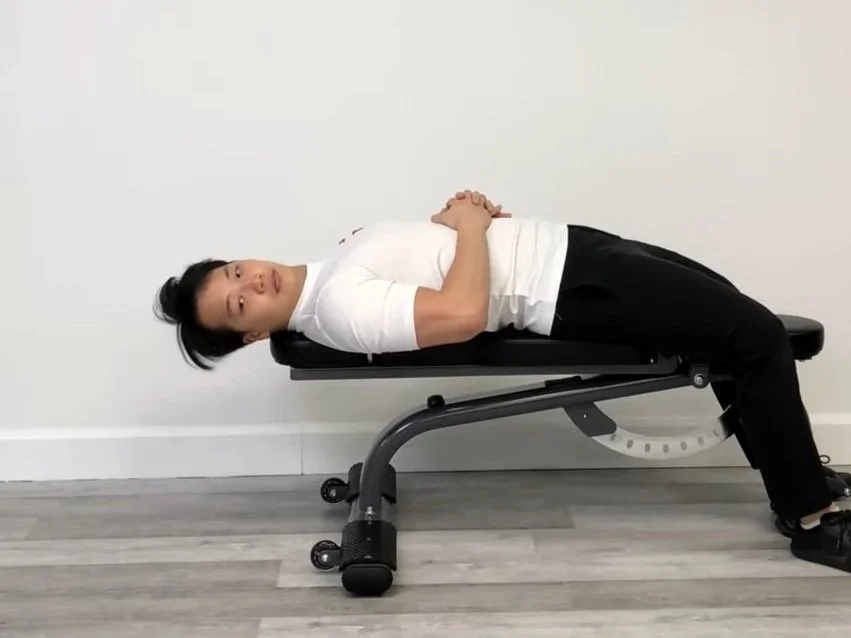
At a Glance: Home Exercises vs Clinical Management
| Feature | Targeted Home Drills | Clinical Assessment and Treatment |
|---|---|---|
| Neuromuscular Focus | General self managed postural awareness | Precise sensorimotor and gaze stabilisation |
| Tissue Release | Basic stretching and self massage | Guided active mobilisation with exercise |
| Load Management | Progressive increase without considering for sensorimotor demands | Identifying guarding and neural overload during exercise and introduce movement modification to reduce sensitisation |
| Recovery Pathway | Unstructured trial of internet routines | Tailored roadmap to eliminate chronic dizziness |
6. How Square One Active Recovery Can Help
Living with cervicogenic dizziness and persistent neck stiffness is physically exhausting and mentally draining. When hypertonic muscles trap you in a continuous feedback loop of poor proprioception and lightheadedness, trying to figure it out alone can feel overwhelming.
At Square One Active Recovery, our clinical approach helps you move past fear and calm your nervous system. We systematically guide you through targeted soft tissue work, movement retraining, and sensorimotor drills, ensuring your neck develops the precise control needed for full recovery.
Nobody else can decide when it is time to address your neck pain, but when you are ready to reclaim your physical independence, professional services are available to support you every step of the way.
Ready to resolve your neck stiffness and stop the dizziness? Book a comprehensive clinical assessment with Square One Active Recovery today.
Key Takeaways
When addressing cervicogenic dizziness, neck pain, and hypertonic muscle tension, keep these core principles in mind:
-
1
High density muscle spindles. The suboccipital muscles boast the highest density of spindles in the body, serving as a biological gyroscope that informs the brain of head position.
-
2
Sensory mismatch and dizziness. Hypertonic neck tissue fires chaotic signals that conflict with your visual and vestibular systems, resulting in an unsteadiness sensation known as cervicogenic dizziness.
-
3
Targeted recovery modalities. Calming hypertonic guarding through manual therapy, relaxation techniques, and proprioceptive retraining breaks the feedback loop and restores balance.

