
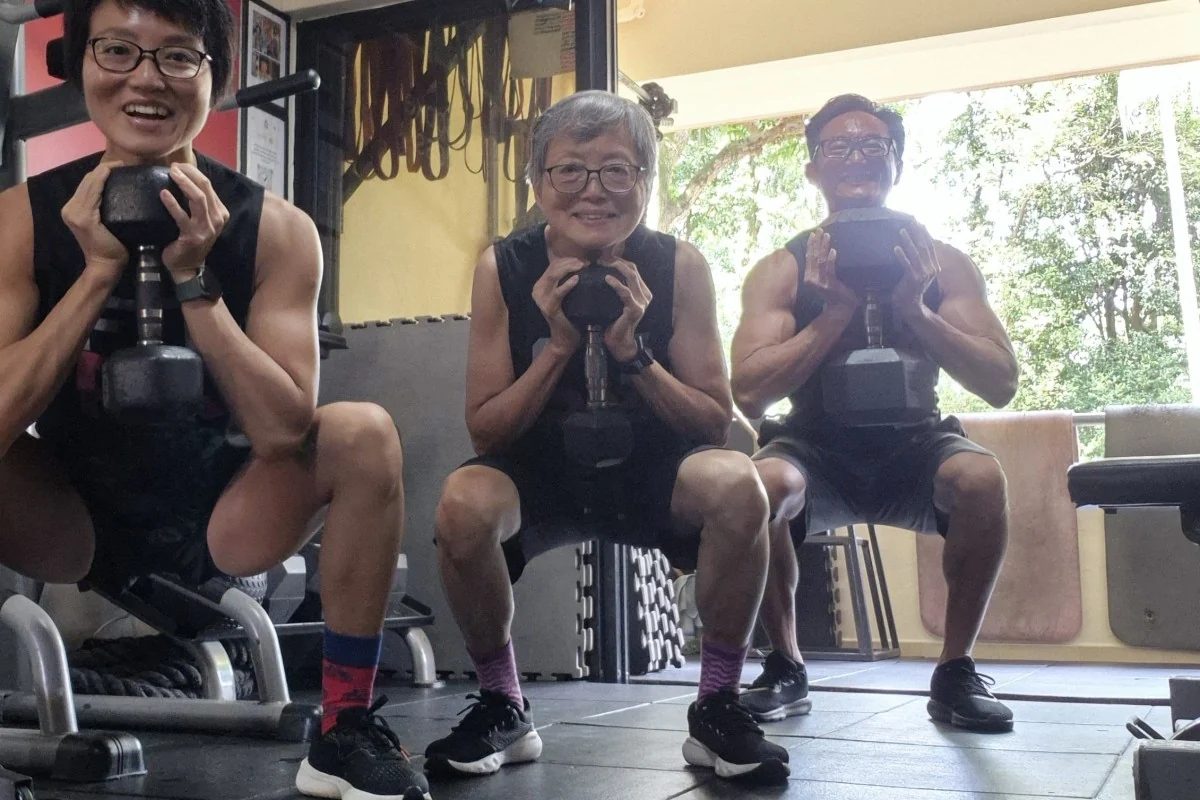
Meet Charlotte, affectionately known as Auntie C or Singapore’s Pull-Up Grandma. While many people assume that getting older means slowing down, Auntie C did not step foot into a gym until she was 72 years old. Today, at 80 years old, she can execute strict, unassisted pull-ups back to back. In fact, she performs more unbroken reps than many young men in Singapore.
Her story is living proof of the remarkable adaptability of the human body regardless of age. At Square One Active Recovery, we advocate for building physical self-reliance, tissue capacity, and functional strength. Auntie C’s journey is an inspiring example of active strength in action, offering important lessons on successful ageing, upper body pull progressions, and chronic pain management.
1. Can You Gain Strength After 70? (Why You Shouldn’t Compare Yourself)
Before jumping onto a pull-up bar or feeling discouraged that an 80-year-old can out-pull you, it is essential to keep context in mind. Please do not compare your starting point to hers.
Pull-Up Grandma benefits from a unique environment that most people do not have:
- Personal Trainer Family: Her children are fitness coaches who custom-tailored her high-intensity strength training routines, corrected her form, and guided her safely through every phase.
- Direct Access: Her home also serves as their home gym base, giving her seamless, daily access to training equipment and professional guidance.
Access to fitness varies widely across Singapore. Busy work schedules, long hours in Chinatown or Raffles Place, caretaking duties, or previous joint injuries mean everyone starts from a different baseline. Auntie C’s setup gave her an ideal launching pad, but your fitness journey belongs entirely to you. Focus on making incremental progress within your own environment rather than matching someone else’s living situation.
2. What Muscles Do Pull-Ups Work? (And How They Relieve Neck & Shoulder Pain)
A pull-up might look like a simple showcase of arm strength, but biomechanically it is a compound upper-body pulling exercise that engages an entire network of muscles across your back, shoulders, and core.
Primary Muscle Groups Used in a Pull-Up
- Latissimus Dorsi (Lats): The large wing-shaped muscles along your mid-to-lower back that drive shoulder extension and downward pulling.
- Rhomboids & Trapezius (Mid/Lower): The upper back muscles responsible for pulling your shoulder blades together and downward.
- Biceps Brachii & Brachialis: The primary elbow flexors that assist in pulling your chest up to the bar.
- Core & Abdominals: Anti-extension stabilisers that prevent excessive lumbar arching and body swinging during the movement.
- Forearms & Grip Strength: Your grip on the bar, which is a physical metric strongly linked to functional independence and longevity in older adults.
How Pulling Exercises Help Reduce Upper Back and Shoulder Pain
In clinical practice with an evidence-based chiropractor in Singapore, upper-body pulling variations are frequently prescribed for neck, shoulder, and upper back rehabilitation. Here is why:
- Reversing Desk Posture: Hours of sitting at ergonomic desks or looking down at phones lock the body into internal shoulder rotation. Strengthening the latissimus dorsi, rhomboids, and lower traps helps restore thoracic extension and scapular control, easing pressure that leads to neck pain and tension headaches.
- Building Tissue Capacity: Chronic pain often stems from under-conditioned tissues that become sensitive under daily stress. Progressive resistance loading builds structural resilience in shoulder tendons and joint capsules, allowing you to move without fear of aggravation.
- Restoring Full Overhead Mobility: Reaching overhead and pulling through a complete range of motion improves scapulohumeral rhythm, helps to resolve shoulder pain and strengthens rotator cuff tendons.
📌 Passive Hang vs Pull Up: What’s the Difference for Back Pain?
You may have seen wellness trends promoting passive hanging, which means hanging loosely from a bar with completely relaxed shoulders. Some people even use inversion boots to hang upside down. While hanging passively can feel soothing, passive hanging is not the same as doing an active pull-up.
1. Passive hanging is a short-term relief tool: It acts as a gravity-assisted stretch, opening up joint spaces and temporarily decompressing the spine. This can work as a distraction technique to briefly ease tight upper back muscles or spinal compression.
2. It does not build long-term muscle strength: Because your muscles are relaxed rather than actively contracting, passive hanging fails to load your tendons, joints, and motor units to adapt and grow stronger over time.
3. Limited rehabilitation value for chronic pain: While passive hangs are useful as a quick symptom reliever, active pulling exercises like pull-ups or incline pull-ups provide the mechanical stimulus required to build lasting tissue capacity and keep pain away permanently.
3. Pull-Up Progressions: From Incline Pull-Up to Strict Pull-Up
Building up to your first pull-up requires breaking the movement down into manageable, progressive steps. The table below outlines key pulling variations, their target muscles, local Singapore NAPFA assessment context, and primary clinical applications in active rehab.
| Exercise Level | Primary Target Muscles | Singapore Fitness Context | Rehab & Pain Application |
|---|---|---|---|
| Incline Pull-Up (Bodyweight Row) | Rhomboids, Middle Trapezius, Posterior Deltoids, Biceps | Standard primary school NAPFA test item for upper body strength | Scapular retractor activation, posture correction, lower-back friendly loading |
| Active Scapular Hang | Lower Trapezius, Serratus Anterior, Forearm Flexors | Grip strength benchmark and shoulder prep drill | Improving shoulder impingement, building subacromial space stability |
| Band-Assisted Pull-Up | Latissimus Dorsi, Teres Major, Biceps Brachii, Core | Intermediate step for full bodyweight pull-up entry | Gradual progressive loading for tendon capacity without overloading shoulder joints |
| Eccentric (Negative) Pull-Up | Latissimus Dorsi, Brachialis, Scapular Stabilisers | Secondary school and IPPT preparation training strategy | High-intensity eccentric loading for tendon stiffness and rapid strength gains |
| Full Dead-Hang Pull-Up | Full Upper Body Pulling Chain, Core, Forearms | Secondary school and IPPT upper body strength gold standard | Maximal kinetic chain integration, robust thoracic extension, long-term functional independence |

4. How to Do Your First Pull-Up (Step-by-Step Exercises for Beginners)
If you cannot perform a pull-up today, do not worry because very few people can right off the bat. Auntie C spent her first year of training working up to a single sit-up, and it took four years of regular effort before she unlocked her very first chin-up. You can break down the movement using these steps:
- Incline Pull-Ups (Back to Basics): Take a leaf out of the national school curriculum. Setting a bar at waist height, placing your feet on the floor, and pulling your chest to the bar allows you to work the exact same pulling muscles with a fraction of your body weight.
- Active Scapular Hangs: Hold onto an overhead bar with arms straight, then practice engaging your upper back to pull your shoulders down away from your ears. This builds essential grip strength and shoulder blade control.
- Negative (Eccentric) Pull-Ups: Use a step to jump up so your chin is over the bar, then lower yourself down as slowly as possible. Aim for a 5-second count because eccentric loading is one of the fastest ways to build pulling strength.
- Band-Assisted Pull-Ups: Loop a resistance band over the bar and place a foot inside. The band offsets part of your body weight while letting you practice the full overhead movement pattern.
Why Upper Body Strength Takes Longer to Build
Upper body strength gains can feel slow compared to lower body movements because the involved muscle groups are relatively smaller. Do not get discouraged if progress feels gradual.
Most of the health, metabolic, and joint benefits of exercise come from regular, long-term participation rather than hitting a specific rep milestone. Staying consistent and keeping your workouts sustainable is the true key to success.
5. Successful Ageing Beyond Pull-Ups: Why Strength Training Is Essential
Auntie C’s pull-up feat is inspiring, but here is a fundamental truth. You do not have to perform pull-ups to age successfully.
Successful ageing is context-dependent. If hanging from a bar does not suit your joints or goals, you can build vital strength through swimming, cycling, clinical pilates, resistance machines, or kettlebell work.
However, there is one non-negotiable principle. You must include some form of progressive strength training. As we age, we naturally face age-related muscle loss known as sarcopenia, as well as declining bone mineral density known as osteoporosis. Resistance training acts as armour by preserving muscle mass, strengthening bones, protecting joint integrity, and keeping you capable of carrying your own groceries up pedestrian bridges without relying on others.
6. What Are Fitness Vanity Metrics? (And How to Set Real Health Goals)
When beginning a fitness programme, it is easy to get caught up in numbers like how many reps you can do, how heavy you can lift, or how impressive it looks.
These are vanity metrics. Before chasing a specific gym target, step back and clarify your primary goal. Being able to do seven pull-ups is a fantastic physical milestone, but it does not automatically mean someone is healthy in every dimension of life. True functional health encompasses:
- Cardiovascular & Metabolic Health: Clean blood panels, good stamina, and manageable blood pressure.
- Mobility & Daily Function: Being able to tie your shoes, squat down, or lift things off the floor without back pain.
- Mental & Emotional Well-being: Managing daily stress, enjoying life, and maintaining cognitive sharpness.
- Pain-Free Independence: Moving through your day without constant stiffness or reliance on passive treatments.
Auntie C did not start training at 72 to chase social media metrics. She started exercising so she could remain independent, manage her health, and avoid chronic diseases. Use pull-ups or any exercise as an enjoyable challenge if you like it, but remember that the true purpose of movement is building a resilient body that serves your life.
Key Takeaways
Keep these core active recovery principles in mind for your strength and health journey:
-
1
Adaptability Has No Age Limit: You are never too old to build strength, improve tissue capacity, and enhance your functional resilience.
-
2
Active Loading Over Passive Hangs: Passive hanging can temporarily relieve tight joint symptoms, but active pulling exercises are essential to build long-term muscle strength and joint capacity.
-
3
Focus on Health Over Vanity Metrics: Whether you prefer incline pull-ups, barbell work, or Pilates, the ultimate goal of strength training is staying independent, pain-free, and capable throughout your life.

