
For years, companies have used the same simple playbook for dealing with worker aches: upgrade the furniture.
If you complain of neck stiffness, upper back aches, or tight shoulders after a long day at your desk, the standard advice is to drop hundreds of dollars on an ergonomic overhaul. Adjustable monitor arms, standing desks, vertical mice, and posture cushions are ergonomic tools used to help improve chronic neck pain. It feels sensible and proactive. After all, if desk work causes neck pain, shouldn’t buying “ergonomic” gear fix it?
As we highlighted in our previous look at ergonomic chairs and back pain, there is an important distinction to make: while ergonomic gear can certainly make sitting more comfortable, it isn’t a treatment for pain. Now, rigorous independent research is confirming for neck pain as well.
1. Does Workplace Ergonomics Actually Help Neck and Shoulder Pain?
A landmark systematic review published by Cochrane shows that there is little evidence common workplace ergonomics help with pain, puncturing the corporate hardware myth.
Researchers evaluated 20 randomised clinical trials involving 2,478 participants to see how office interventions affected work-related complaints of the arm, neck, or shoulder (CANS). They looked at specialised gear, standing desks, workstation adjustments, and posture training. The result? Ergonomic changes showed no meaningful benefit for pain, functional recovery, or sick leave compared to doing nothing at all.
The practical takeaway is clear: changing your desk layout might feel nice, but hardware alone does not cure neck, arm, or shoulder pain.
2. Why Buying Ergonomic Gear Won’t Fix Your Neck
The push for ergonomic gear rests on a simplistic view of the human body: the belief that your neck and upper back are fragile structures that will break down unless propped up at perfect angles by expensive equipment.
In reality, work-related neck and shoulder aches rarely come from a mechanical flaw that a gadget can fix. Buying specialised gear might change how you sit, but it creates two main problems:
- It targets symptoms instead of building strength: Gear acts as a passive prop rather than training your neck and upper back muscles to handle real daily loads.
- It makes you rely on external tools: It reinforces the false idea that your neck cannot support itself without mechanical help.
3. Comparative Overview: Workplace Hardware vs. Active Rehabilitation
To help desk workers and clinicians see where to focus time and energy, this breakdown compares passive ergonomic fixes with active recovery strategies:
| Intervention Approach | What It Actually Does | Clinical Reality & Effectiveness |
|---|---|---|
| Monitor Arms & Ergonomic Accessories | Adjusts screen heights and sitting angles | Little to no impact on neck/shoulder pain or recovery (Cochrane review); offers only passive support. |
| Resting After a Long Day | Temporarily removes work posture demands | Feels natural, but ineffective over time; does not strengthen neck tissues for future strain. |
| High-Volume Unsupervised Workouts | Increases overall fitness and burn | Can lead to over-exercising and exceed tissue limits if recovery is neglected. |
| Progressive Targeted Exercise | Builds load capacity in neck & shoulder muscles | Highly effective; provides lasting, practical relief for desk workers. |
4. What Actually Helps Neck Pain? The Counterintuitive Solution
One thing is certain: desk-related neck pain is very real. Holding your head still for long stretches under deadline stress places clear physical strain on your neck and upper back.
However, the fix is surprising. When your neck feels exhausted and sore after a hard day, your first instinct is to collapse onto the sofa and rest. It feels as though your neck muscles did “too much” work and simply need to lie still.
In truth, exercise is the best remedy. Your neck is rarely sore because it worked too hard; it is sore because its current strength limit was lower than what your work demanded. Resting keeps that limit low, meaning the exact same pain comes back tomorrow. Targeted exercise trains your neck and shoulder muscles to adapt, build strength, and carry daily work demands comfortably.
- Build Load Capacity in Your Neck & Shoulders: Long-term relief comes from progressive resistance training for the upper trapezius, rhomboids, deep neck flexors, and rotator cuff so they can handle daily posture loads.
- Prioritise Movement Variety Over “Perfect Posture”: Sitting in any single position for hours causes fatigue, no matter how good your chair is. Taking regular breaks and changing positions keeps neck tissues healthy and mobile.
- Move From Passive Fixes to Active Recovery: Real relief does not come from monitor stands or ergonomic gadgets—it comes from giving your body the strength to handle your day.

5. How We Design a Comprehensive Neck Rehab Plan
Effective neck rehabilitation is not about handing out random stretches or telling people to “sit up straight.” True neck resilience requires a clear, step-by-step clinical plan tailored to your tissue starting point:
Phase 1: Rebuilding Control & Deep Neck Flexor Activation
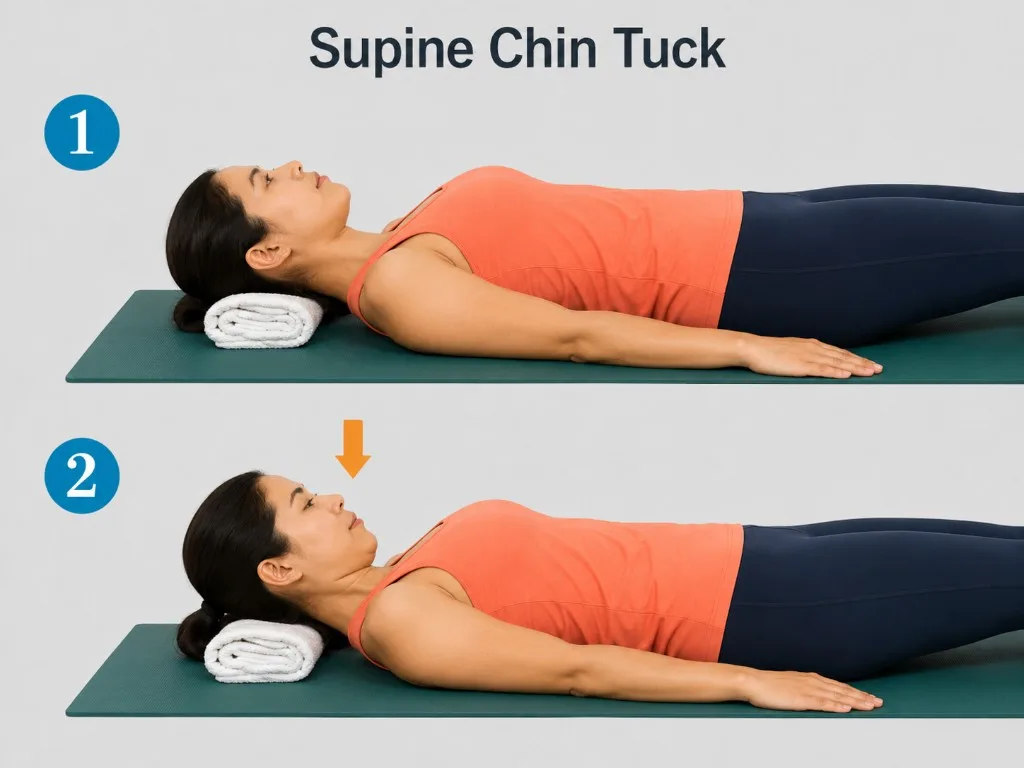
When neck pain is sensitive or acute, loading the neck heavily right away can feel overwhelming. We start by restoring movement control using precise chin-tuck mechanics and activating the deep cervical flexors (longus colli and longus capitis). As explained in our guide on deep neck flexor rehabilitation, these deep stabilising muscles act like an internal support belt for your neck, restoring accurate movement before adding heavy weights.
Phase 2: Building Muscle Capacity with Resistance Work
Once baseline control is steady, we move to strength and tissue capacity. As set out in our guide on resistance band neck exercises, movements like quadruped neck retractions and serratus anterior wall slides challenge the back of the neck and shoulder girdle directly. Strengthening this shoulder foundation lets your upper back carry daily loads so your neck does not have to overwork.

Phase 3: Advanced Loading via the Cadillac
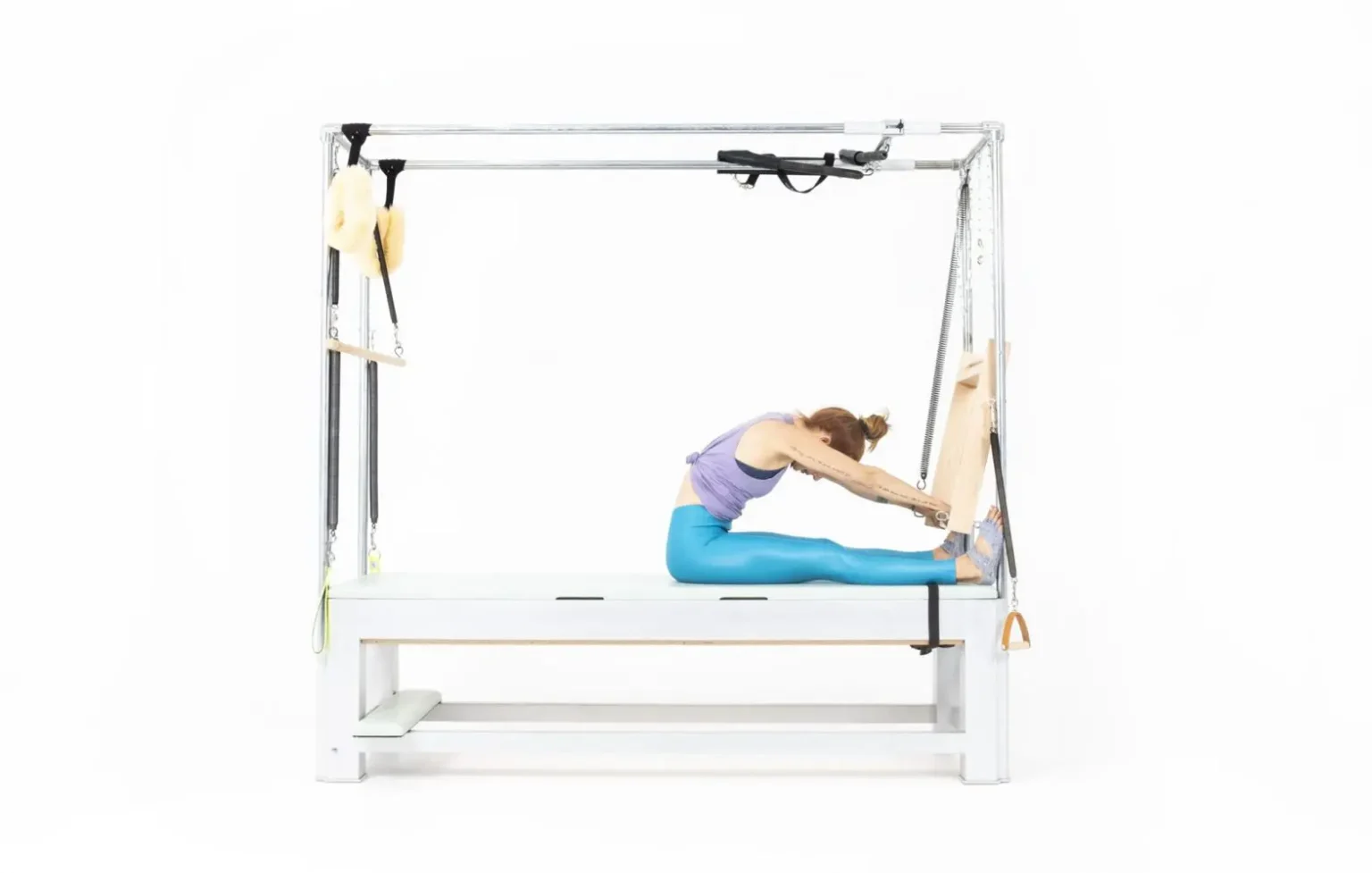
If you deal with guarded neck movements or shoulder stiffness, specialised studio equipment bridges the gap between basic drills and full movement freedom. In our review of why the Cadillac Trapeze Table beats the Reformer for neck and shoulder pain, the Cadillac’s stable frame and spring setups offer clear, closed-chain support. This lets us build thoracic mobility and overhead arm reach safely, without setting off muscle guarding in the neck.
6. Why Your Exercise Routine Might Not Be Working (Yet)
You might read this and think: “I’ve already tried exercising, and it didn’t help my neck or shoulder pain at all. It actually made it worse.” That is a common frustration. But before setting exercise aside, look at how the movements are being dosed. When exercise fails to ease neck pain, it usually comes down to one of two common mistakes:
Doing Exercises That Are Too Light (or Stopping at the First Flare-Up)
If you are not used to strength training and try a few gentle neck rolls or light stretches, you may find they do very little—or cause a brief flare-up. Persistent neck pain can make your nervous system extra sensitive, making self-dosing tricky:
- Pushing Too Hard Too Soon: Pain flares up, making it feel like exercise is harming your joints or nerves.
- Doing Too Little Out of Caution: Using loads that are too light means your neck muscles never get the push they need to strengthen and adapt.
Finding the right exercise dose early on often takes clear guidance. As discussed in our article on why doctors under-prescribe exercise for pain, standard healthcare is quick to offer medication, but rarely prescribes specific, progressive exercise loads.
Training Hard Without Enough Recovery
On the other hand, what if you already lift weights, run, or take intense fitness classes, yet your neck and shoulders still ache? Here, the issue is usually volume and recovery management, not effort. High-repetition routines, workplace stress, and constant workouts add up to heavy structural load on your neck and shoulders.
If total exercise volume outpaces your body’s ability to recover, your tissues stay in a state of ongoing irritation. Without proper rest, sleep, and recovery windows, muscles cannot adapt. Tissues need a real window of rest to rebuild stronger.
Key Takeaways
Ergonomic office gear can make sitting comfortable, but it is not a medical treatment. Keep these core principles in mind:
-
1
Hardware Is Not Healthcare: Cochrane research shows that workplace ergonomics offer little to no benefit for arm, neck, or shoulder pain compared to no treatment at all.
-
2
Exercise Beats Rest: Desk-related neck pain is real, but lying on the sofa is not the cure. Targeted exercise is the most reliable way to rebuild muscle capacity.
-
3
Follow a Clear Plan: Rehabilitation progresses from motor control (deep neck flexors) to load-bearing band work and clinical tools like the Cadillac Trapeze Table.
For a deeper look at passive fixes, read our article on Why Ergonomic Chairs Don’t Cure Low Back Pain.

